Water actively entering
A drip that is flowing, a ceiling bulging with pooled water, or rain reaching light fixtures — water moving through the house is the emergency, whatever the roof looks like.
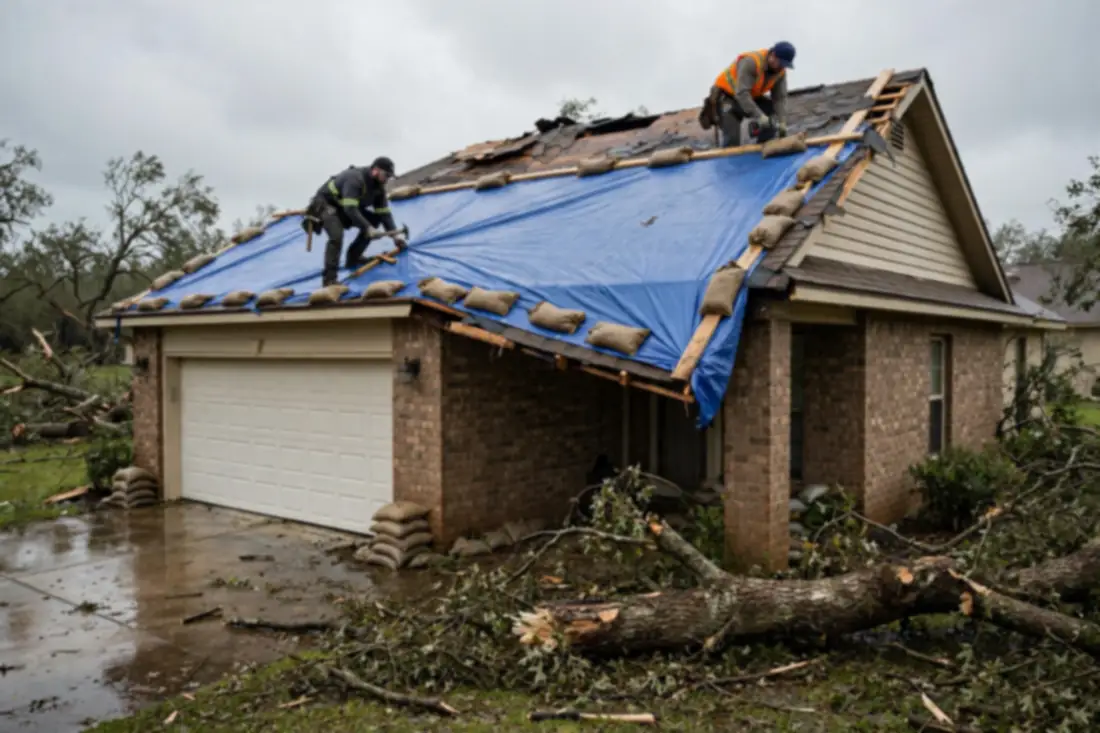
The storm-night service: roofs opened by wind, limbs, or sudden leaks made weather-tight fast — tarping, temporary sealing, and the permanent repair that follows.
Roof emergencies in Houston rarely keep office hours. They arrive at 2 AM with a limb through the shingles, or mid-afternoon when a thunderstorm cell parks over the neighborhood and a ceiling starts dripping over the living room. Emergency roof repair is the discipline of that moment: stop the water, stabilize the roof, and protect the home — then, once the weather and the light allow, diagnose and make the permanent repair.
The order matters as much as the speed. Inside the house, the first hour belongs to buckets, plastic, and photographs. On the roof, the work belongs to professionals in safe conditions — a wet, wind-loaded roof in a storm is no place for improvisation. The local roofers in this network handle both halves of that equation: the calm triage on the phone, and the tarping, sealing, and follow-through repair once they are on site.
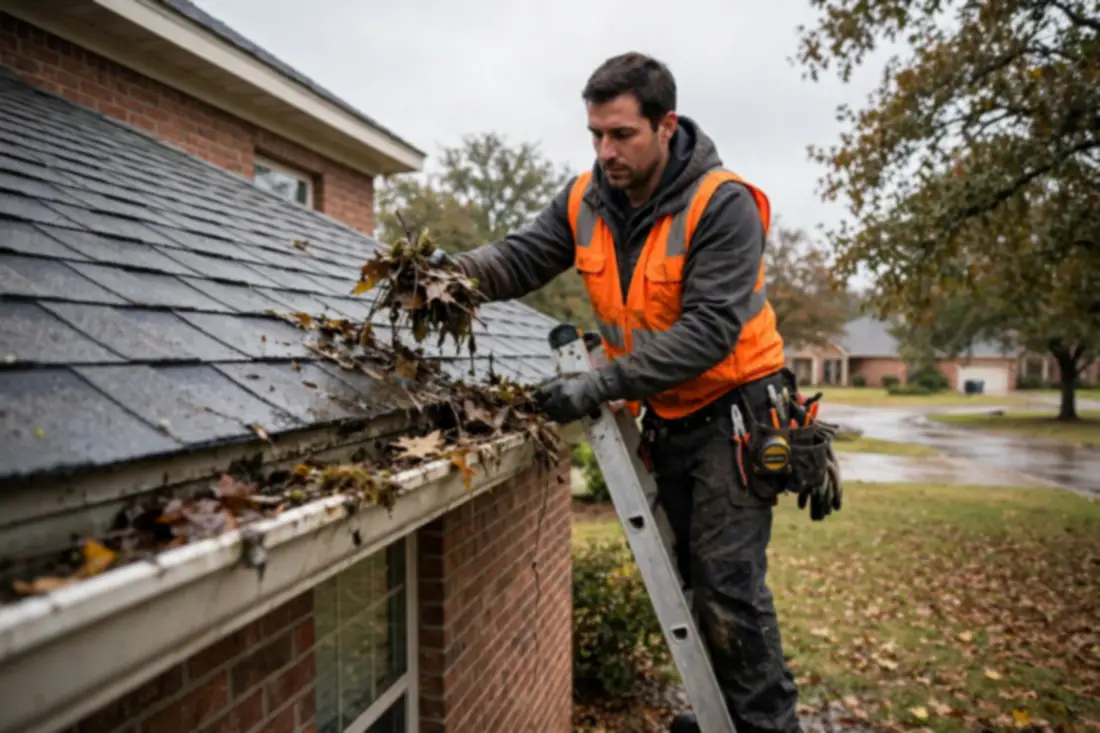
The ProblemWind peels the roof's layers in sequence — seal, shingle, underlayment — leaving openings that grow with every flap in the next gust.
 The Fix
Stabilize first, then rebuild — each failure gets its matched response:
A drip that is flowing, a ceiling bulging with pooled water, or rain reaching light fixtures — water moving through the house is the emergency, whatever the roof looks like.
Impact damage opens the roof's layers at once and loads structure that may be cracked beneath. Even without a visible hole, the deck under a limb needs professional eyes before weight shifts.
Shingles and underlayment torn away by wind leave decking — or the attic itself — open to the sky. Every following rain goes straight in.
A roofline that dips, or light visible in the attic where none was before, means structure has moved. That is the most urgent call on this list.
Emergency work has two phases with different jobs. The first phase — stabilization — makes the home weather-tight: debris cleared from the opening, a tarp or temporary membrane secured over the damaged area with battens and fasteners placed to shed water, and any active leak paths sealed. A proper tarp is not thrown and weighted with bricks; it is sized past the damage on every side, anchored into sound material, and arranged so water runs off it, not under it.
The second phase — the permanent repair — happens in dry conditions with a full diagnosis: the damaged layers come off, deck and framing are checked for impact or rot, and the section is rebuilt to match the surrounding system. Skipping the second phase is how temporary tarps become season-long fixtures and small openings become attic mold stories. The emergency call should always end with the permanent repair scheduled, not just the tarp admired.
Houston's emergency calendar is written by its weather: the May 2024 derecho that tore shingles across the whole metro in an hour, hurricane seasons that bring Beryl-style wind and days of rain, spring hail cells, and the ordinary summer thunderstorm that stalls and drops six inches on one neighborhood. After a regional event, every roofer in the metro is triaging at once — which is exactly why the description you give on the call matters: active water entry and structural damage move first.
Local knowledge shapes the response itself. Crews here stage tarps and battens as standard truck stock in storm season, know which neighborhoods' tree canopy drops limbs first, and read post-storm roofs for the damage pattern of the specific event — wind-lift on south and west slopes after a derecho, debris impact under the oaks, driven-rain leaks at details that hold in ordinary weather.
Limbs punch through shingles and decking together, and the surrounding field is often cracked or lifted beyond the visible hole.
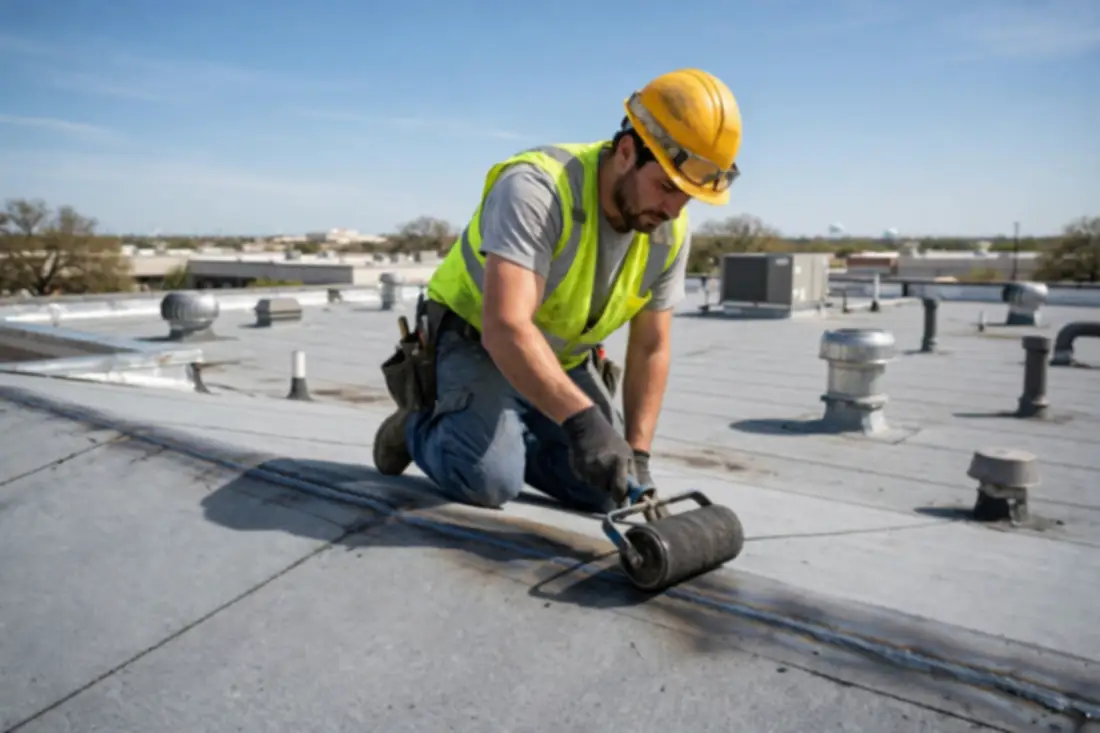
Rain falling faster than valleys and gutters can move it backs up under flashing and laps — leaks that appear only in the heaviest downpours.
A loose or undersized tarp channels water into the opening it was meant to cover, and flaps itself apart in the follow-up wind.
Stabilize first, then rebuild — each failure gets its matched response:
Your description — where the water is, what fell, what is missing — sets the priority and tells the crew what to load before they roll.
The opening is made weather-tight: tarp or temporary membrane, secured to shed water, with interior leak paths addressed from above.
Photographs of the damage, the stabilization, and the roof's wider condition — your record for every conversation that follows.
Before the crew leaves, you know what the lasting repair involves and when it happens. The tarp is a bridge, never the destination.
Once the permanent repair is done, walk the attic after the next hard rain and confirm the old drip points are dry. Check that the tarp's fastener holes were addressed in the rebuild — a proper permanent repair absorbs them into the new layers rather than leaving them as a memory.
Then use the event. A storm that found one weakness has told you about the roof's other aging details — the boots, the flashing, the valley linings that rode out the same wind a few years older. The post-storm inspection report is the moment to get the whole roof's condition in writing, while the evidence is fresh and the crew knows your roof.
Wet shingles and storm debris make roofs treacherous, and nothing a homeowner can do up there in the rain improves the outcome. The inside work — buckets, plastic, photos — is the contribution that matters.
Loose weights slide, concentrate loads, and leave the tarp's edges open to driven rain. A tarp that is not anchored and lapped correctly is a funnel, not a cover.
Tarps are measured in weeks of service, not seasons. Every week of delay lets the trapped moisture at the opening keep working on the deck.
Photographs taken during the event — damage, water paths, belongings — are worth ten times the same effort a week later, for the repair scope and for your own records.
Limbs overhanging the roof are the emergency that has not happened yet. Keep branches cut back well clear of the surface.
Shingles already loose in May are the section missing in August. A pre-season check of seals, boots, and edges is the simplest storm preparation there is.
A written condition report from the last inspection tells you — and any emergency roofer — what they are dealing with before they climb.
Where the water is entering, what fell or tore, and when it started. That description triages your call correctly in a busy storm queue.
The crew makes the roof weather-tight — tarp or temporary membrane over the damage, leak paths sealed, debris cleared.
With the weather past, the damaged area is opened, deck and framing checked, and the permanent repair scoped in writing.
The section is rebuilt into the surrounding system and the whole roof checked for the same event's quieter damage.
That is exactly what the diagnosis is for. Describe what you are seeing and a local roofer will read the roof and tell you which service the evidence supports — in writing.
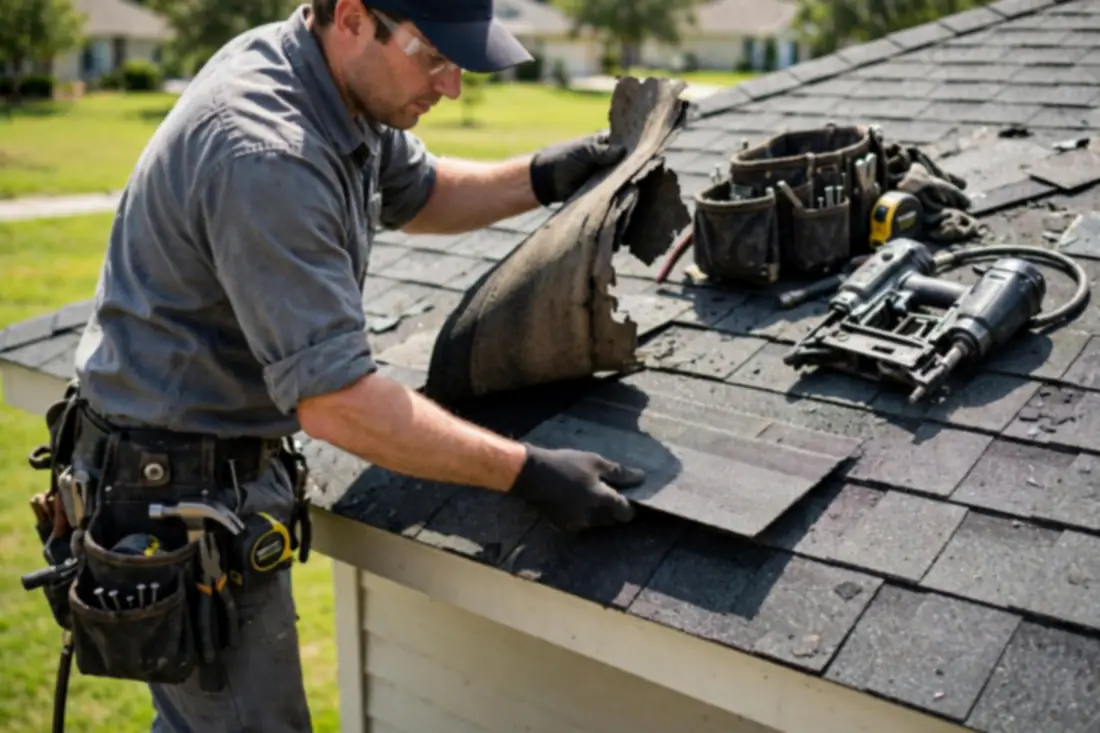
Targeted repairs for the failures Houston roofs actually develop — heat-curled shingles, cracked pipe boots, tired flashing, and storm-lifted edges caught before they reach the ceiling.
Explore Roof Repair →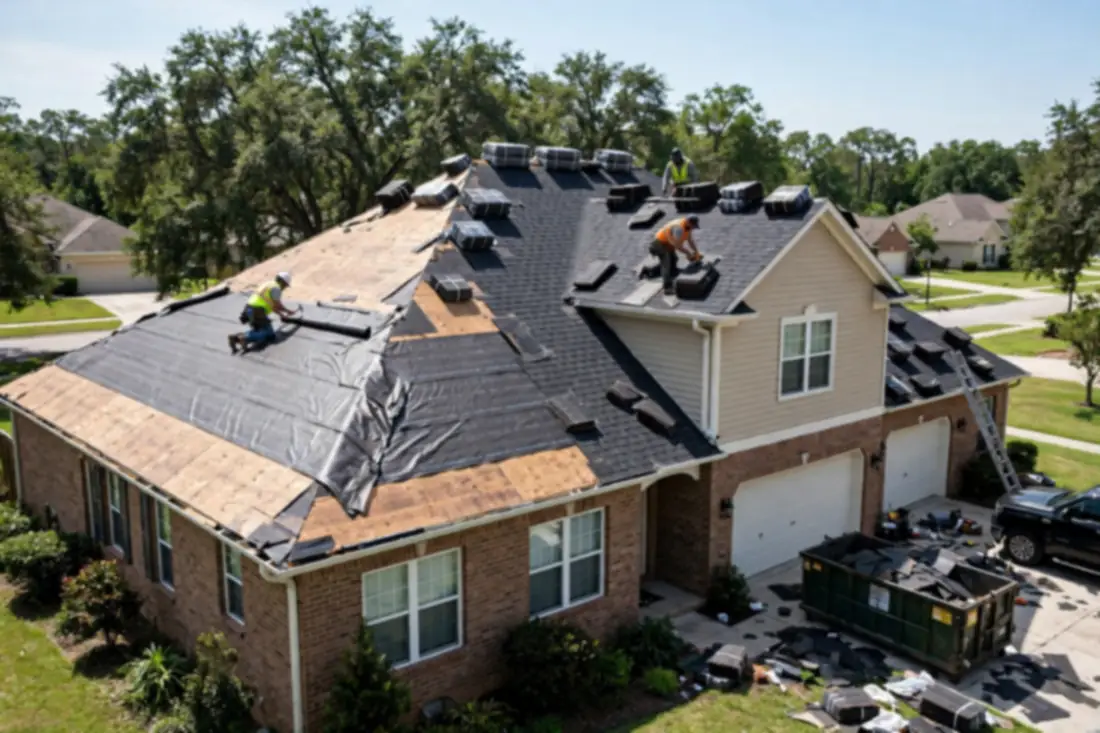
Full tear-off and re-roofing for Houston homes whose shingles have reached the end of their service life — deck inspection, modern underlayment, and a roof built for Gulf storms and Texas heat.
Explore Roof Replacement →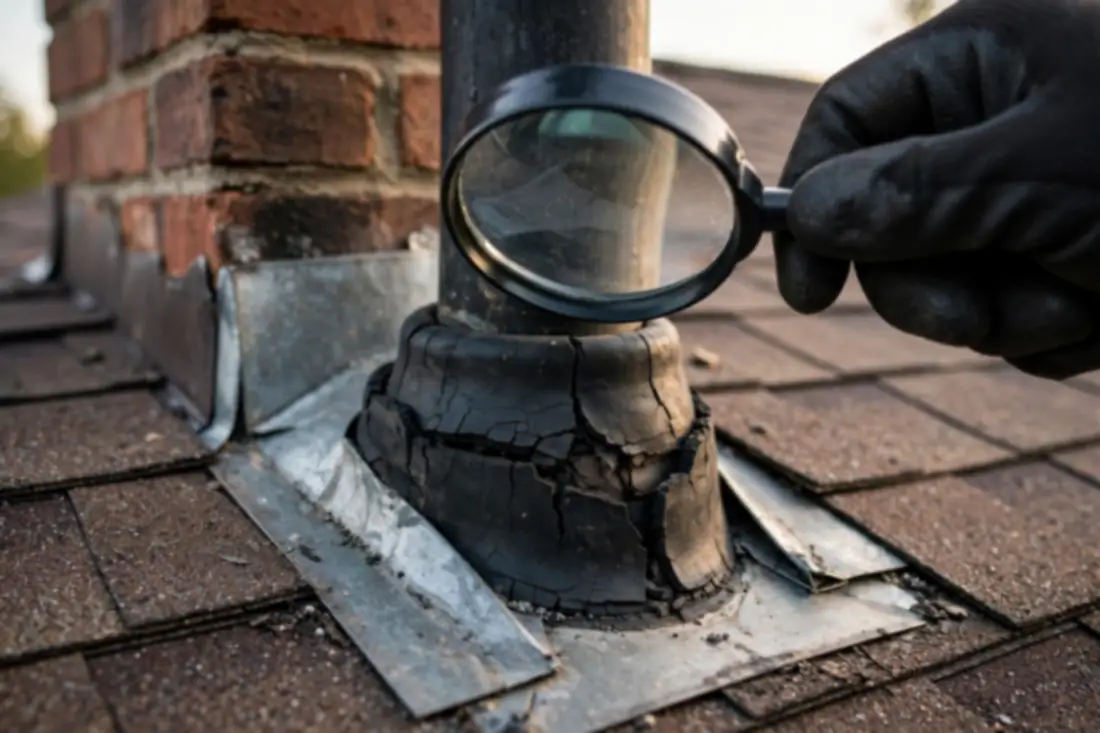
Attic-first leak detection for Houston homes — the stain traced to the failed boot, flashing, or seam above it, then repaired at the source layer, not at the symptom.
Explore Roof Leak Repair →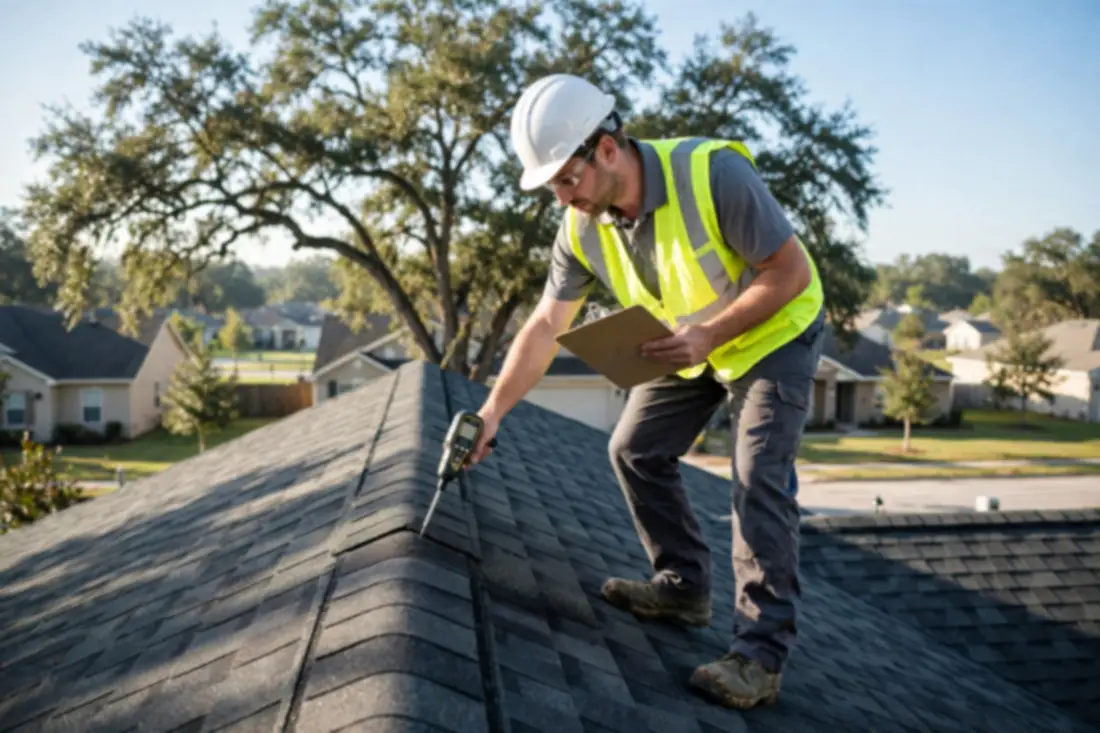
A full condition reading of your roof — surface, flashing, deck, attic, and ventilation — with photographs, findings by slope, and an honest remaining-life estimate in writing.
Explore Roof Inspection →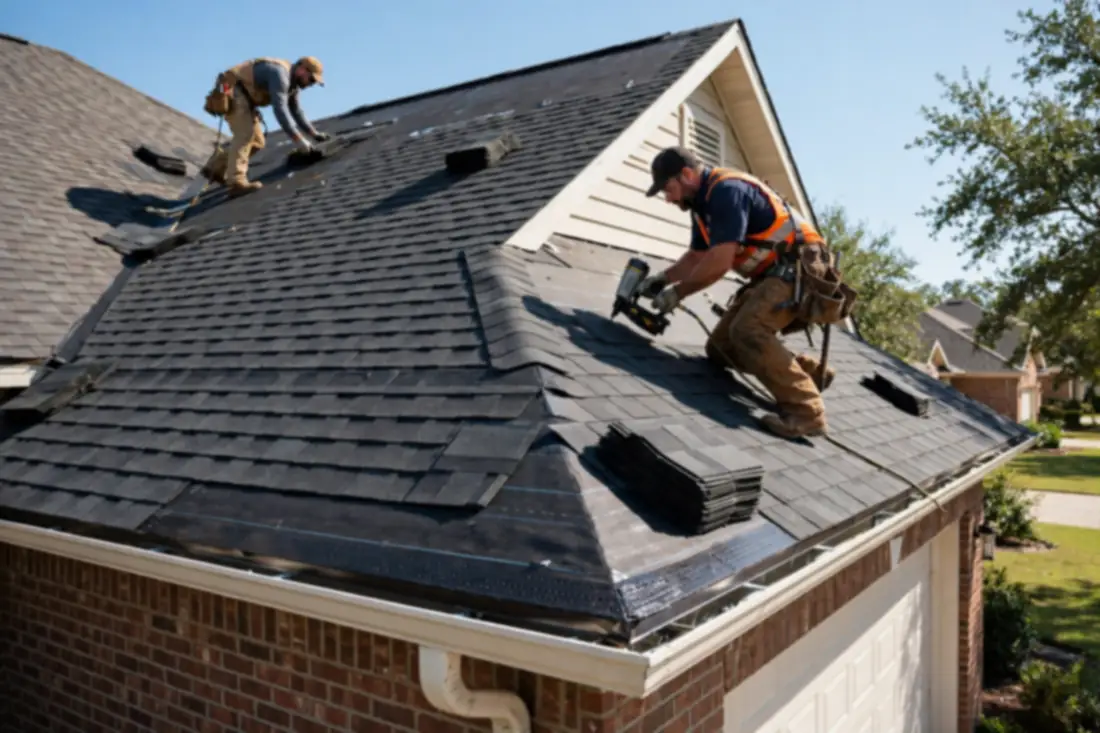
Architectural asphalt shingle roofing installed as a complete system — leak barrier, underlayment, flashing, and ventilation — matched to Houston heat, humidity, and storm wind.
Explore Shingle Roofing →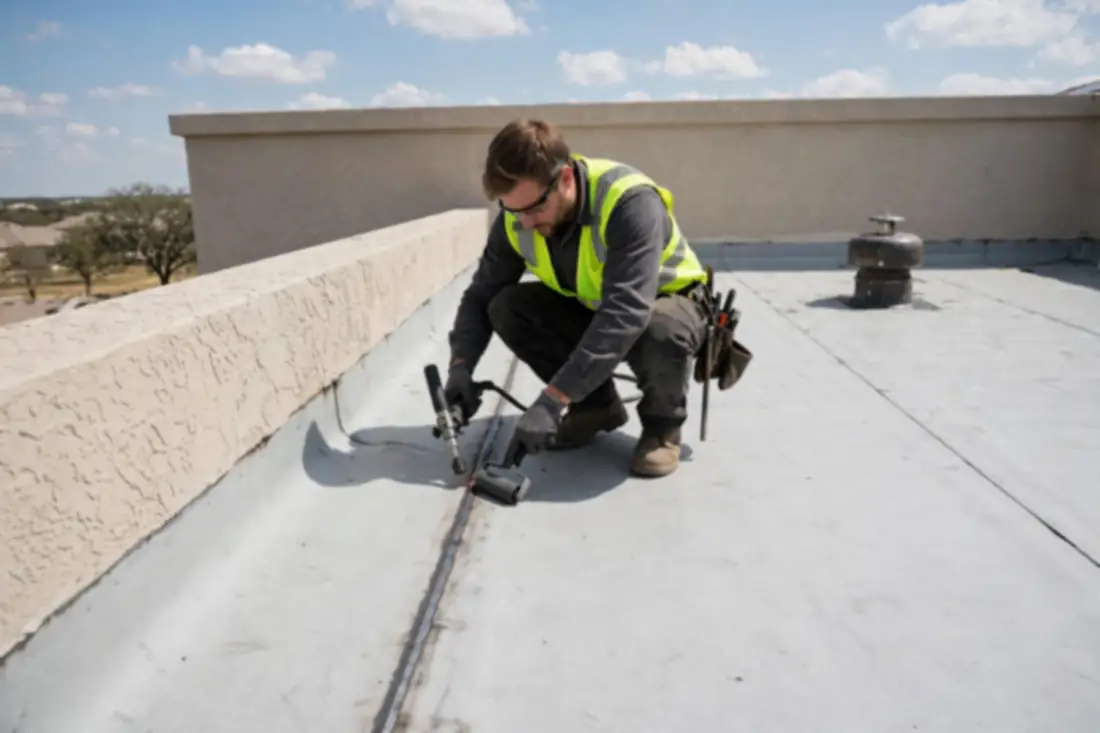
Membrane flat and low-slope roofing for Houston homes and additions — seams, drains, and ponding handled first, because flat roofs live or die by their drainage.
Explore Flat Roofing →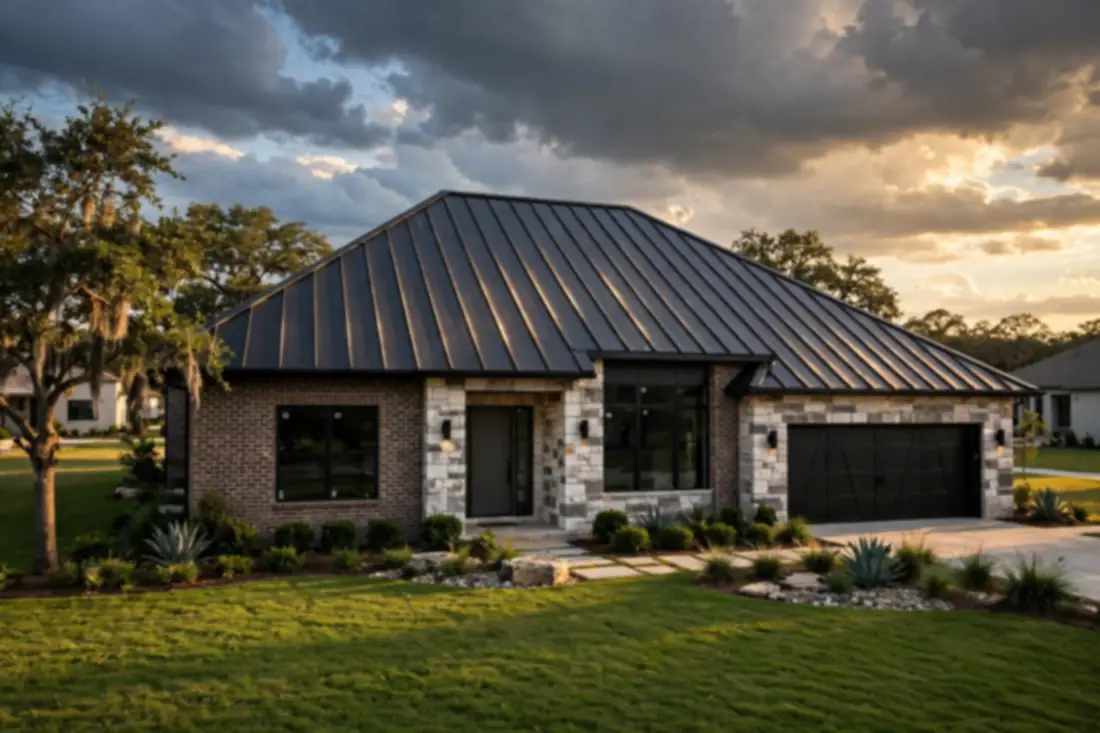
Standing seam and metal shingle roofing for Houston homes — panels detailed for Gulf wind, summer heat reflection, and decades of service with minimal upkeep.
Explore Metal Roofing →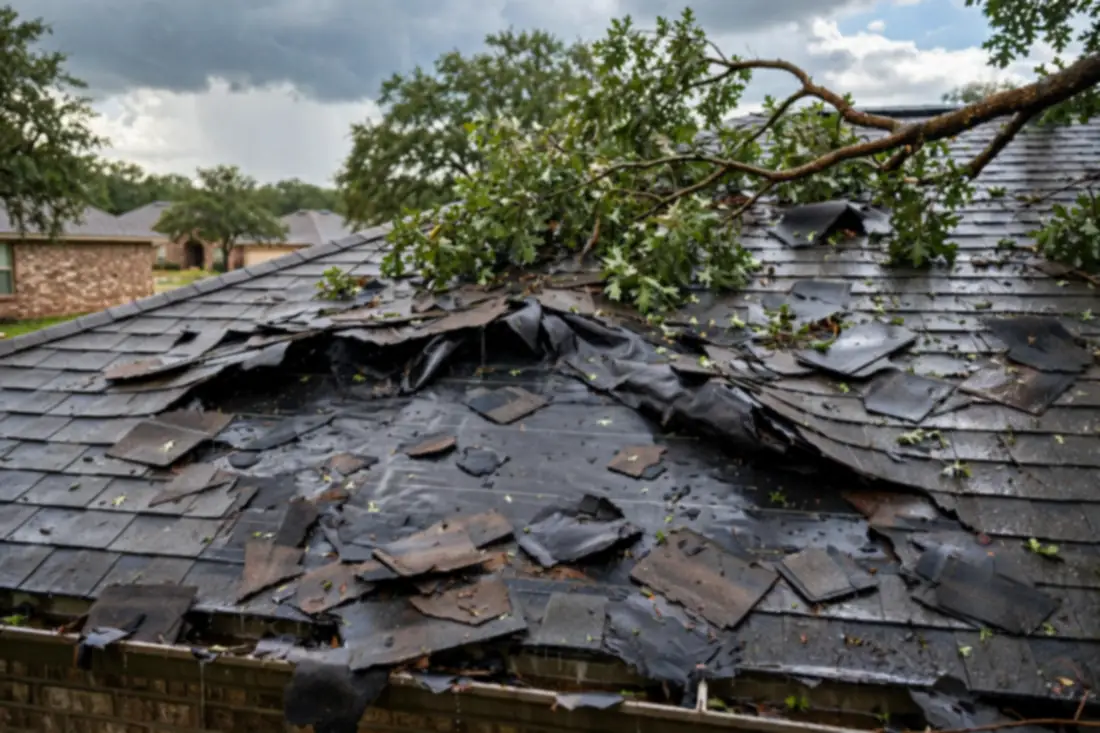
After the wind: storm-torn shingles, limb punctures, and lifted seals across Houston documented properly, stabilized, and repaired as a system — not just the hole you can see.
Explore Storm Damage Roof Repair →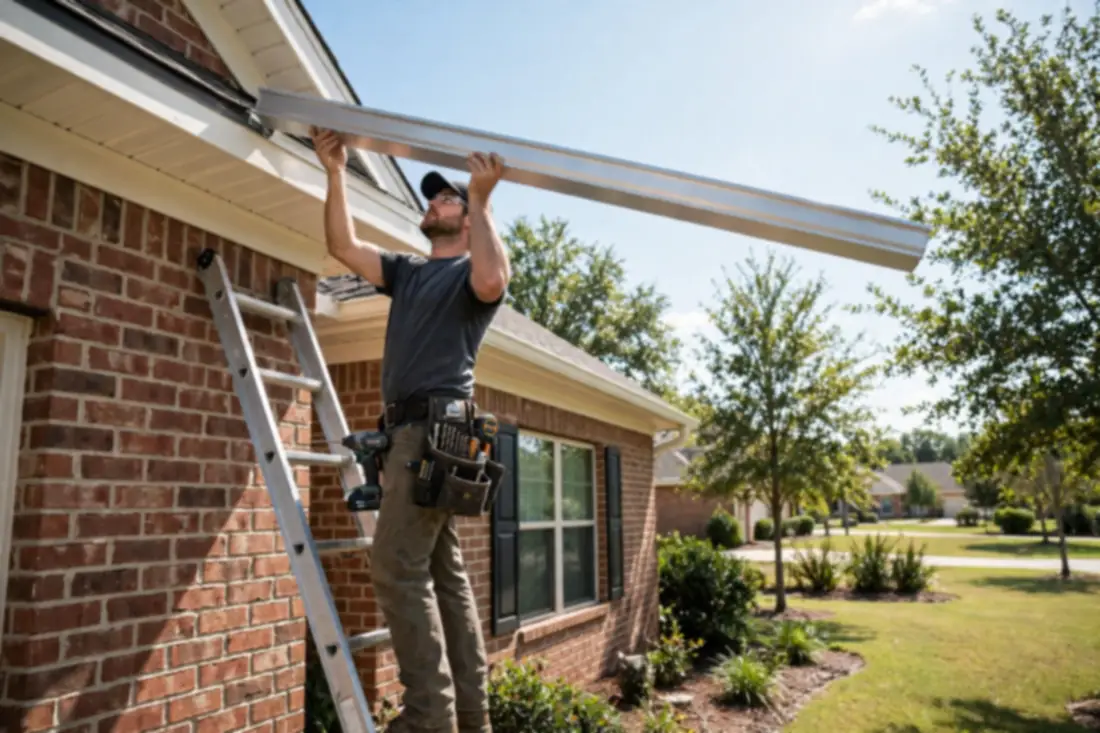
Seamless gutters sized to your roof and Houston's rain rates, pitched to actually drain, hung on sound fascia, and discharged well away from the foundation.
Explore Gutter Installation →Inside the house: move belongings out of the water's path, catch drips in a container with a towel in the bottom to stop splashing, and photograph everything. If a ceiling bulges, it is holding pooled water. Then call and describe where the water shows and when it started.
No. Wet roofs are among the most dangerous surfaces in home life, and the diagnosis does not need it. Contain the water inside, document, and let the crew work the roof in safe conditions.
A properly installed tarp is a bridge of days to a few weeks while the permanent repair is scheduled — not a season's solution. Sun and wind degrade it, and the opening beneath it still needs its real repair.
It has downgraded to urgent. The opening is still there, sized for the next storm, and the wet decking is not drying in Houston humidity. Get the diagnosis scheduled while the evidence is fresh.
The line is staffed Mon–Fri 7 AM–10 PM, Sat 8 AM–10 PM, and Sun 7 AM–9 PM Central. Emergencies that begin outside those hours should be contained inside the house — buckets, plastic, photographs — and called in first thing.
Mon–Fri 7 AM–10 PM · Sat 8 AM–10 PM · Sun 7 AM–9 PM Central. One call connects you with a local roofing professional.