A stain with a schedule
A spot that appears or darkens only in hard rain, only in wind from one direction, or only in long rains is telling you the entry type — driven-rain details, overwhelmed valleys, and slow seeps each keep their own hours.
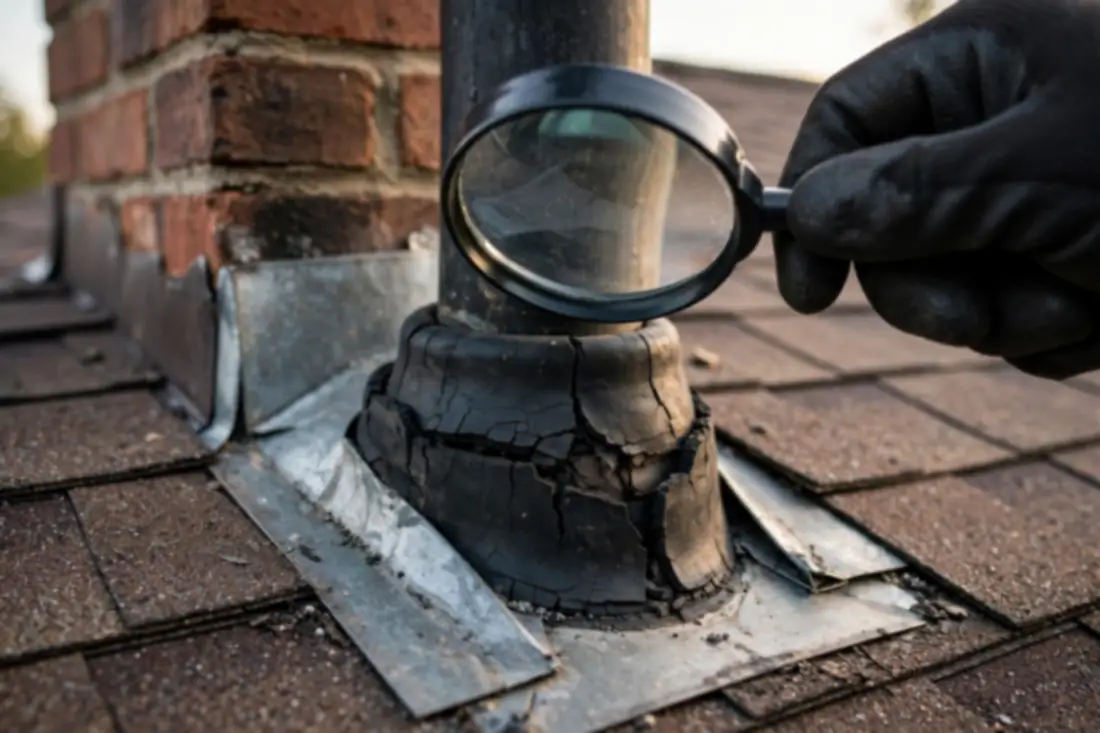
Attic-first leak detection for Houston homes — the stain traced to the failed boot, flashing, or seam above it, then repaired at the source layer, not at the symptom.
A roof leak is a mystery with a wet signature. The water shows up in the living room, but it got in somewhere else — at a boot, a valley, a flashing joint several feet upslope — and traveled along the deck and rafters before it found a seam in your ceiling. Roof leak repair is the discipline of solving that mystery properly: trace the water's path from the attic evidence to the entry point, then repair the failed layer at the source.
It is the service that separates diagnosis from patching. A patch guesses at the spot above the stain; a leak repair proves the entry point first — with attic stains, moisture patterns, and the roof's own details read in sequence — and fixes that. In Houston, where a single afternoon thunderstorm can push gallons through a pinhole opening, guessing wrong is expensive: the stain comes back bigger, and the deck has been soaking in the meantime.
The ProblemThe rubber collar around plumbing vents splits with sun and age — the most common single leak source on Houston roofs, and one of the simplest to fix properly.
 The Fix
Diagnosis first, then the repair matched to the proven entry point:
A spot that appears or darkens only in hard rain, only in wind from one direction, or only in long rains is telling you the entry type — driven-rain details, overwhelmed valleys, and slow seeps each keep their own hours.
Insulation that is dark, matted, or damp to the touch means water has been arriving for a while, whether or not the ceiling shows it yet.
Water arriving at a light fixture or vent fan has traveled along framing or ducting to get there — the entry point is upslope of the show, sometimes rooms away.
Blisters and rot at the fascia and soffit mean water is working at the roof's edge — gutter overflow, drip edge failure, or heavy-rain backup at the eave line.
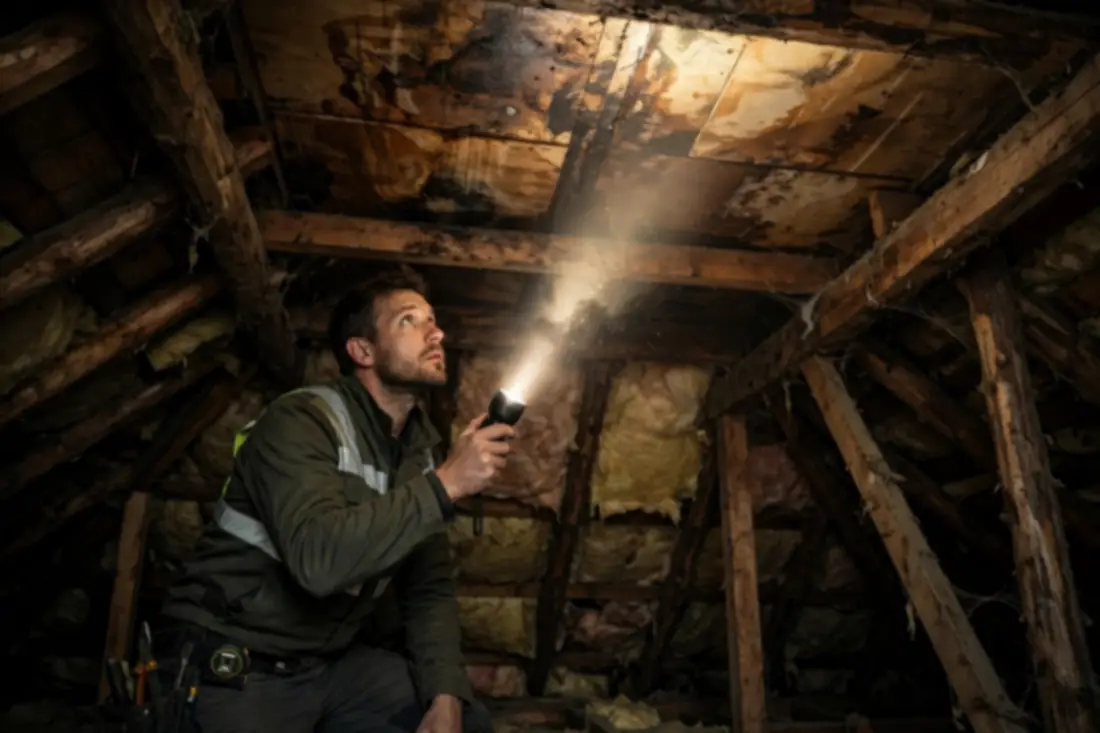
The hunt starts below, not above. In the attic, the roofer reads the evidence the water left: stain trails on the decking, rust lines on nail points, damp insulation, and the low path the water took to the ceiling. That evidence points upslope to a small set of suspects — and in the great majority of Houston leak calls, the suspects are interruptions in the roof field, not the field itself: pipe boots cracked by sun, flashing separated at chimneys and walls, valleys worn or clogged, nail heads exposed by slipped shingles.
On the roof, each suspect is examined and, where the diagnosis stays ambiguous, tested — a controlled hose test, run section by section from the lowest suspect upward, reproduces the leak on demand and settles the question. Only then is anything opened. The repair itself is usually compact: the failed detail rebuilt, the surrounding layers made sound. The value of the service is not the size of the fix; it is the certainty that the fix landed on the cause.
Houston leaks have local habits. The sun cooks pipe boots and sealant on south and west slopes years ahead of their shaded neighbors, so leak calls cluster on the sunny side of the house. Live oak and pine debris dams valleys and the mouths of gutters, holding water against laps that shed fine when clear. And the sheer rate of Gulf rain — inches in an hour — finds openings that gentler climates never test: a lap that holds in drizzle admits a stream in a downpour.
Storm history matters to the hunt. A leak that began after the May 2024 derecho is read as wind-lift until proven otherwise; a leak that predates it follows the aging-detail trail. Local roofers carry that event calendar in their heads, and it shortens the diagnosis on your roof.
Heat cycling works chimney, wall, and skylight flashing loose over the years, opening a vertical path that shingles alone were never meant to close.
Valleys concentrate the whole roof's water into one channel. Worn linings, debris dams, and shingles cut too tight turn that channel inward.
Wind pushes rain upward under laps and ridge details that shed standing water perfectly well. These leaks keep a weather schedule — they only perform in storms.
Diagnosis first, then the repair matched to the proven entry point:
Stain trails, moisture, and daylight points mapped before anyone climbs — the map that points the roof work at the right suspects.
Boots, flashing, valleys, and laps checked in order of likelihood for your roof's age, exposure, and leak schedule.
Where the entry is not obvious, a controlled hose test reproduces the leak section by section until the source confesses.
The failed detail rebuilt with the layers around it made sound — and the result verified against water before the visit ends.
A leak repair proves itself over the next few rains. Watch the old stain: it should not darken, grow, or reappear, through ordinary rain and through at least one real Houston downpour. If it performs again, call back with the details — which rain, which wind — because that new evidence narrows any remaining path.
Ask for the diagnosis in writing: the entry point found, the repair made, and the condition of the neighboring details. Boots and flashing age in families; the note that the other two boots are two years behind the failed one is the kind of sentence that saves a ceiling later.
The stain marks where water exited the ceiling, almost never where it entered the roof. Sealant at the exit's address does nothing to the entry's.
Surface sealant over a failed boot or flashing joint holds for weeks in Texas sun, then splits — while the water it diverted has been soaking the deck around the patch.
A diagnosis made only from the roof's surface is a guess with a ladder. The attic holds the map; professionals read it first.
A leak 'fixed' in a dry week is a hypothesis. The repair earns its name at the next hard rain, and a good roofer tells you to watch for exactly that.
When one pipe boot cracks, its same-age neighbors are on the same clock. Swapping them together, while the crew is up, closes the whole family of leaks at once.
Debris dams turn valleys into ponds against the laps. A spring clear-out removes the most common slow-leak cause in the metro.
Note which rains produce the stain — hard only, wind-driven, every rain. That log is the diagnostician's shortcut on any future call.
Call with the details: which room, which ceiling position, what weather brings it, when it started. Those facts are the roofer's first evidence.
The evidence is read below and above, suspects are examined in order, and a hose test settles anything still ambiguous.
The failed detail is rebuilt with its surrounding layers made sound — usually a compact scope once the source is proven.
The fix is water-checked, and you get the diagnosis and the condition of the neighboring details in writing.
That is exactly what the diagnosis is for. Describe what you are seeing and a local roofer will read the roof and tell you which service the evidence supports — in writing.
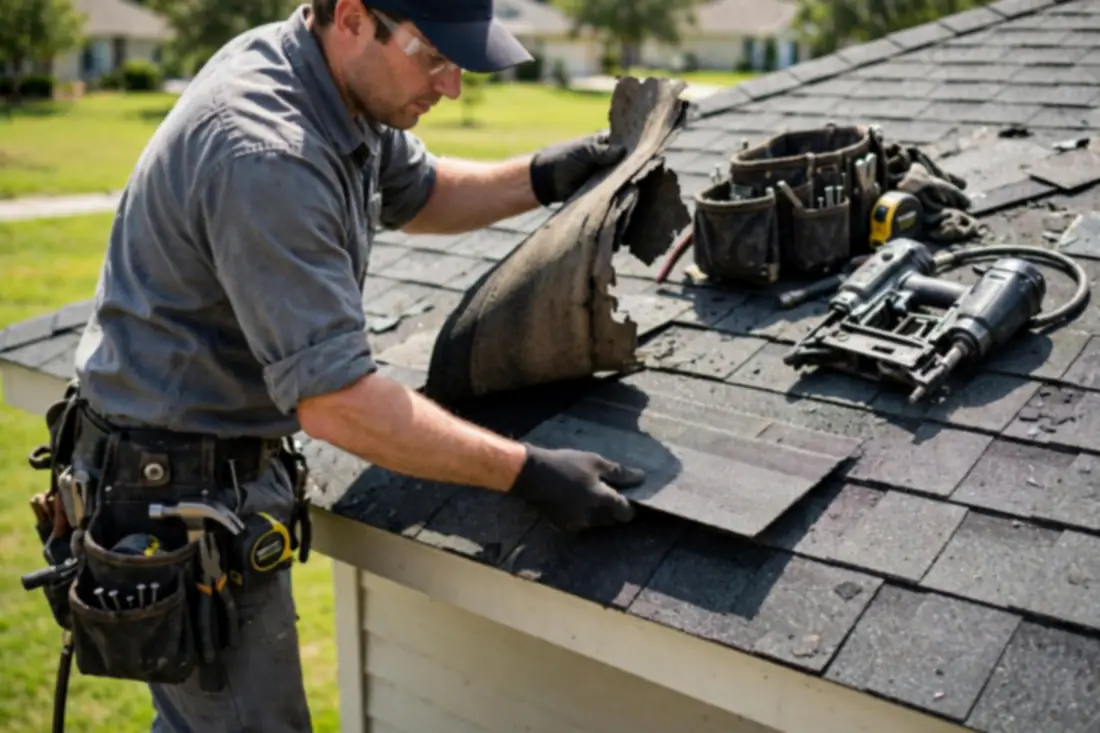
Targeted repairs for the failures Houston roofs actually develop — heat-curled shingles, cracked pipe boots, tired flashing, and storm-lifted edges caught before they reach the ceiling.
Explore Roof Repair →
Full tear-off and re-roofing for Houston homes whose shingles have reached the end of their service life — deck inspection, modern underlayment, and a roof built for Gulf storms and Texas heat.
Explore Roof Replacement →
The storm-night service: roofs opened by wind, limbs, or sudden leaks made weather-tight fast — tarping, temporary sealing, and the permanent repair that follows.
Explore Emergency Roof Repair →
A full condition reading of your roof — surface, flashing, deck, attic, and ventilation — with photographs, findings by slope, and an honest remaining-life estimate in writing.
Explore Roof Inspection →
Architectural asphalt shingle roofing installed as a complete system — leak barrier, underlayment, flashing, and ventilation — matched to Houston heat, humidity, and storm wind.
Explore Shingle Roofing →
Membrane flat and low-slope roofing for Houston homes and additions — seams, drains, and ponding handled first, because flat roofs live or die by their drainage.
Explore Flat Roofing →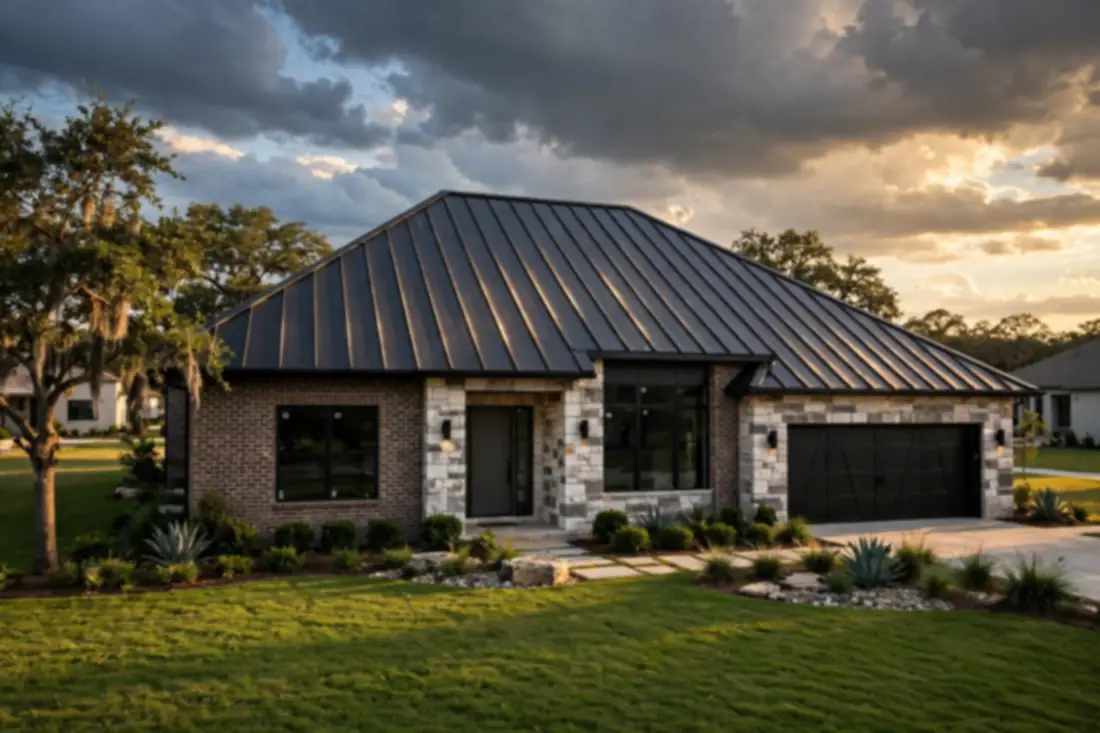
Standing seam and metal shingle roofing for Houston homes — panels detailed for Gulf wind, summer heat reflection, and decades of service with minimal upkeep.
Explore Metal Roofing →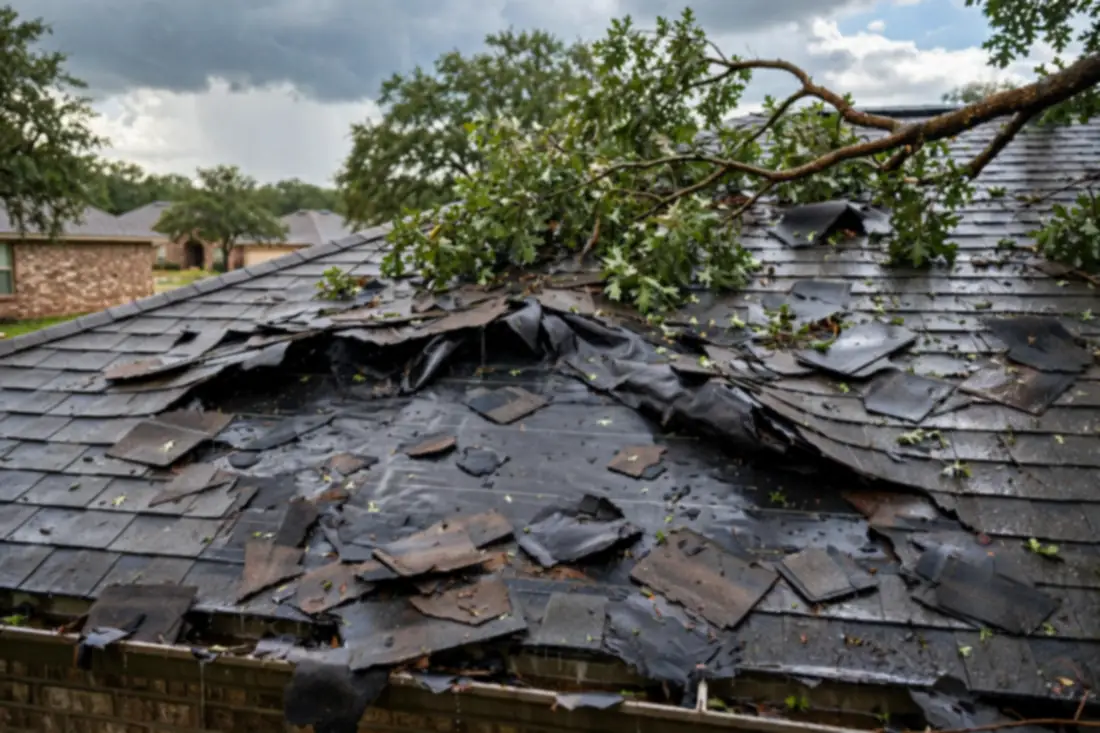
After the wind: storm-torn shingles, limb punctures, and lifted seals across Houston documented properly, stabilized, and repaired as a system — not just the hole you can see.
Explore Storm Damage Roof Repair →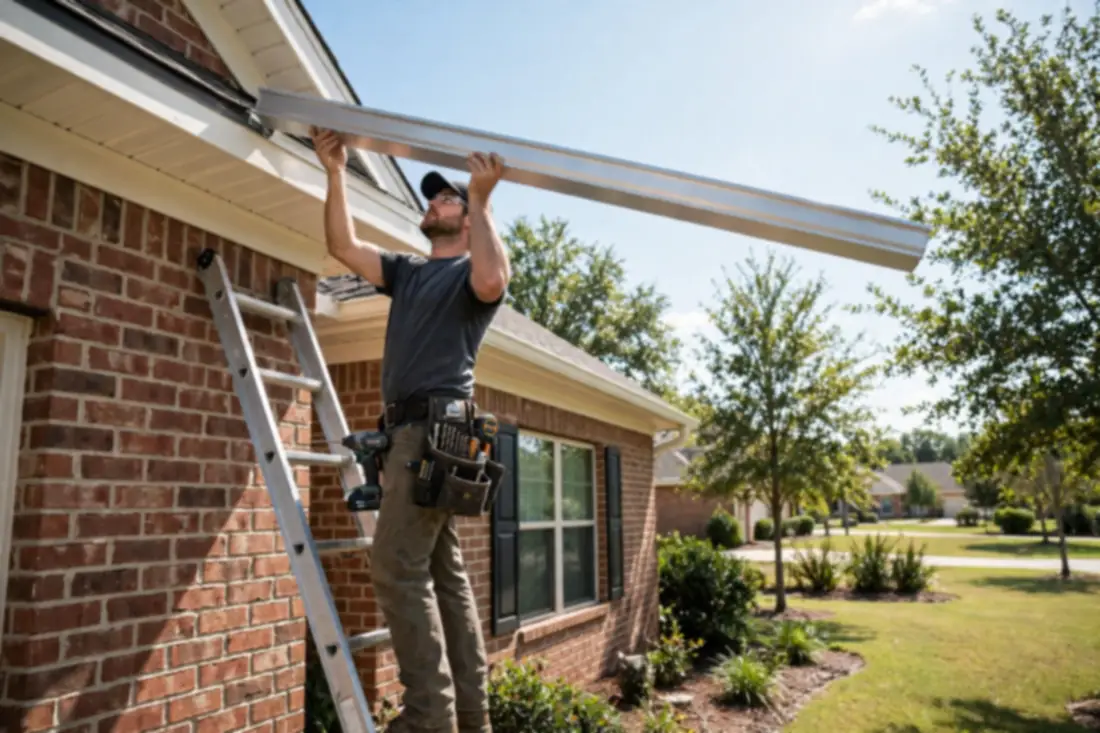
Seamless gutters sized to your roof and Houston's rain rates, pitched to actually drain, hung on sound fascia, and discharged well away from the foundation.
Explore Gutter Installation →Because the entry is a lap, seam, or detail that sheds ordinary rain but is overwhelmed or wind-driven in a downpour. Houston's rain rates test openings that would stay silent in gentler weather — which is also the clue that points the diagnosis at the right detail.
Water runs along decking and rafters from its entry point to the low seam where it exits your ceiling — often several feet, sometimes rooms, away. The roofer works at the entry; the stain is only the exit's address.
In most cases, yes. Attic evidence narrows the suspects, surface examination tests them in order, and a hose test settles the rest. Opening the roof is the last resort of a diagnosis, not the first step.
A straightforward case — a cracked boot, a separated flashing run — is often proven within the first visit's examination. Intermittent, wind-scheduled leaks can take the hose test and occasionally a follow-up after the next storm's evidence.
The leak stops; the stain remains until the drywall is confirmed dry, then sealed and painted. Cosmetics come last, after the structure is dry — painting early seals moisture in.
Mon–Fri 7 AM–10 PM · Sat 8 AM–10 PM · Sun 7 AM–9 PM Central. One call connects you with a local roofing professional.