Granules where they should not be
Grit in the gutters and at the downspouts is the wear surface leaving. Steady loss after the roof's early years means the asphalt beneath is exposed and aging fast in the sun.
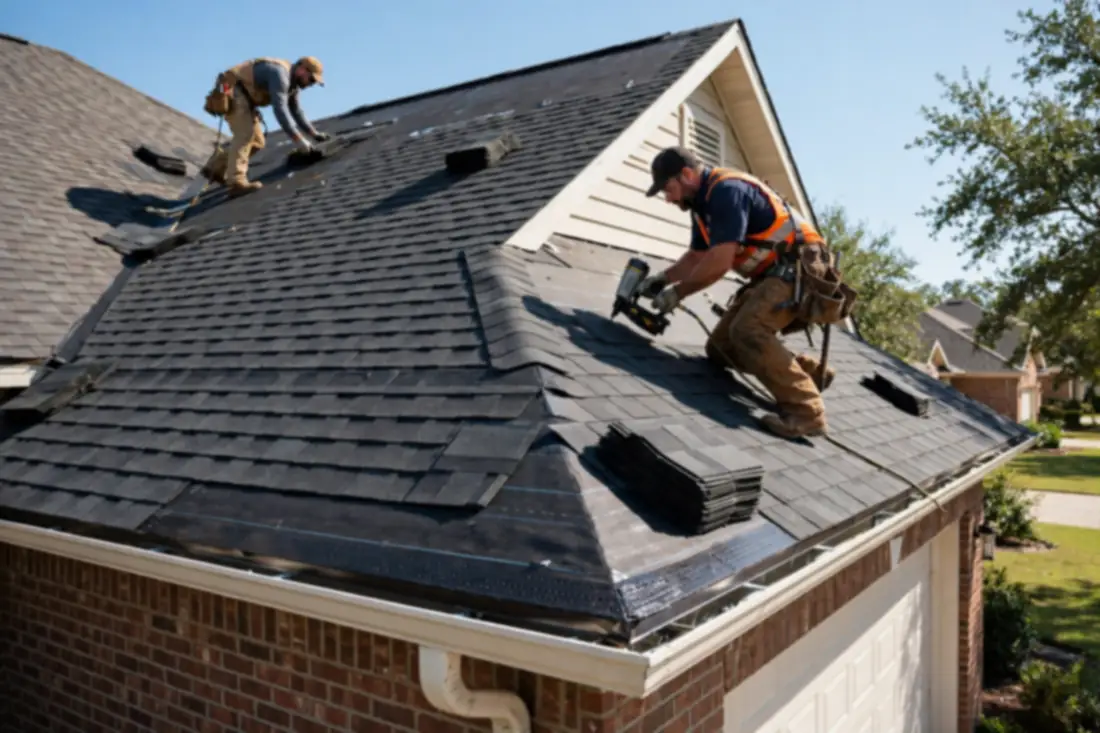
Architectural asphalt shingle roofing installed as a complete system — leak barrier, underlayment, flashing, and ventilation — matched to Houston heat, humidity, and storm wind.
Asphalt shingles roof the overwhelming majority of Houston homes, and for good reason: they handle the heat, shed the rain, and take the occasional hail cell in stride — when they are installed as a system. Shingle roofing, done properly, is not a product but an assembly: leak barrier at the vulnerable lines, underlayment across the deck, starter courses that seal the eave edge, the shingle field itself, flashing woven in at every interruption, and a ridge that vents the attic beneath it all.
The failures homeowners blame on shingles usually belong to the assembly — the skipped leak barrier in the valley, the reused flashing, the attic cooking the field from below. The local professionals in this network install and renew shingle roofs as systems, with the details chosen for this climate: algae-resistant granules for the humid shade, strong sealant bonds for storm wind, and ventilation sized for a Texas attic in August.
The ProblemSun and attic heat together embrittle the mat until granules shed and edges curl — the whole slope finishing at once rather than in spots.
 The Fix
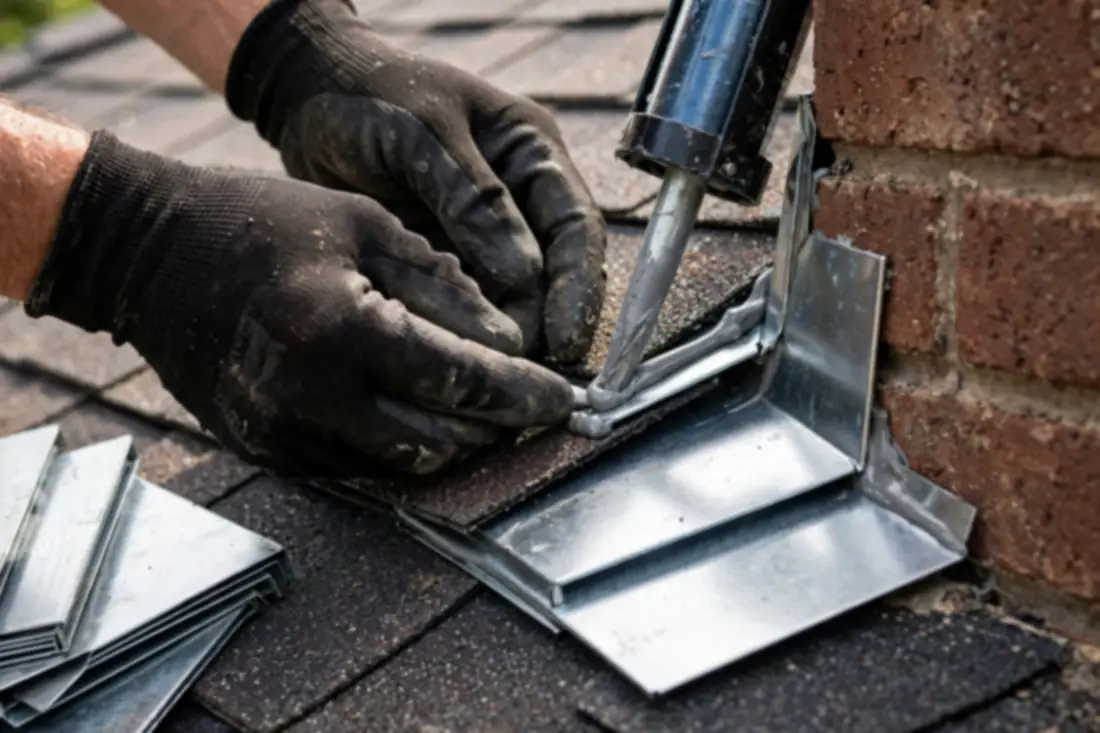
Shingles perform as an assembly — each layer answers a known failure:
Grit in the gutters and at the downspouts is the wear surface leaving. Steady loss after the roof's early years means the asphalt beneath is exposed and aging fast in the sun.
Shingles that lift, cup, or curl under have lost the flexibility to lie flat and seal. They catch wind, crack underfoot, and mark a material spending its last flexibility.
Algae staining is cosmetic — the shingles are not leaking — but it maps exactly where moisture lingers longest, which is where the details around it age fastest.
A sound shingle system keeps its pieces in unremarkable weather. Shingles in the yard after a routine thunderstorm mean the sealant system has retired before the shingles have.
A modern architectural shingle is a laminated mat — fiberglass core, asphalt, and a granule surface that carries the color and shields the asphalt from ultraviolet light. Its rated life assumes the whole assembly around it works: the granules stay on, the seals bond course to course, the flashing keeps the interruptions dry, and the attic below stays ventilated so heat does not cook the mat from beneath. Remove any one of those and the same shingle ages at double speed.
Installation is where the assembly is won. Courses must align so every fastener is covered by the course above; nails land in the reinforced strip, the right count per shingle for the wind expectations; starter courses seal the vulnerable eave edge; and shingles are woven — never simply surfaced — through valleys and against walls. It is unglamorous, checkable work, and it is exactly what a walkthrough of a finished shingle roof should be able to show you.
Houston writes four demands on a shingle roof. Heat: summer surfaces past 150 degrees, aging asphalt and punishing any attic that cannot breathe. Humidity: algae and mold pressure on every shaded slope, answered by algae-resistant shingle lines. Wind: Gulf storms and derecho gusts hunting the eave and rake edges, answered by sealant quality, fastener counts, and starter-course discipline. Rain rate: downpours that test every lap and valley at volumes gentler climates never see.
The housing stock adds its own notes. Master-planned suburbs carry steep, complex roofs — hips, valleys, dormers, turrets — where the shingle work is mostly detail work. Older inner-loop homes carry lower pitches where shingle selection and underlayment choices matter more, and where some slopes honestly belong to a different material conversation, which a good roofer will start rather than force shingles onto a slope that cannot shed with them.
When the factory sealant strip ages out, storm wind becomes the roof's editor, removing pieces slope by slope.
The shingle field can outlive its valleys and flashing by years — a roof that looks sound from the street and leaks at its seams.
Shaded slopes hold dew and rain longest, feeding the streaks and keeping laps damp — cosmetic today, aging accelerant always.
Shingles perform as an assembly — each layer answers a known failure:
Shingle line, underlayment, and barrier choices matched to your slopes — including an honest word where a low slope wants a different material.
Starter, field, flashing, and ridge installed as one assembly by the crew that scoped it, with fasteners placed and counted to the wind standard.
Soffit and ridge airflow checked and corrected as part of the job, so the assembly's underside works too.
The completed roof walked and photographed, materials recorded, and the condition notes for its details handed over with the paperwork.
A fresh shingle roof sheds a small amount of loose granule in its first rains — that is manufacturing excess, not wear. Seals bond fully across the first warm season; a spring-installed Houston roof is typically sealed tight by the time hurricane season peaks, which is one reason spring is the classic season for this work.
Keep the paperwork with the home records: shingle line, color, install date, and the scope as built. And keep the rhythm light — valleys cleared, limbs back, a professional look after major storms. The system was built to be boring for a long time; those small habits are how it stays that way.
Color and profile are the visible tenth. The granule package, sealant quality, and the underlayment system beneath decide the roof's actual life.
A second layer hides the deck, traps heat, and doubles the tear-off waiting at the end. In this climate it spends the new roof's life on the old roof's debts.
Flashing is a small share of a project and the source of most leaks. New shingles against fifteen-year-old flashing is a new field with old holes.
Below their shedding pitch, shingles become decoration over underlayment. The honest scope changes material there — and a roofer who says so is protecting the house.
Attic airflow is the shingle's life-support. Keep soffit vents unblocked by insulation and paint, and let the ridge do its work.
Leaf and needle mats hold moisture against the granules and feed the algae. Clear slopes and valleys as part of seasonal yard work.
A quick ground-level look after big wind — pieces in the yard, edges lifted — catches seal failure while it is still a small repair.
Slopes, pitch, attic, and exposure read first; shingle line and system layers matched to what the roof actually faces.
The full assembly in writing — tear-off, deck work, barrier, underlayment, shingles, flashing, ventilation — before any commitment.
Old roof off, deck corrected, system assembled course by course. Most homes complete in one to three working days.
The finished roof walked end to end, photographed, and documented for your home file.
That is exactly what the diagnosis is for. Describe what you are seeing and a local roofer will read the roof and tell you which service the evidence supports — in writing.
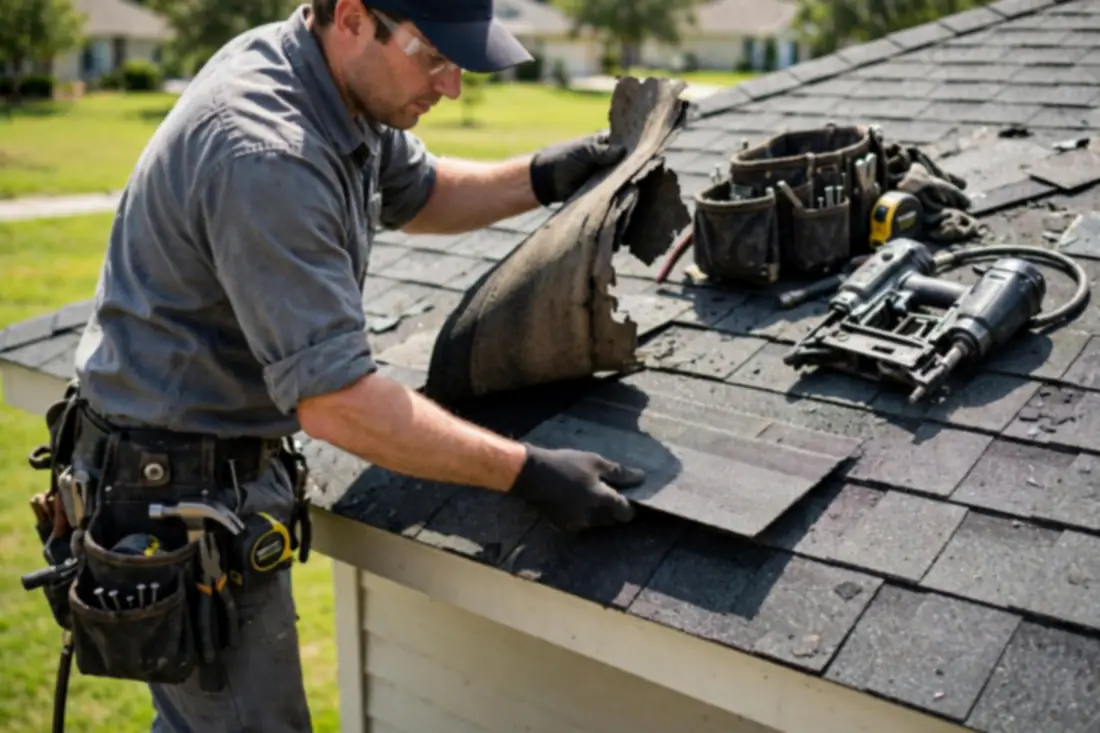
Targeted repairs for the failures Houston roofs actually develop — heat-curled shingles, cracked pipe boots, tired flashing, and storm-lifted edges caught before they reach the ceiling.
Explore Roof Repair →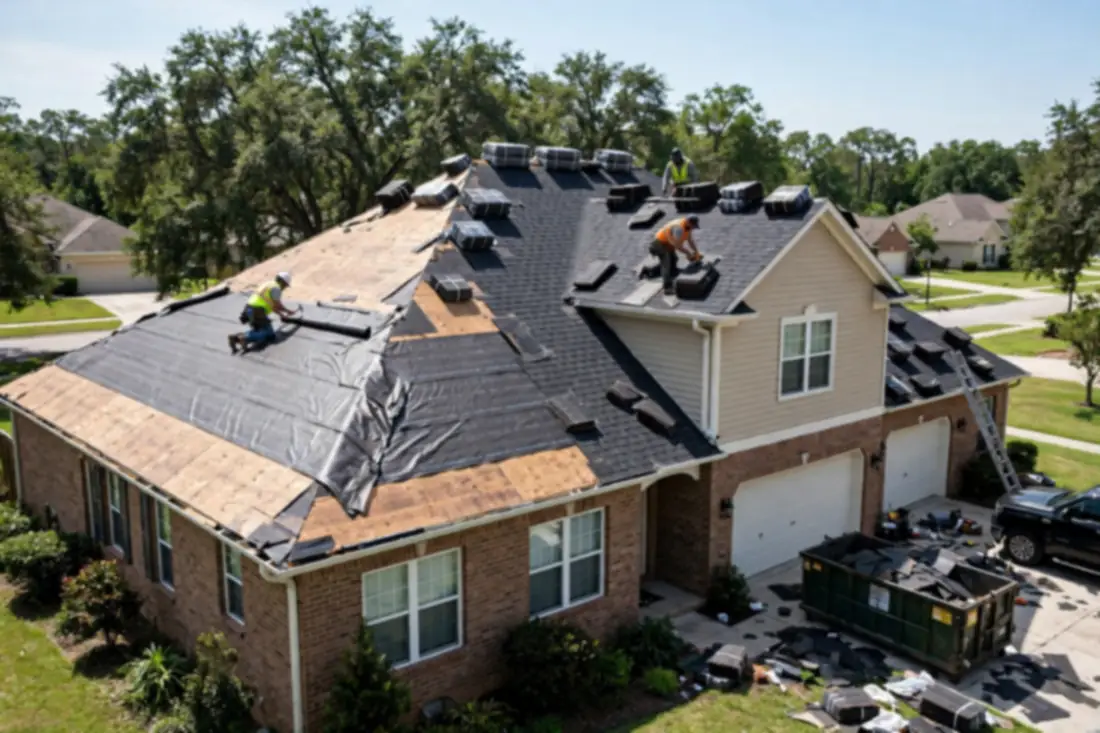
Full tear-off and re-roofing for Houston homes whose shingles have reached the end of their service life — deck inspection, modern underlayment, and a roof built for Gulf storms and Texas heat.
Explore Roof Replacement →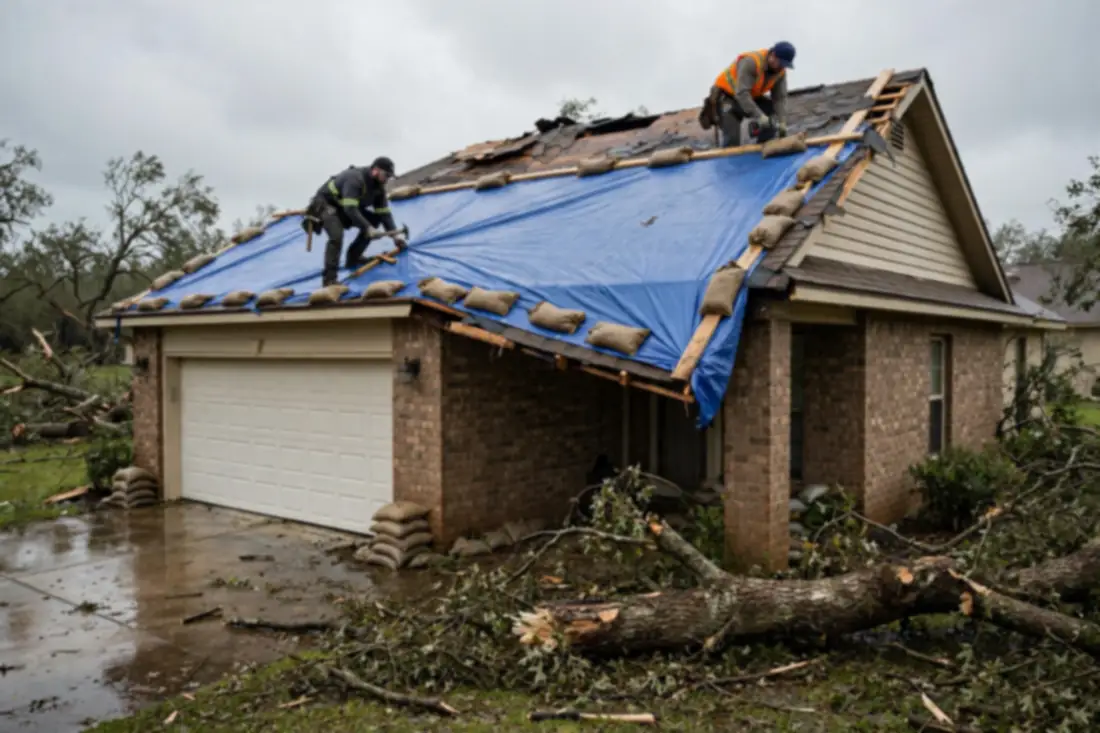
The storm-night service: roofs opened by wind, limbs, or sudden leaks made weather-tight fast — tarping, temporary sealing, and the permanent repair that follows.
Explore Emergency Roof Repair →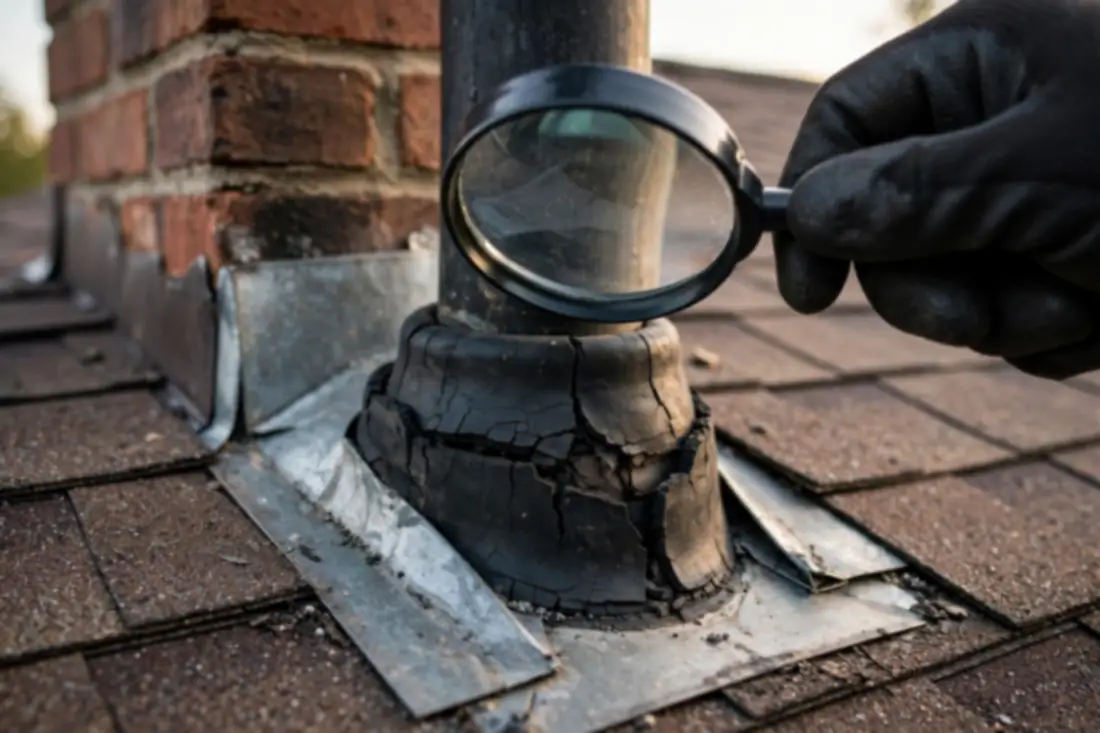
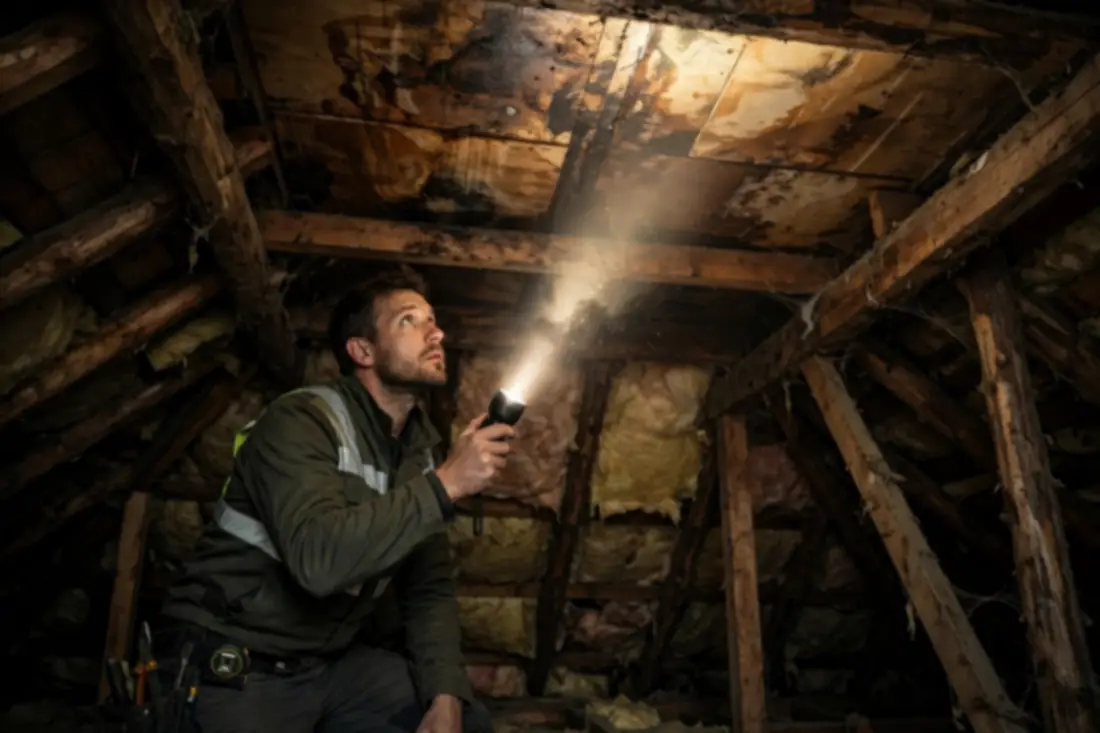
Attic-first leak detection for Houston homes — the stain traced to the failed boot, flashing, or seam above it, then repaired at the source layer, not at the symptom.
Explore Roof Leak Repair →
A full condition reading of your roof — surface, flashing, deck, attic, and ventilation — with photographs, findings by slope, and an honest remaining-life estimate in writing.
Explore Roof Inspection →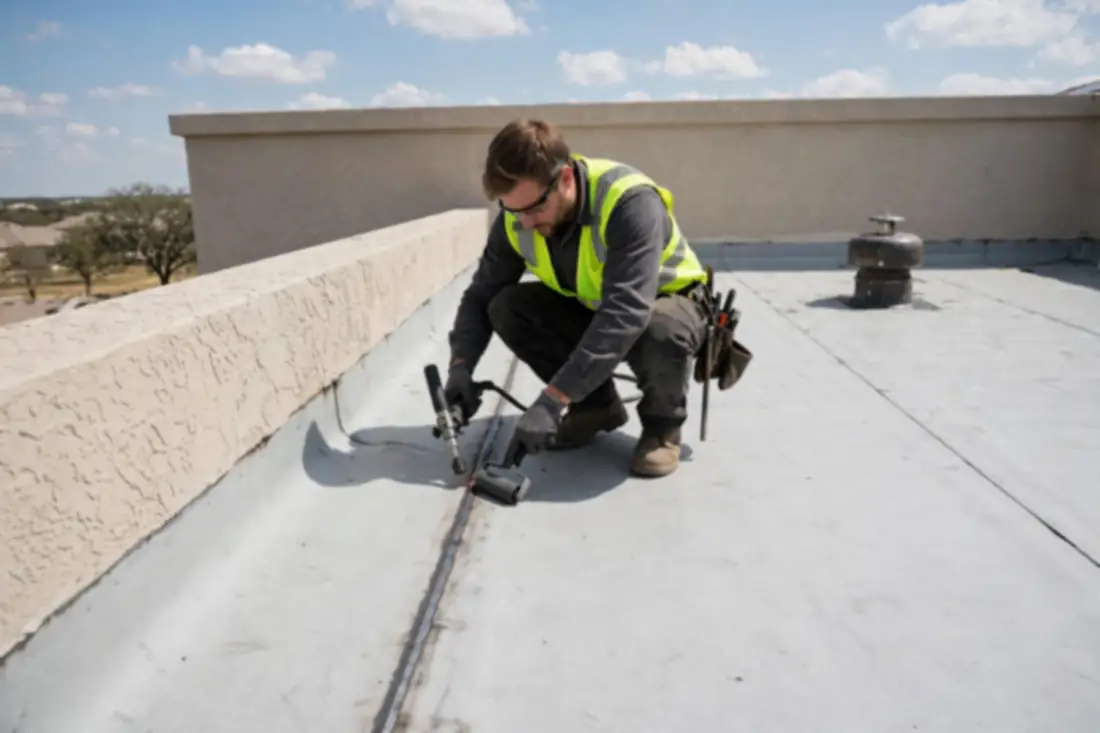
Membrane flat and low-slope roofing for Houston homes and additions — seams, drains, and ponding handled first, because flat roofs live or die by their drainage.
Explore Flat Roofing →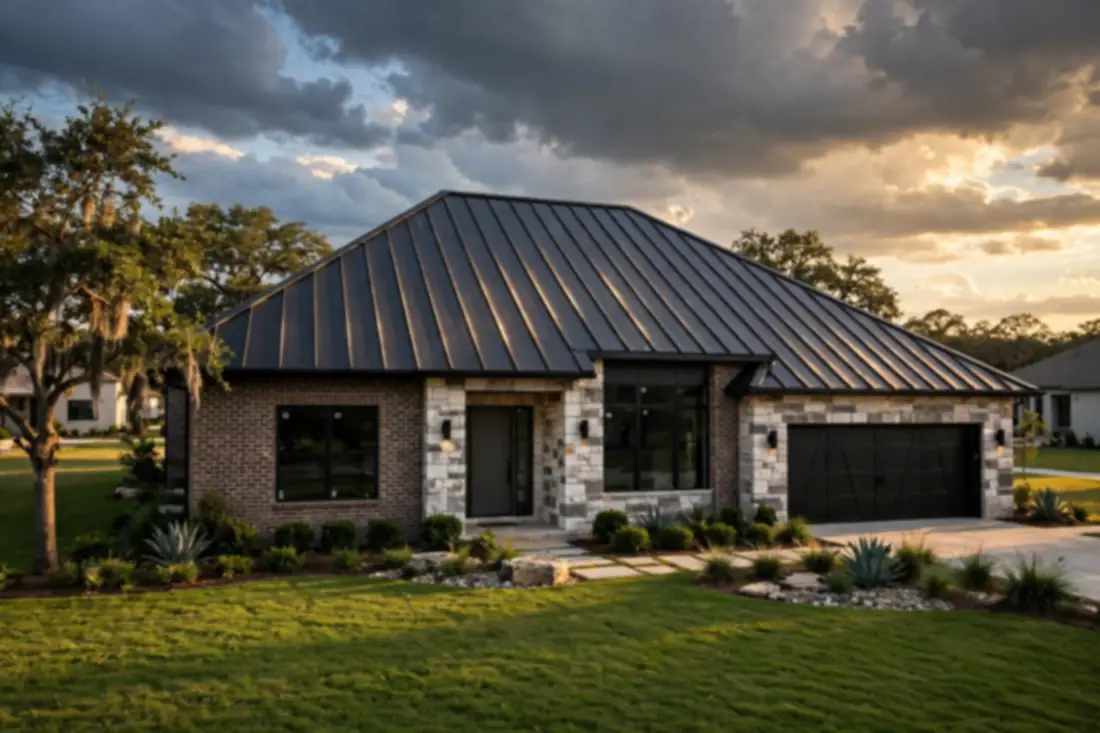
Standing seam and metal shingle roofing for Houston homes — panels detailed for Gulf wind, summer heat reflection, and decades of service with minimal upkeep.
Explore Metal Roofing →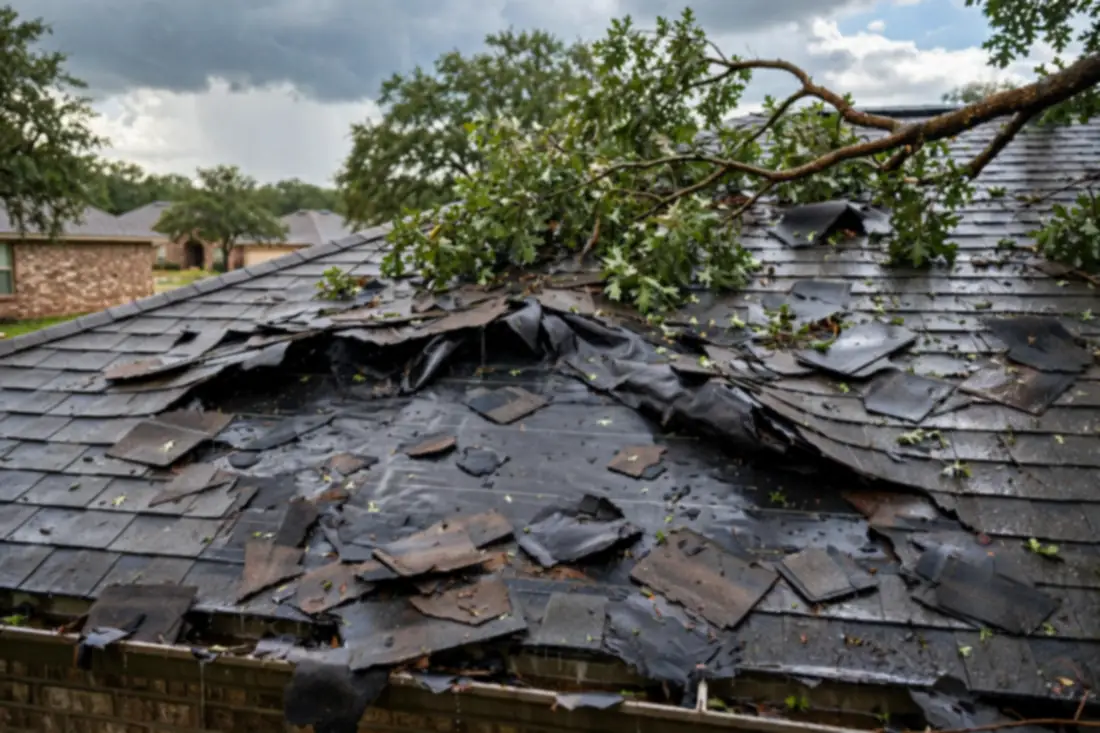
After the wind: storm-torn shingles, limb punctures, and lifted seals across Houston documented properly, stabilized, and repaired as a system — not just the hole you can see.
Explore Storm Damage Roof Repair →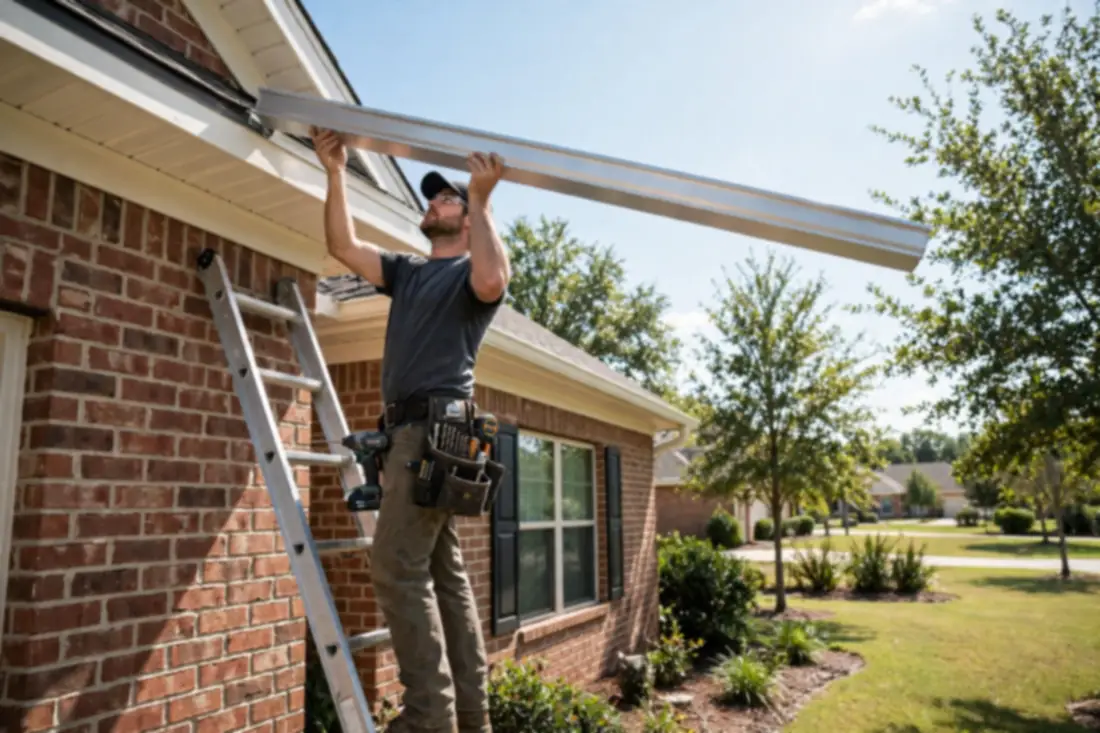
Seamless gutters sized to your roof and Houston's rain rates, pitched to actually drain, hung on sound fascia, and discharged well away from the foundation.
Explore Gutter Installation →Shorter than the number on northern packaging — heat and humidity here spend shingles faster. Architectural lines commonly serve in the range of eighteen to twenty-five years in this climate when the assembly around them — underlayment, flashing, ventilation — was done properly.
For Houston, the laminated architectural lines are the standard recommendation: thicker mats, stronger wind performance, and longer service in heat. Three-tab belongs to an earlier era of this market and ages visibly faster on Texas sun.
Shingles whose granules carry copper or zinc compounds that discourage the algae growth behind the black streaks on humid, shaded slopes. In Houston they are close to a default choice for north-facing and tree-covered roofs.
No — shingles shed water by overlap, and below a minimum slope water lingers and backs under laps. Low-slope sections belong to membrane materials; a proper scope says so and designs the transition between the two.
Somewhat: lighter colors reflect more heat at the surface, though attic ventilation matters far more to the roof's temperature and the home's cooling load. Choose the color for the house; fix the ventilation for the roof.
Mon–Fri 7 AM–10 PM · Sat 8 AM–10 PM · Sun 7 AM–9 PM Central. One call connects you with a local roofing professional.