Obvious openings
Missing sections, a limb through the deck, lifted and folded shingles, a ridge cap displaced. These announce themselves — and they are triage, not the whole inventory.
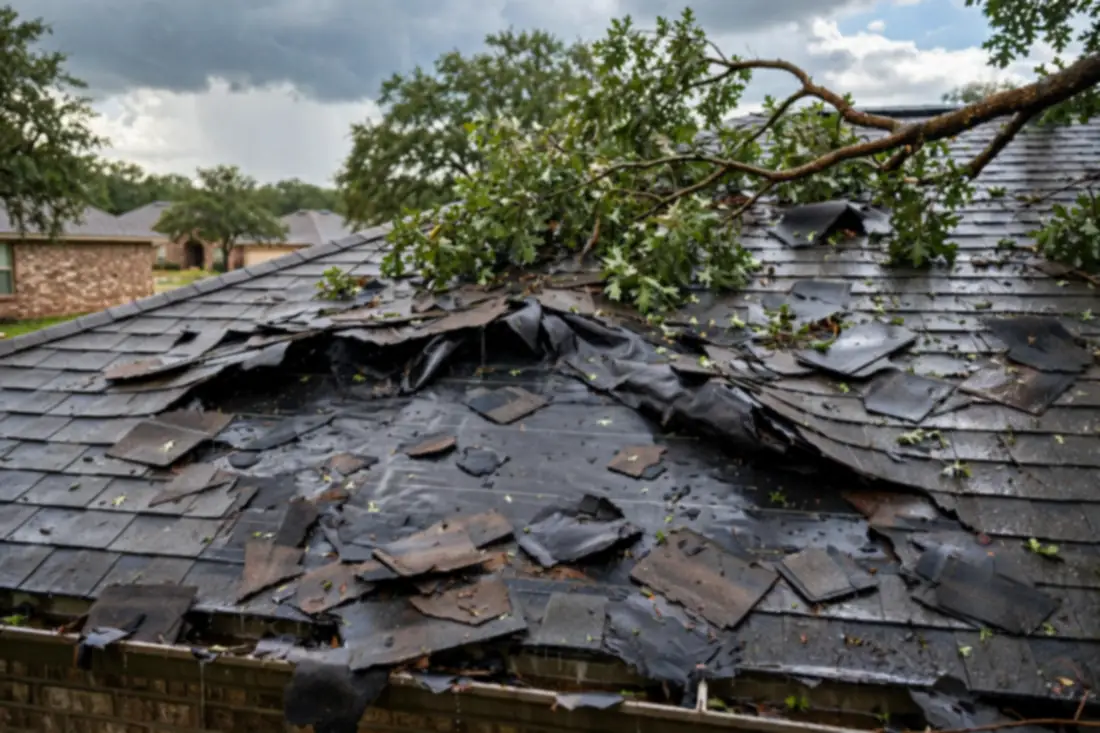
After the wind: storm-torn shingles, limb punctures, and lifted seals across Houston documented properly, stabilized, and repaired as a system — not just the hole you can see.
Storm damage is the roof injury with a paper trail. Long after the wind drops, the work of a storm repair is twofold: restore the roof as a system — including the damage that hides — and create the photographic record that documents what the storm did, when it did it, and what the restoration involved. Homeowners who get both halves right come out of storm season with a sound roof and a clean file; those who get only the patch often meet the same slope again at the next storm.
Houston writes more storm chapters than almost any metro in America: the May 2024 derecho, Hurricane Beryl that same summer, spring hail cells, and the weekly summer thunderstorms that stall over one neighborhood and spare the next. The local professionals in this network read post-storm roofs the way this city requires — slope by slope, with the specific event's damage signature in mind.
The ProblemTorn-away field and underlayment leave decking — or the attic — open to every following rain, growing the damage daily.
 The Fix
Stabilize, inventory, restore — the storm workflow in its proper order:
Missing sections, a limb through the deck, lifted and folded shingles, a ridge cap displaced. These announce themselves — and they are triage, not the whole inventory.
Every fragment on the ground came from somewhere above. Pieces after a storm mean the field has new gaps, whether or not they are visible from the lawn.
Wind bends shingles back past their breaking point, cracking the mat while leaving the piece lying flat afterward. This hidden damage is the storm's most missed signature — found by hand and eye on the roof, not from the street.
A stain that began with a specific storm is evidence with a date on it. Noting the date, and photographing before anything changes, protects every later conversation.
A storm works a roof in sequence. Wind gets under the eave and rake edges first, breaking sealant bonds course by course as it worries the field; gusts flex shingles until their mats crease; debris arrives as impact — limbs that puncture, branches that scrape granules and crack mats where they drag. Rain then tests every new opening at Gulf rates, and driven rain enters laps that would shed a vertical downpour all day.
A proper post-storm repair therefore has three layers: stabilize any opening against the next rain; inventory the whole roof, not just the loud damage — creased pieces, lifted seals, wounded details, gutter and flashing trauma; and restore as a system, replacing damaged sections woven into the field and renewing the details the storm stressed. The documentation — timestamped photographs before, during, and after — is produced as part of the work, because the storm's file is an asset in every conversation that follows.

Each Houston storm type leaves its own signature, and local roofers read them fluently. Derecho damage runs directional — whole slopes lifted on the windward faces in an hour of straight-line fury. Hurricane damage mixes wind with days of rain and tree impact under saturated canopies. Hail marks its address slope by slope, worst on the faces turned to the cell's path. Even the unnamed summer thunderstorm, stalled and dropping six inches, writes its chapter in overwhelmed valleys and driven-rain leaks at details that hold in ordinary weather.
Timing is local knowledge too. After a regional event, the metro's roofers triage at once — active openings first, then the inventory visits. The homeowner's contribution to that queue is a precise description on the first call: what is open, what fell, what leaks, and the date the damage arrived.
Shingles cracked at the fold line but lying flat: invisible from the ground, failed as a weather surface, and destined to break away in the next blow.
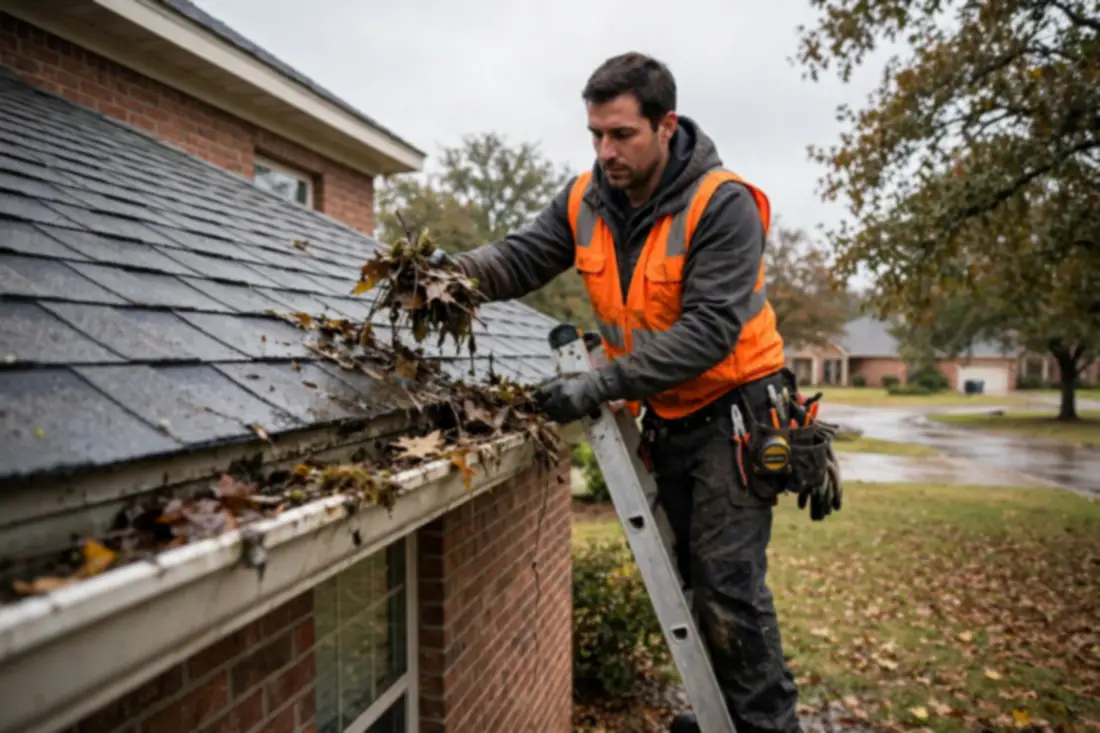
Limbs puncture and scrape in the same event — the hole you see, and the cracked, granule-stripped field around it that you do not.
Flashing lifted, ridge displaced, vents bent — the storm's quieter work at the roof's interruptions, each one a future leak with a head start.
Stabilize, inventory, restore — the storm workflow in its proper order:
Photographs with the storm's date attached — the roof's condition recorded before anything is disturbed.
Every slope and detail read for the event's signature, not only the damage visible from the yard.
Repairs woven into the field and detailed to match, so the restored roof ages as one roof, not as a patchwork.
The roof's post-repair state in writing — what was restored, what was stressed but sound, what to watch at the next storm.
The repaired roof earns its verdict at the next hard rain: old drip points dry, no new stains, seals holding through the first serious wind. Walk the attic after that rain and confirm it. If a stressed detail the inventory marked as sound begins to perform, its documentation is already in your file — the follow-up conversation starts from evidence.
File the whole storm packet with your home records: the date, the photographs, the scope, the report. Storm history is part of a Houston home's story; the next buyer, the next roofer, and future-you will all read it with gratitude.
The storm that took one section stressed every seal on the roof. A patch at the loud spot leaves the quiet damage scheduled for the next event.
Creased shingles and lifted seals are found by hand on the roof. Sidewalk verdicts — in either direction — are theater, not inspection.
Opened and creased damage admits water on the storm's schedule, not yours. The inventory visit belongs in the calm right after the event, while the evidence is fresh and the openings are still small.
Documentation made during the event window is worth many times the same effort later. Photograph before tarps, before repairs, before anything is hauled away.
A spring reading of seals, boots, and edges closes the small failures that storms convert into sections. It is the highest-value hour in Houston roof ownership.
Limbs over the roof are impact damage in waiting. Keep them cut back before the season, not after the event.
Photograph your roof's normal state on a calm day each spring. The 'before' half of a storm file is impossible to create after the storm.
Call with what the storm did: openings, limbs, leaks, and the date. That description triages the visit correctly.
Openings made weather-tight, debris cleared, active leaks addressed from above.
The event's full signature read slope by slope and detail by detail, documented with photographs.
Damaged sections restored as a system, and the condition report — with the storm file — handed over for your records.
That is exactly what the diagnosis is for. Describe what you are seeing and a local roofer will read the roof and tell you which service the evidence supports — in writing.
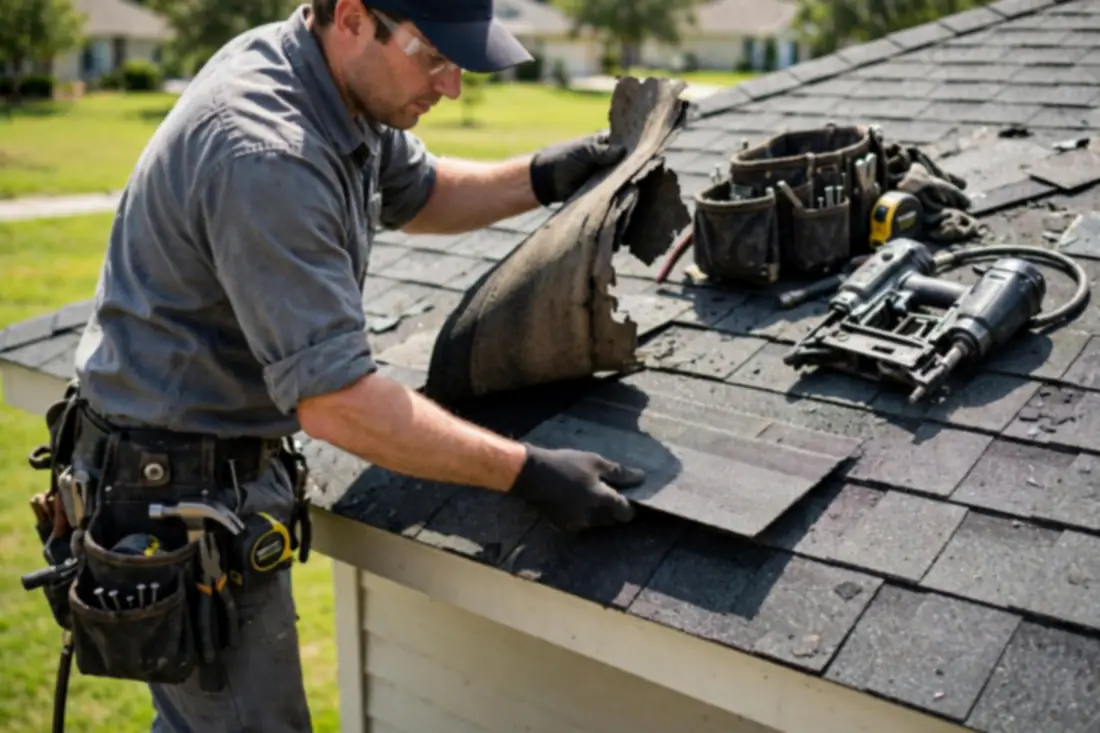
Targeted repairs for the failures Houston roofs actually develop — heat-curled shingles, cracked pipe boots, tired flashing, and storm-lifted edges caught before they reach the ceiling.
Explore Roof Repair →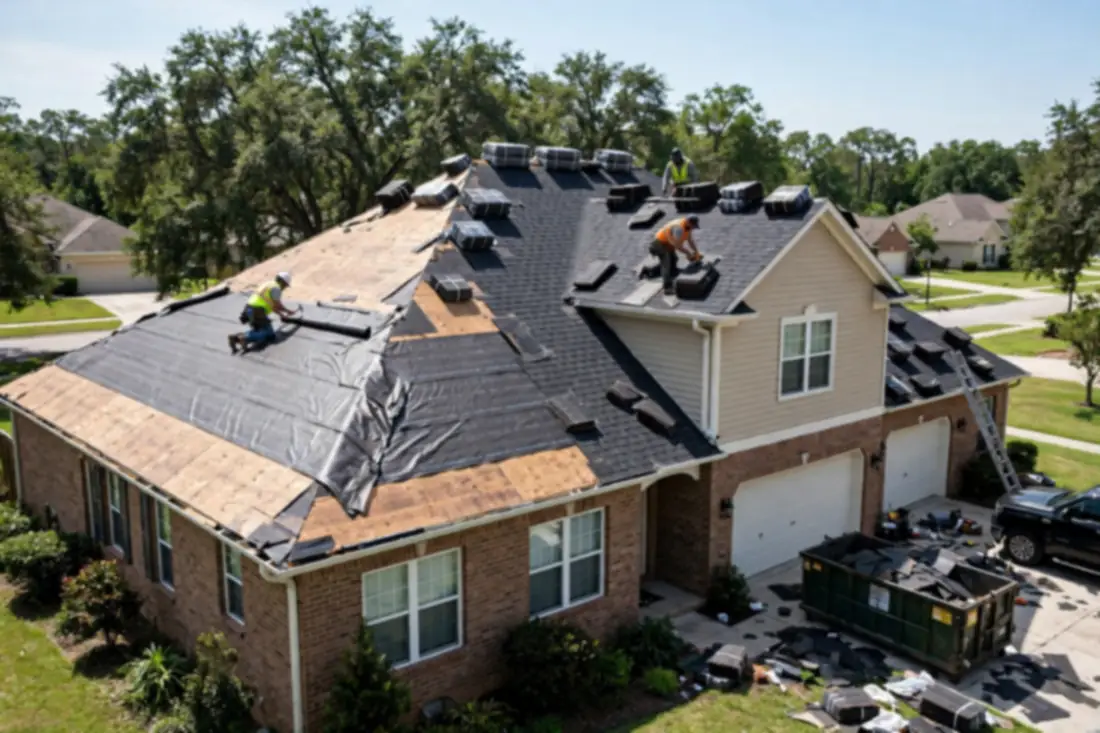
Full tear-off and re-roofing for Houston homes whose shingles have reached the end of their service life — deck inspection, modern underlayment, and a roof built for Gulf storms and Texas heat.
Explore Roof Replacement →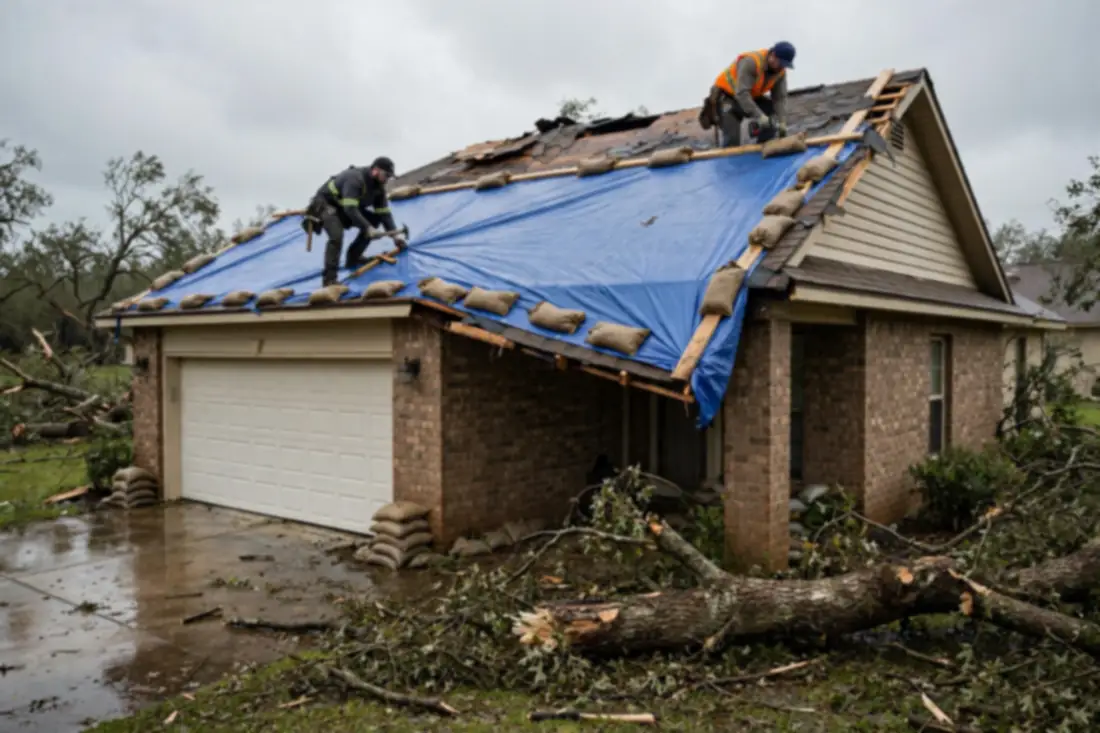
The storm-night service: roofs opened by wind, limbs, or sudden leaks made weather-tight fast — tarping, temporary sealing, and the permanent repair that follows.
Explore Emergency Roof Repair →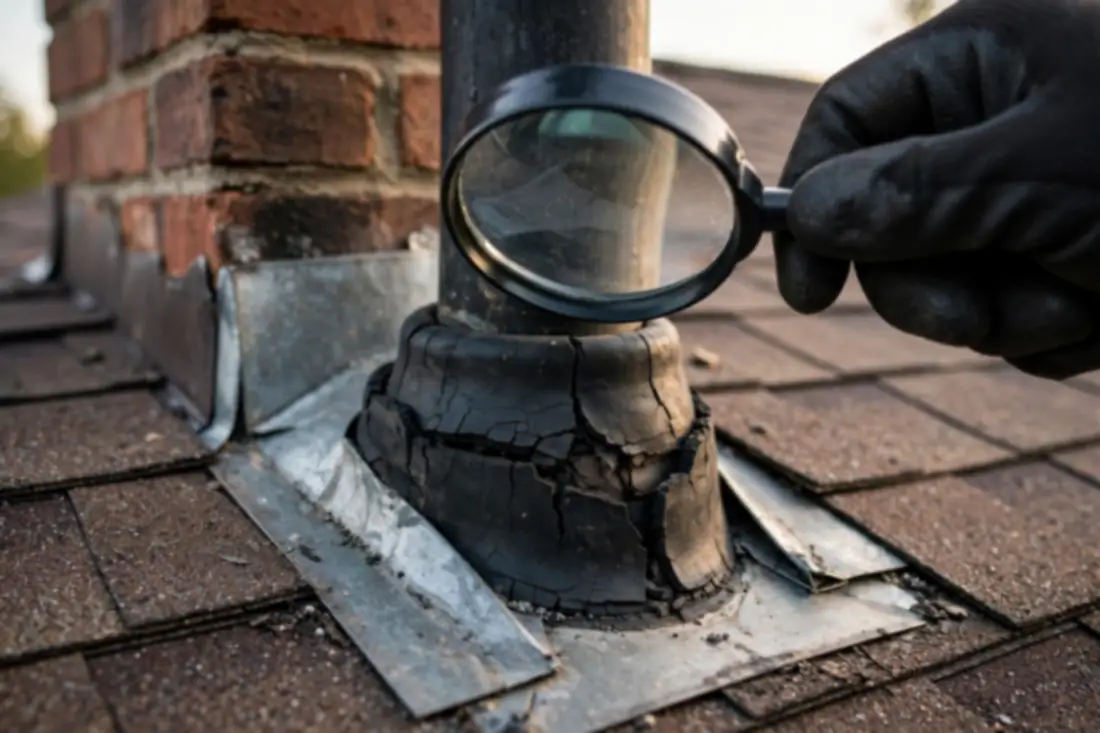
Attic-first leak detection for Houston homes — the stain traced to the failed boot, flashing, or seam above it, then repaired at the source layer, not at the symptom.
Explore Roof Leak Repair →
A full condition reading of your roof — surface, flashing, deck, attic, and ventilation — with photographs, findings by slope, and an honest remaining-life estimate in writing.
Explore Roof Inspection →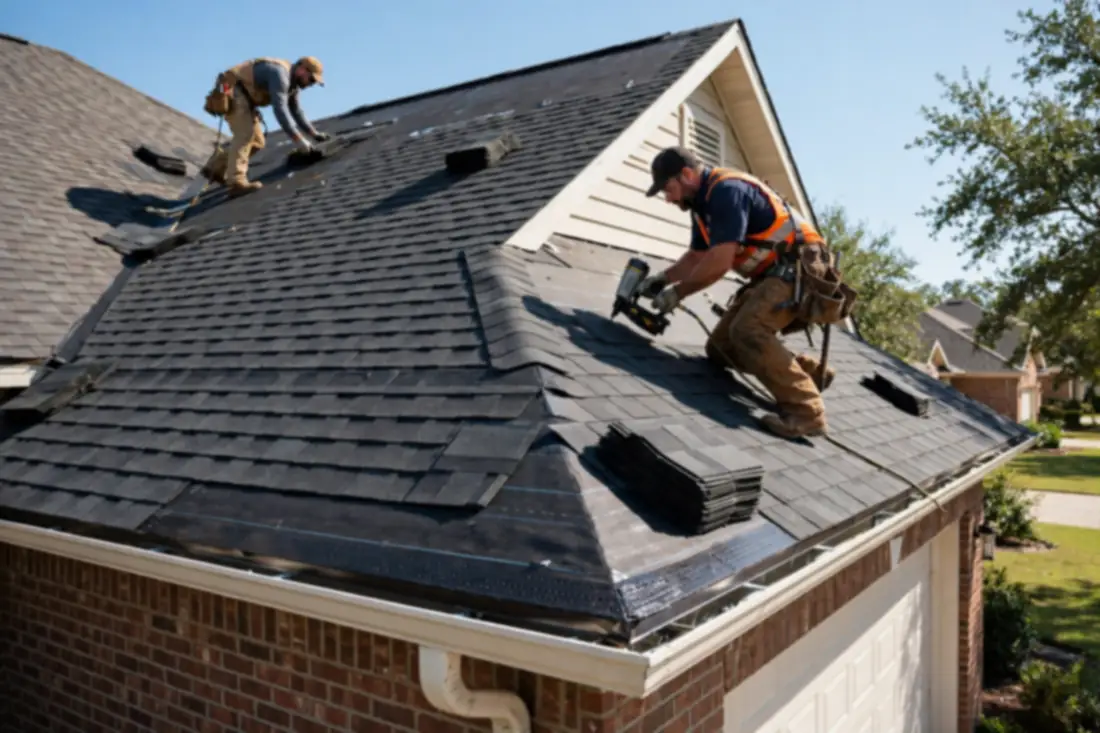
Architectural asphalt shingle roofing installed as a complete system — leak barrier, underlayment, flashing, and ventilation — matched to Houston heat, humidity, and storm wind.
Explore Shingle Roofing →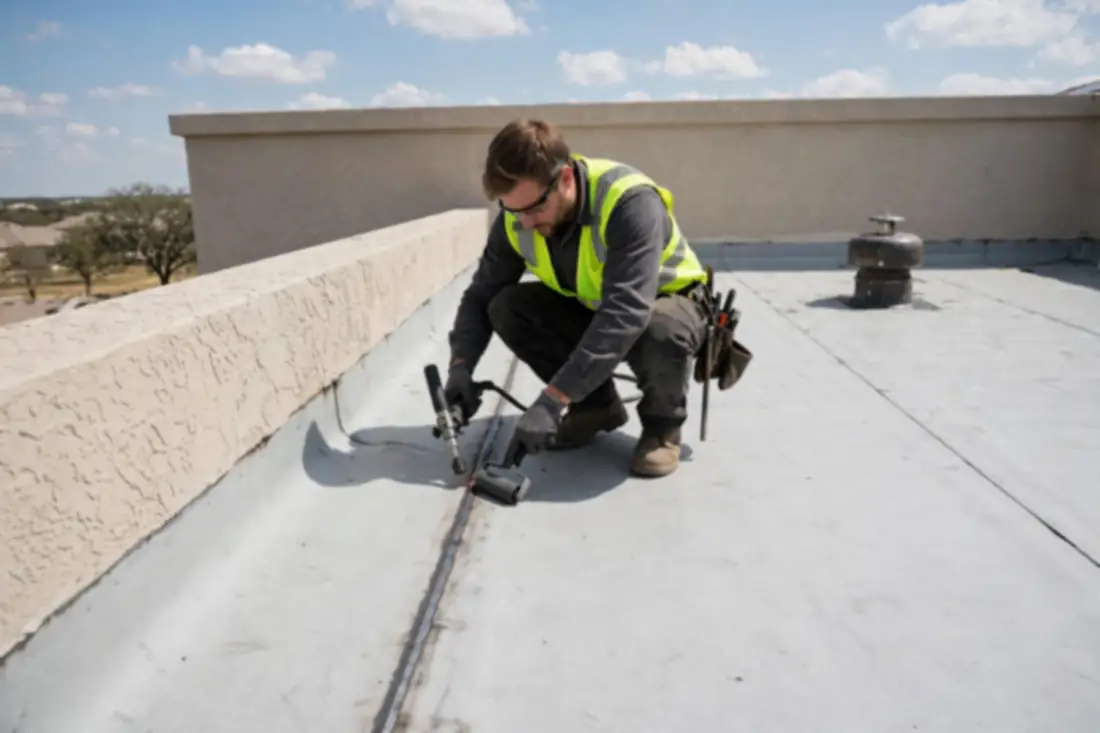
Membrane flat and low-slope roofing for Houston homes and additions — seams, drains, and ponding handled first, because flat roofs live or die by their drainage.
Explore Flat Roofing →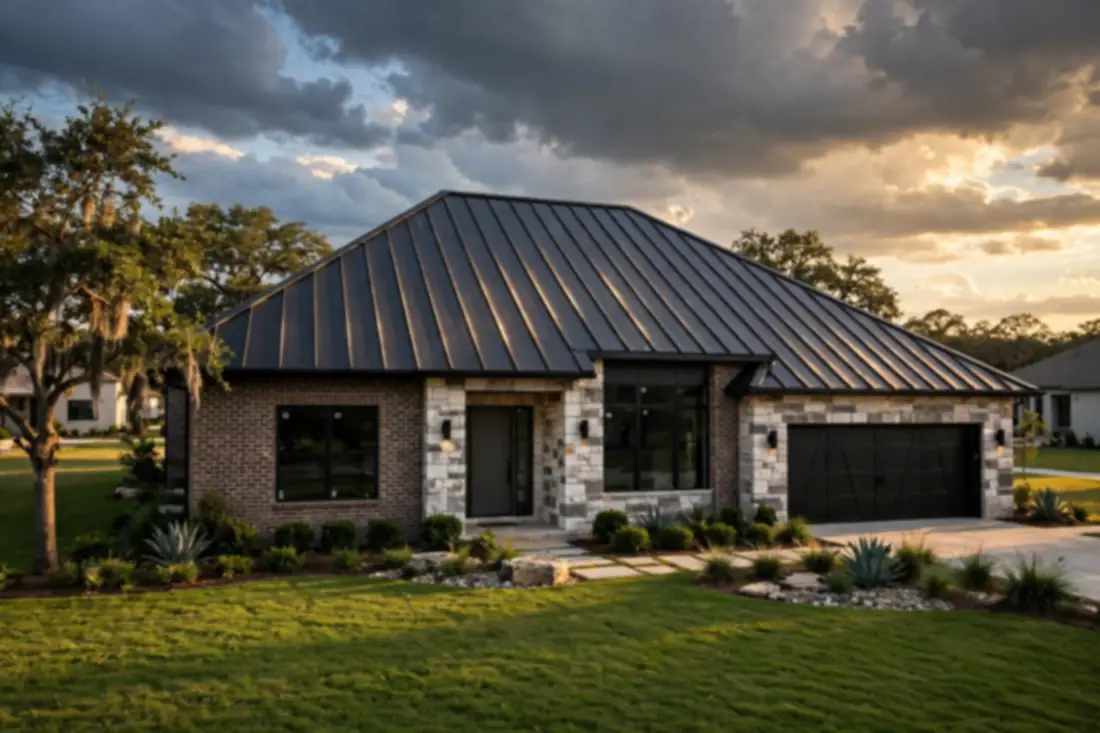
Standing seam and metal shingle roofing for Houston homes — panels detailed for Gulf wind, summer heat reflection, and decades of service with minimal upkeep.
Explore Metal Roofing →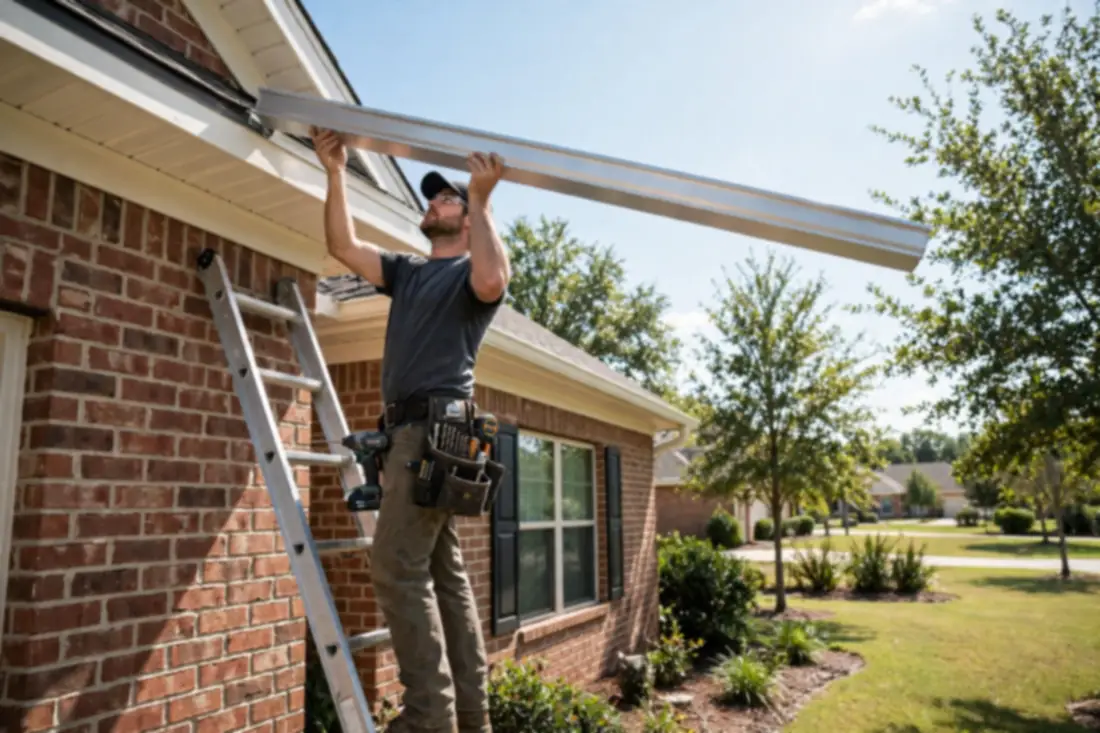
Seamless gutters sized to your roof and Houston's rain rates, pitched to actually drain, hung on sound fascia, and discharged well away from the foundation.
Explore Gutter Installation →Yes — the storm's most consequential damage, creased shingles and broken seals, is silent until the next event. An inventory visit in the calm is how that damage gets found while it is still a repair.
Openings and active leaks are immediate. The full inventory belongs to the first calm days after the event — evidence fresh, photographs honest, and any stabilization already in place.
A crease is a crack in the shingle's mat — the piece has lost its integrity even though it lies flat. Sealant on a cracked mat is decoration; the section is replaced and woven in.
The event date, photographs of the damage before work, the scope as written, photographs of the restoration, and the final condition report. Together they are the storm's complete file for your home records.
The roofing scope covers the roof system and its edges — gutters included where they serve the roof's drainage. Other property damage is outside the roofing professional's scope, but the storm documentation habit applies to all of it equally.
Mon–Fri 7 AM–10 PM · Sat 8 AM–10 PM · Sun 7 AM–9 PM Central. One call connects you with a local roofing professional.