Ponding that outlasts the rain
Water still standing forty-eight hours after a storm is not a puddle; it is a design failure loading the structure and testing every seam it covers. In Houston heat it also brews algae and softens adhesives.
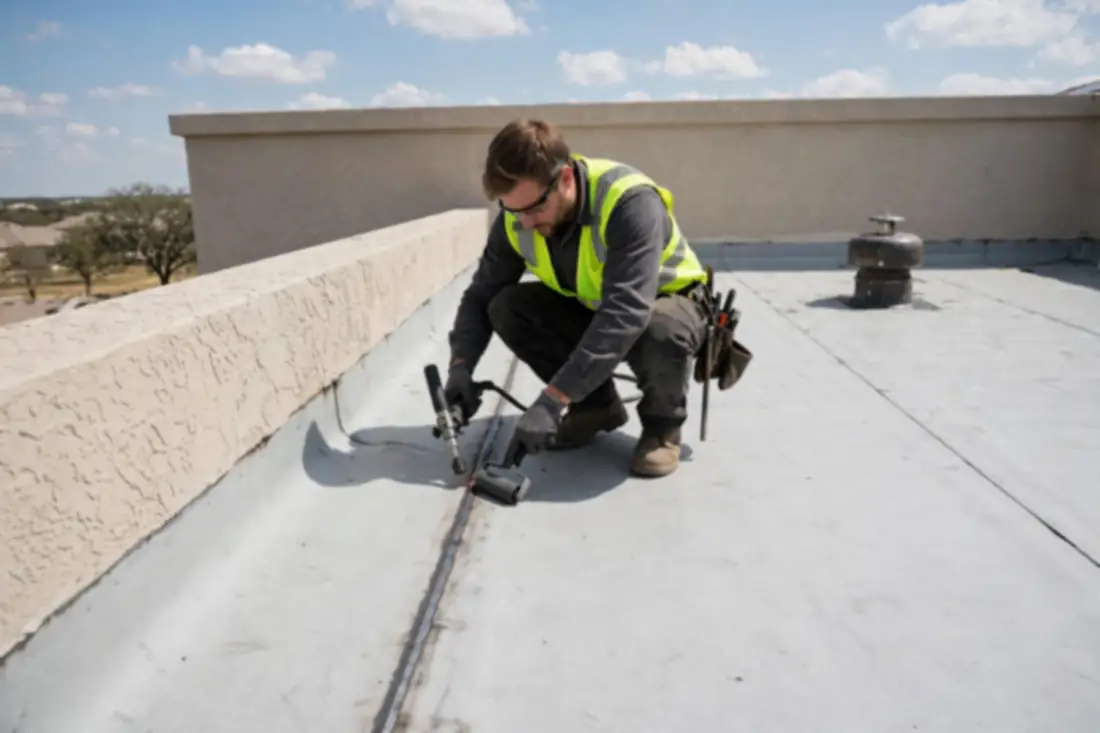
Membrane flat and low-slope roofing for Houston homes and additions — seams, drains, and ponding handled first, because flat roofs live or die by their drainage.
Flat and low-slope roofs play by different rules than the pitched fields above them. A shingle roof sheds water by speed; a flat roof must manage water that moves slowly, ponds in low spots, and sits against every seam for hours after a Houston downpour. Flat roofing is therefore a drainage discipline first and a membrane discipline second: the right material, welded or adhered without flaws, laid over a slope design that gives water somewhere to go.
In Houston the flat roof hides in plain sight — over garage conversions, patio covers, room additions, porch roofs, and the modern low-slope designs appearing across new construction, plus the commercial-style sections on mixed homes. The local professionals in this network work the main membrane families — TPO, modified bitumen, and built-up systems — and, just as importantly, they diagnose flat roofs in the right order: drains and slope before seams, seams before surface.
The ProblemLow spots from settled insulation, deflected decking, or absent taper hold water against the membrane for days — adding weight, feeding leaks, and aging the surface.
 The Fix
Drainage first, membrane second, details always — the flat roof order of operations:
Water still standing forty-eight hours after a storm is not a puddle; it is a design failure loading the structure and testing every seam it covers. In Houston heat it also brews algae and softens adhesives.
Raised blisters in the membrane are trapped moisture or air expanding in the sun. Intact blisters can be watched; cracked or foot-worn ones are open doors.
Lap seams lifting at their edges — visible as dark lines that open when pressed — are the flat roof's most common leak origin, especially where foot traffic and heat cycling concentrate.
Ceiling stains under a flat section that keep their own schedule — appearing a day after rain, not during — are ponded water finding a seam on its slow schedule.
A flat roof is a layered waterproofing system: deck, insulation (often tapered to manufacture slope where the structure has none), the membrane itself, and the edge and penetration details that terminate it. Modern single-ply membranes like TPO are welded at the seams with hot air, forming one continuous sheet; modified bitumen systems are torched or adhered in plies; older built-up roofs layer felts in asphalt. Each family has its own failure dialect, and a roofer who works all three reads yours in its own language.
The governing fact is water residence time. Every hour water stands on a membrane is an hour it spends probing seams, fasteners, and flashing terminations at a pressure pitched roofs never impose. That is why flat-roof craft is measured in drainage design — tapered insulation, crickets behind chimneys and curbs, drains and scuppers sized and placed for Gulf rain rates — and only then in membrane choice.
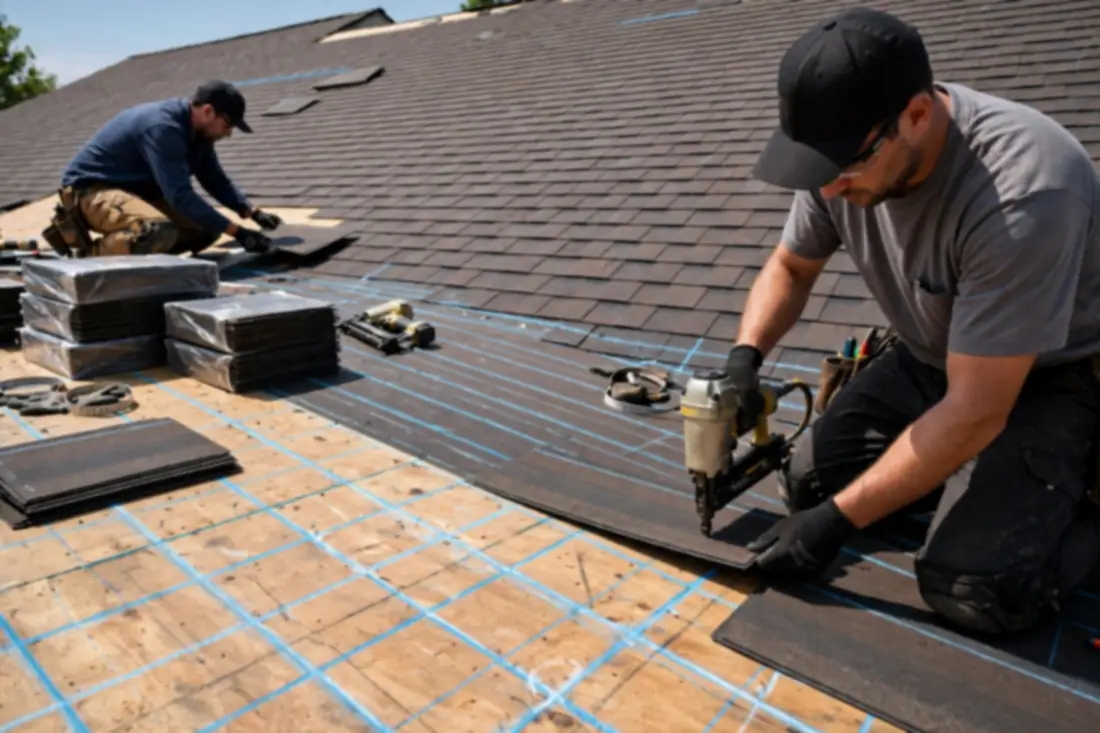
Houston tests flat roofs harder than almost any American city. Rain arrives at rates that overwhelm undersized drains in minutes. Heat expands membranes and works their seams daily, then summer sun bakes exposed surfaces past 170 degrees. Patio and addition roofs — the metro's most common residential flat work — often carry original designs with marginal slope, draining through a single scupper that one oak limb's worth of leaves can silence.
The housing patterns matter: garage conversions across the suburbs roofed with whatever the conversion budget allowed; mid-century homes inside the Loop with true low-slope designs; new modern builds whose wide flat planes are architectural statements that still have to survive August. Each wants its own drainage answer, and the inspection that designs it starts with a hose and a level, not a material catalog.
The membrane field rarely fails; its joints do. Welds and adhesives age, lift, and open in sequence along the roof's hardest-worked lines.
One drain for a wide field, scuppers blocked by debris, interior leaders running slow — the roof becomes a shallow pool with a house under it.
Where the membrane meets walls, curbs, and pipes, the termination bars and counter-flashing decide dryness — and they are the first details to loosen in the heat.
Drainage first, membrane second, details always — the flat roof order of operations:
Slope, drains, scuppers, and ponding mapped — with the roof's water story told in plain terms before any material talk begins.
Repair or replacement designed in your roof's actual membrane family, with seam and detail work named line by line.
Terminations, flashing, and penetration boots rebuilt as part of the scope — the flat roof's dryness lives at its edges.
After the work, the roof's drainage is checked against water: where it goes, how fast, and what still stands — stated plainly either way.
Flat roofs ask for a lighter but more regular attention than pitched ones: drains and scuppers cleared before storm season and after leaf-heavy months, a walk after major storms to read the seams and look for new ponding, and prompt attention to any blister that cracks. The good news is that everything on a flat roof is visible and reachable — its maintenance is a reading habit, not a mystery.
Keep the scope documents: membrane family, thickness, and install details are the facts every future roofer needs, and flat roofs outlive memories. The paperwork turns a future repair from archaeology into maintenance.
A coating can extend a sound membrane's life; over saturated insulation and split seams it seals the problem in and adds a layer the next roofer must excavate. The moisture reading comes first.
Drains do not fix fields that slope away from them. Taper and crickets move water; drains only receive what arrives.
Patch materials that do not bond to the existing membrane create decorated leaks. The patch must be chemically and mechanically family — or the section renewed whole.
A slow interior drain ponds the whole roof silently. Drain testing belongs in every flat-roof diagnosis, not after the membrane is blamed.
Scuppers and drains cleared in spring and late fall — and after any storm that drops limbs and leaves across the neighborhood.
One look, a day after a storm, tells you the ponding story while it is still a design note instead of a ceiling stain.
Patio-roof storage and casual foot traffic wear seams and puncture membranes. What lives on a flat roof should be the membrane and the weather, nothing else.
The roofer maps slope, drains, ponding, seams, and terminations — and reads the attic or ceiling evidence beneath the low spots.
Repair, section renewal, or replacement set out in writing, with the drainage corrections named as their own line items.
Seams, details, taper, or full membrane — executed and water-checked, with photographs of the layers as they go down or come up.
The drainage result stated plainly, and the membrane documentation handed over for your home file.
That is exactly what the diagnosis is for. Describe what you are seeing and a local roofer will read the roof and tell you which service the evidence supports — in writing.
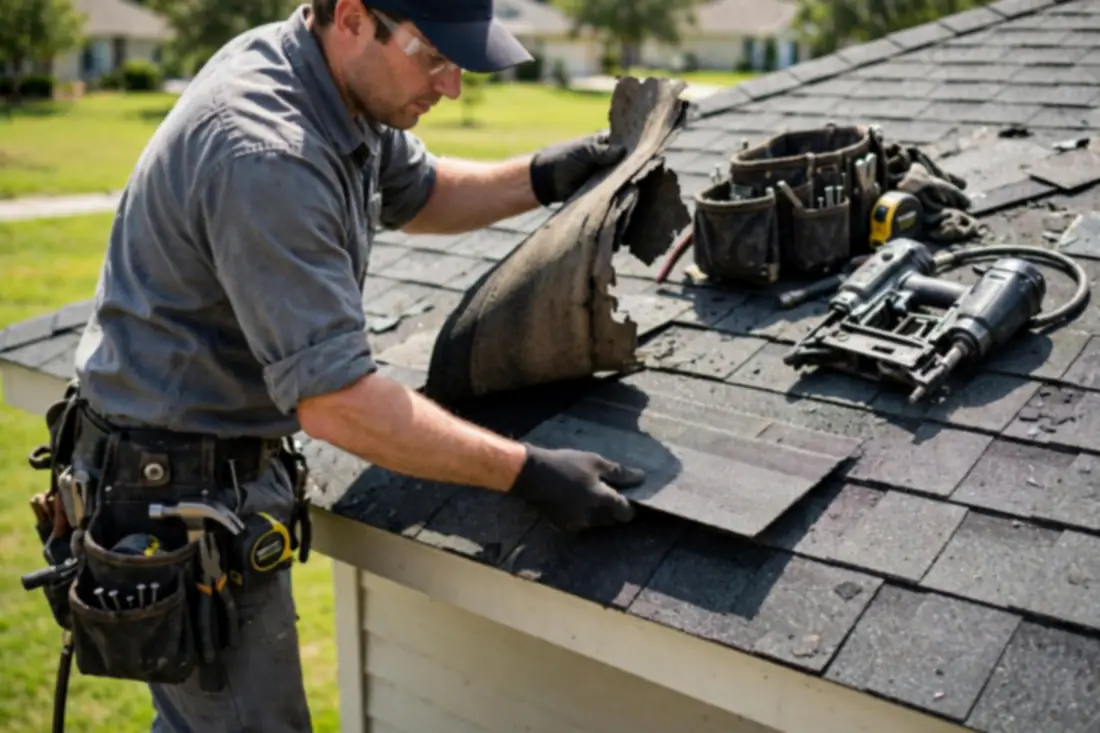
Targeted repairs for the failures Houston roofs actually develop — heat-curled shingles, cracked pipe boots, tired flashing, and storm-lifted edges caught before they reach the ceiling.
Explore Roof Repair →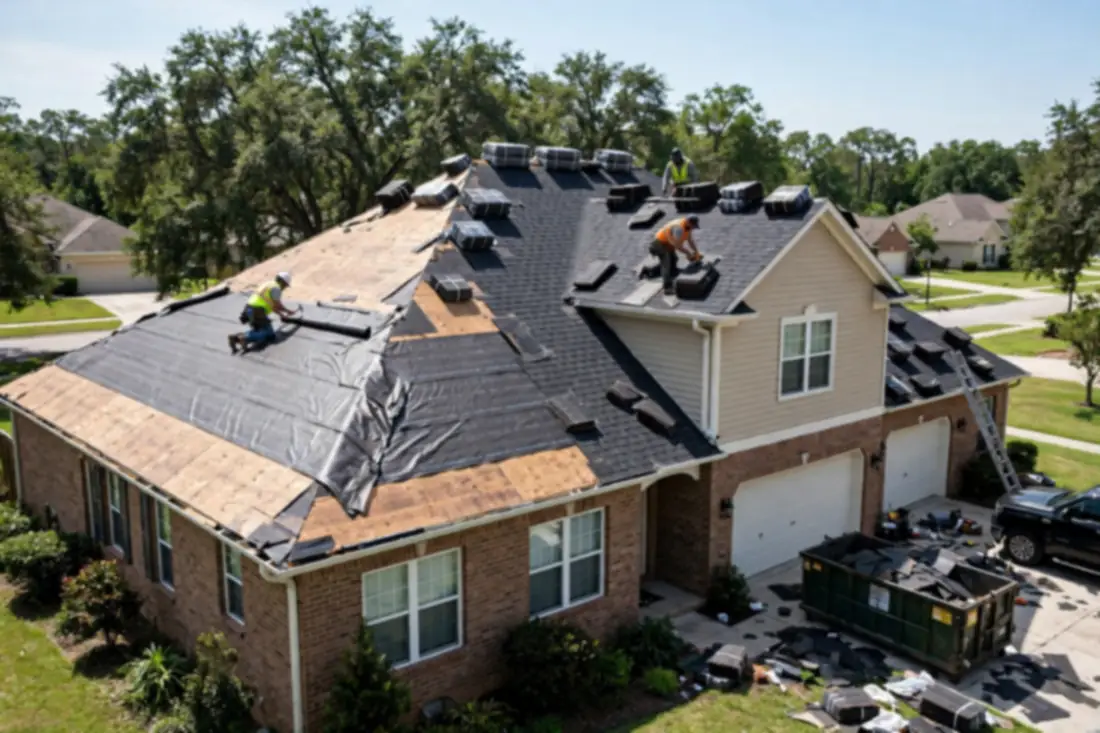
Full tear-off and re-roofing for Houston homes whose shingles have reached the end of their service life — deck inspection, modern underlayment, and a roof built for Gulf storms and Texas heat.
Explore Roof Replacement →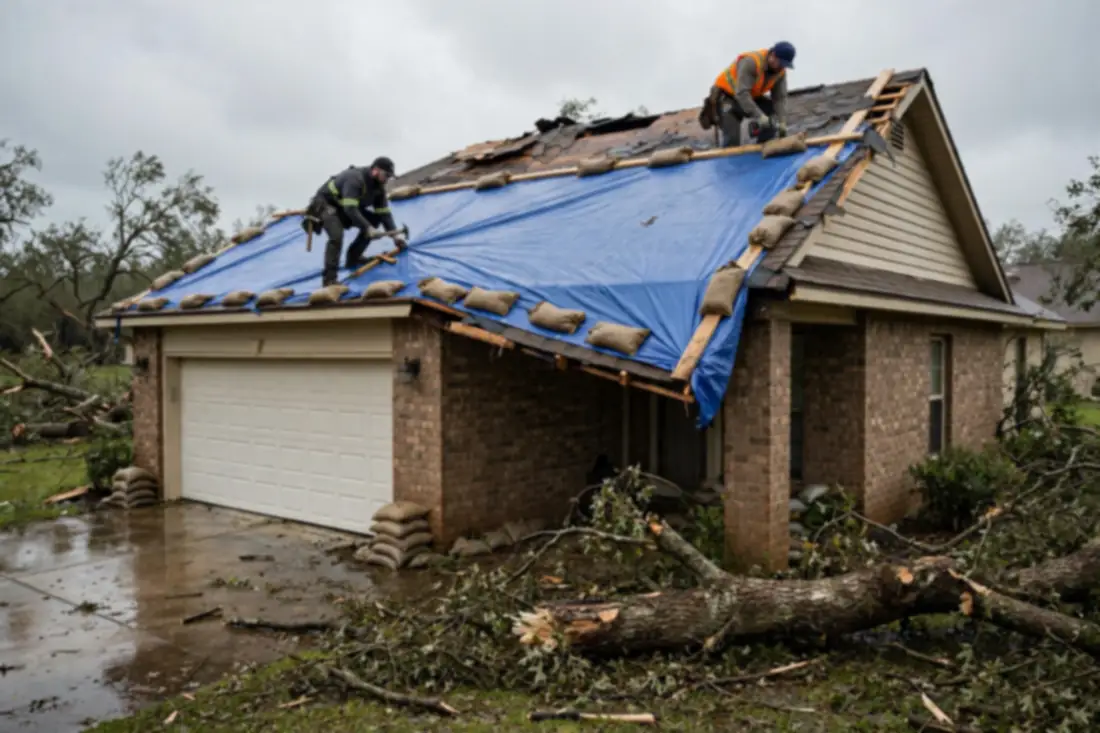
The storm-night service: roofs opened by wind, limbs, or sudden leaks made weather-tight fast — tarping, temporary sealing, and the permanent repair that follows.
Explore Emergency Roof Repair →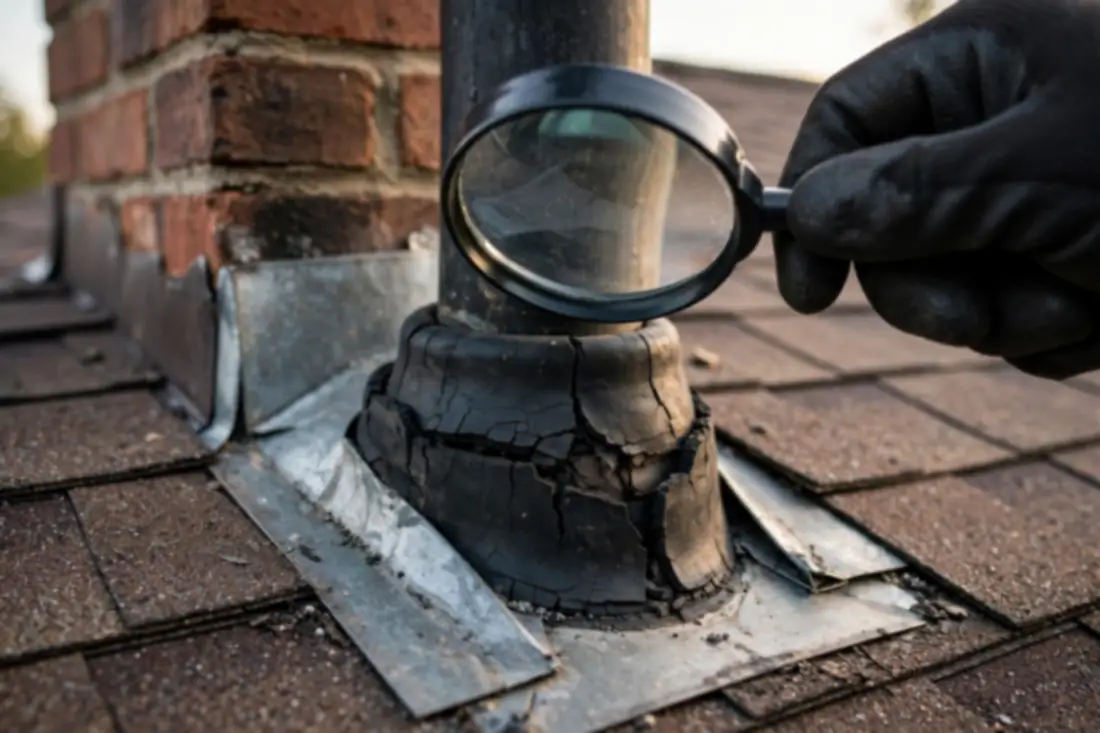
Attic-first leak detection for Houston homes — the stain traced to the failed boot, flashing, or seam above it, then repaired at the source layer, not at the symptom.
Explore Roof Leak Repair →
A full condition reading of your roof — surface, flashing, deck, attic, and ventilation — with photographs, findings by slope, and an honest remaining-life estimate in writing.
Explore Roof Inspection →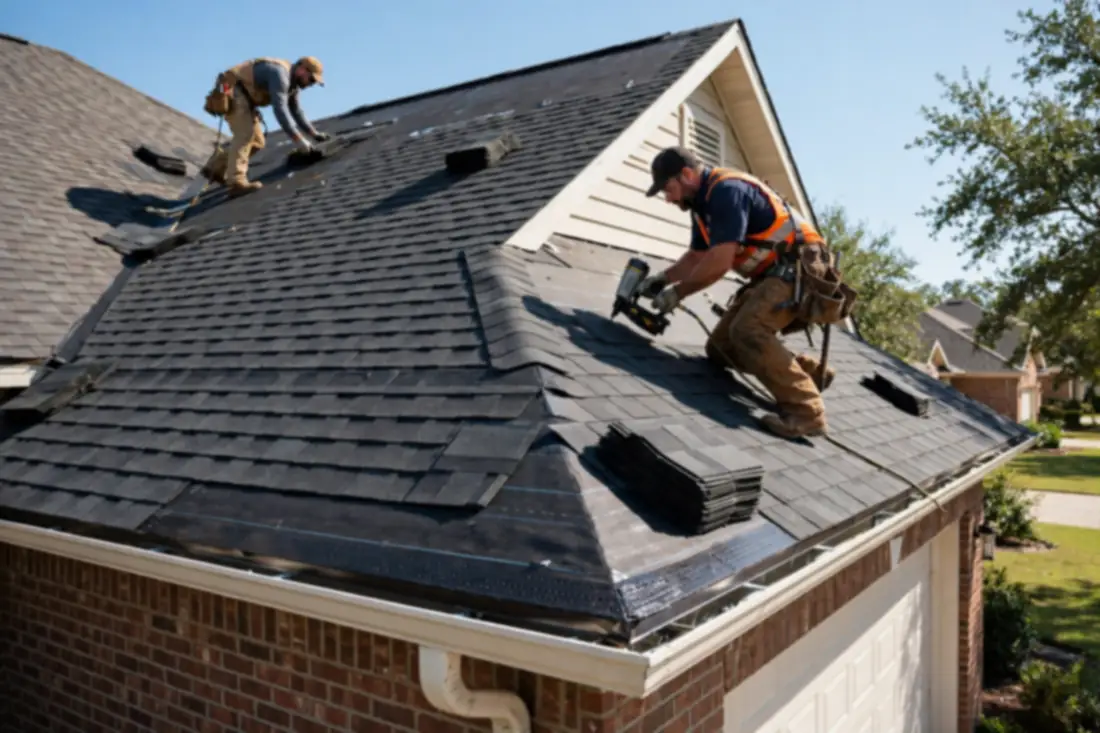
Architectural asphalt shingle roofing installed as a complete system — leak barrier, underlayment, flashing, and ventilation — matched to Houston heat, humidity, and storm wind.
Explore Shingle Roofing →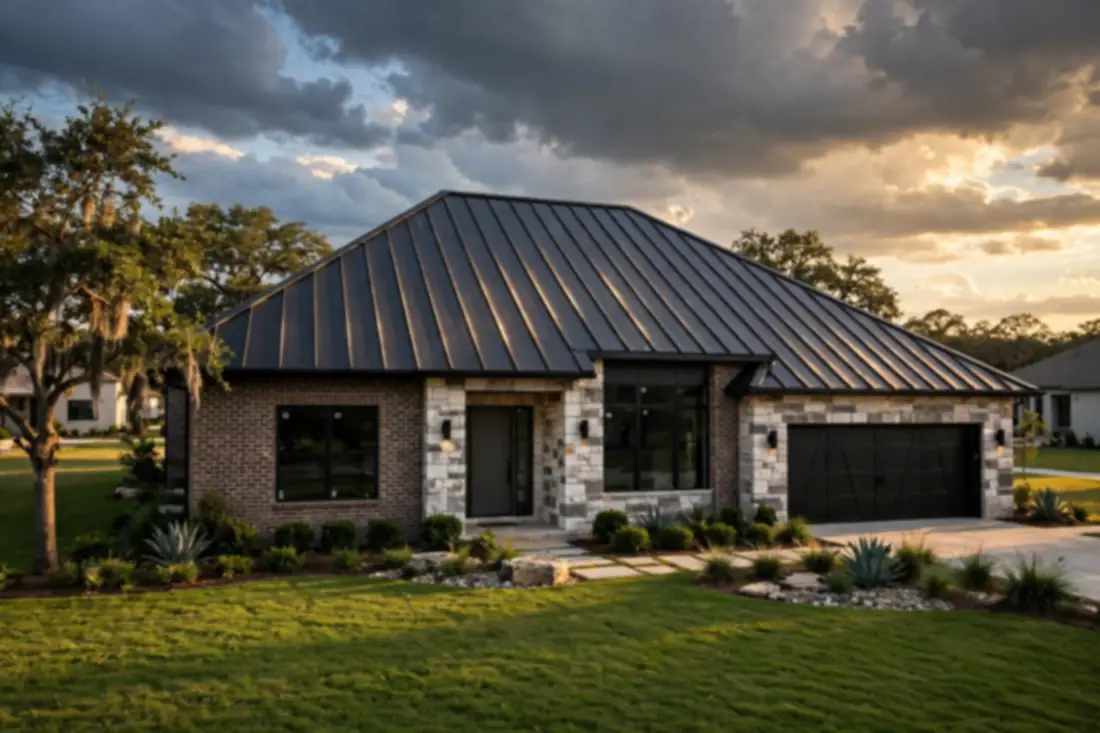
Standing seam and metal shingle roofing for Houston homes — panels detailed for Gulf wind, summer heat reflection, and decades of service with minimal upkeep.
Explore Metal Roofing →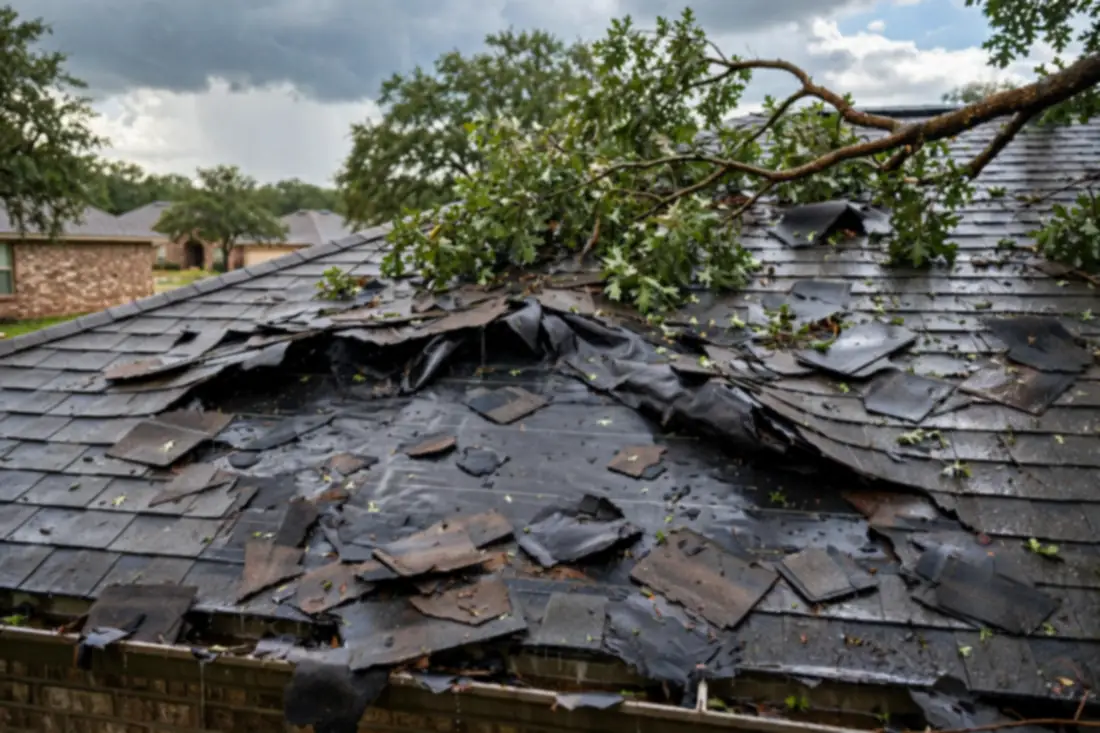
After the wind: storm-torn shingles, limb punctures, and lifted seals across Houston documented properly, stabilized, and repaired as a system — not just the hole you can see.
Explore Storm Damage Roof Repair →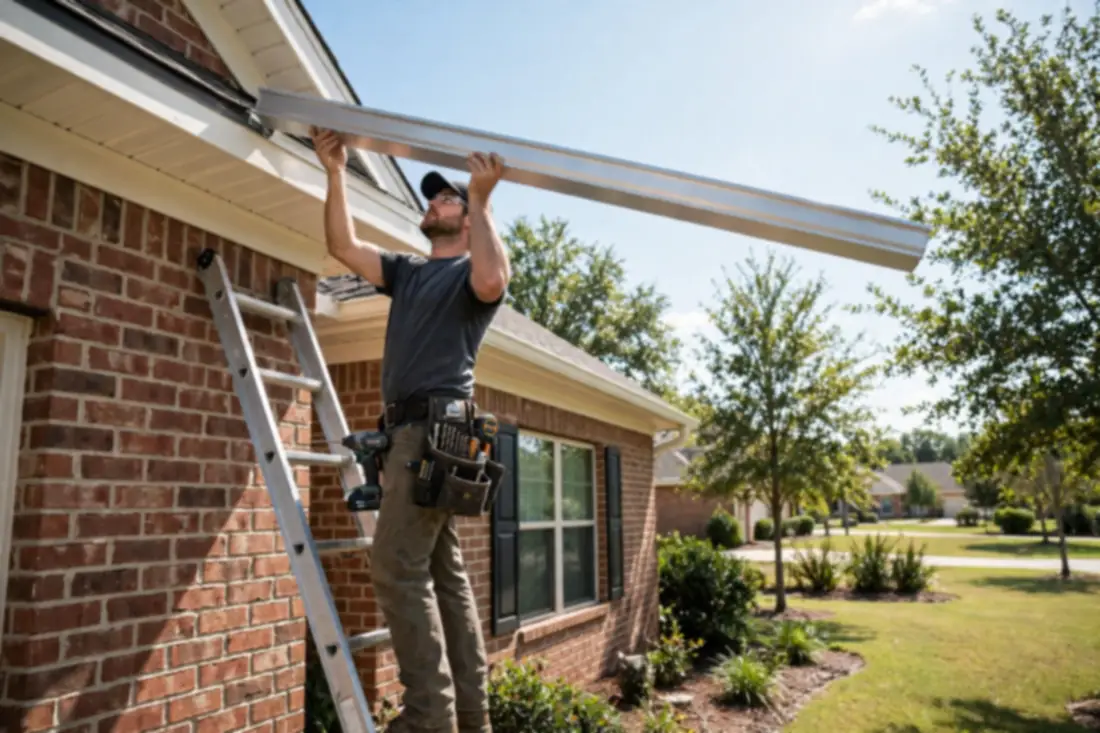
Seamless gutters sized to your roof and Houston's rain rates, pitched to actually drain, hung on sound fascia, and discharged well away from the foundation.
Explore Gutter Installation →Water standing more than about forty-eight hours after rain is working against the roof: loading the structure, probing seams under pressure, and aging the surface in the sun. Short-lived shallow ponding after a deluge is common; standing water with a schedule is a design correction waiting to be scoped.
Frequently repaired — leaks at seams, terminations, and drains on a sound membrane are exactly that. A field cracked throughout, or insulation saturated beneath it, argues for re-roofing. The moisture evidence, read in the diagnosis, makes the call.
TPO is the common modern choice for its welded seams and reflective surface in the heat; modified bitumen serves smaller and more detailed roofs well; and existing built-up roofs have their own renewal paths. The deciding factors are your roof's slope design, details, and what is already down — the diagnosis names the fit.
Ponded water finds its seam slowly, and saturated layers release moisture on their own schedule. A delayed stain under a flat section is a signature of ponding plus a seam — which is why the diagnosis starts with the drainage map.
Membrane systems in this climate commonly serve fifteen to twenty-five years depending on family, thickness, drainage, and maintenance. The drainage half of that equation matters as much as the membrane half — a well-drained roof outlives a ponded one of the same material.
Mon–Fri 7 AM–10 PM · Sat 8 AM–10 PM · Sun 7 AM–9 PM Central. One call connects you with a local roofing professional.