Waterfall edges in ordinary rain
Water spilling over the gutter's front or back in a normal storm means the system is undersized, clogged, or pitched wrong — the roof is delivering more than the gutter's design accepts.
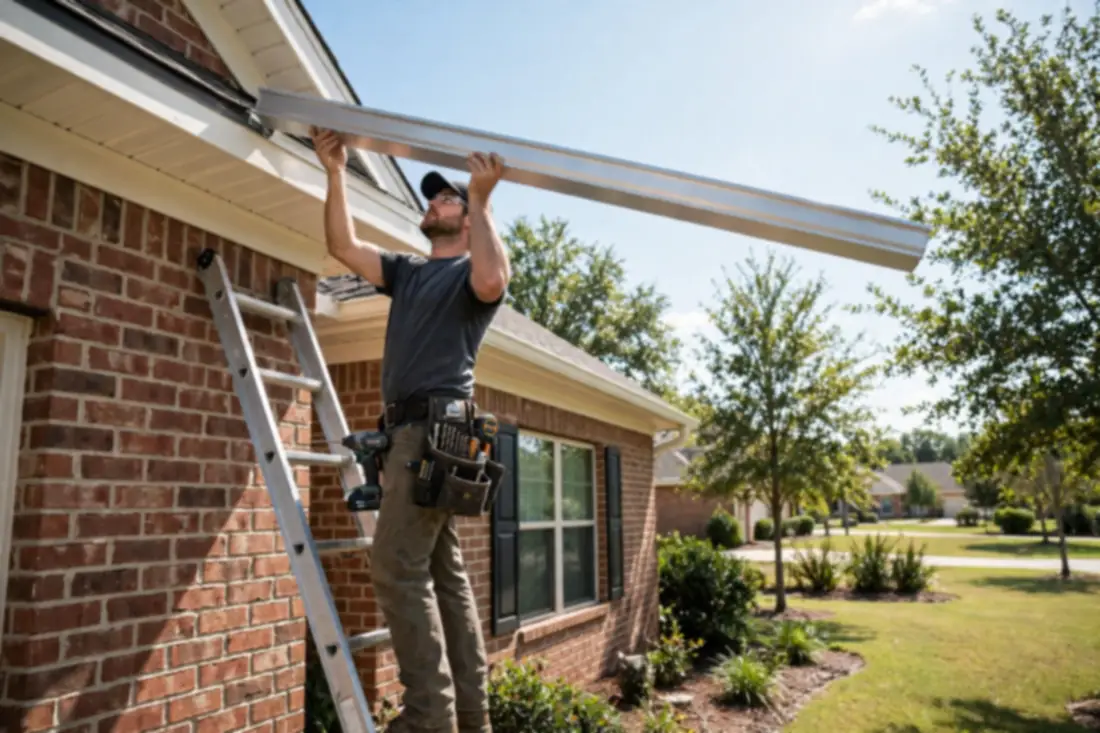
Seamless gutters sized to your roof and Houston's rain rates, pitched to actually drain, hung on sound fascia, and discharged well away from the foundation.
Gutters are the roof's handoff — the moment all the water a roof has collected becomes the gutter's problem. In Houston, that handoff happens at tropical intensity: a thousand square feet of roof in a two-inch-per-hour downpour is delivering water like a fire hose, and the gutter system's only jobs are to catch it, move it, and put it down far from the foundation. Gutter installation, done properly, is drainage engineering in miniature: sizing, pitch, hanger spacing, downspout count and placement, all calculated against the roof above and the ground below.
The local professionals in this network install seamless aluminum gutters formed on site to your home's exact lengths — no leaky sectional joints every ten feet — and they treat the fascia and the discharge path as part of the same job. A gutter is only finished when the water's whole journey, cloud to curb, has been walked and works.
The ProblemGutters chosen by habit rather than by the roof's collection area overflow in exactly the rains that matter most.
 The Fix
Catch it, move it, put it down far away — each element answers a failure:
Water spilling over the gutter's front or back in a normal storm means the system is undersized, clogged, or pitched wrong — the roof is delivering more than the gutter's design accepts.
A gutter holding water a day after rain has lost its pitch or its hangers. Standing water breeds mosquitoes, weights the run, and rots the fascia behind it.
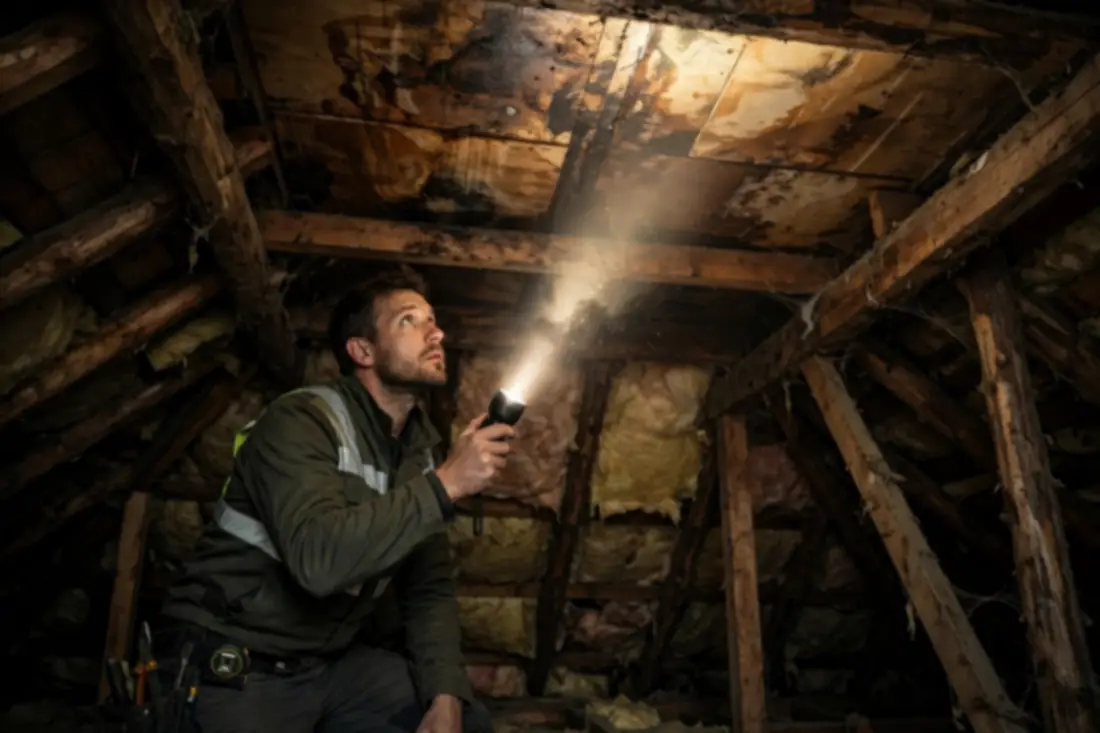
Tiger-striping on the gutter face and soft, peeling fascia boards behind it tell the overflow story: water has been going over the back edge, into the wood, for seasons.
Downspouts discharging at the foundation — or missing elbows that dump roof water at the wall — move the roof's whole harvest against the house's base, in the metro where foundations ask for even moisture.
A residential gutter system has four working parts: the gutter channel itself, sized in width and profile to the roof's delivery; the hangers that carry it, spaced to hold a full channel's weight without sagging; the pitch — a slight, deliberate slope toward the outlets that the eye should barely catch; and the downspouts, whose count and placement decide how fast the channel can empty, discharging through extensions or drains that carry the water clear of the foundation.
Seamless construction removes the sectional gutter's weakest feature: joints every ten feet, each one a future drip and a debris catch. A seamless run is formed from a continuous coil at your home, cut to the exact length of the eave, with joints only at corners and outlets. Combined with hidden hangers screwed — not spiked — into sound fascia, it is the system that turns gutters from a recurring chore into a long, quiet service.
Houston sizing starts from the rain rate, not the catalog. Downpours here deliver inches per hour that overwhelm standard five-inch gutters on large or steep roofs; six-inch profiles and oversized downspouts are common Houston answers, chosen from the roof's actual collection area rather than from habit. The debris load is local too: pine needles thread through guards that stop oak leaves, live oak tassels arrive in spring drifts, and any guard choice has to be honest about which tree owns your roof.
Then there is the ground. Houston's clay soils and slab foundations ask for discharge placed with respect — water delivered evenly and away, not ponded at one corner. Gutter scopes here walk the whole path: channel, downspout, extension or drain line, and the grade it lands on. It is the difference between a gutter that decorates the eave and one that defends the house.
Spike-and-ferrule hangers work loose over years; the run sags, ponds, and spills at its low points, rotting the fascia it hangs from.
Needles, tassels, and shingle grit fill channels and silence downspouts — the system fails full, in the rain, at the roof's edge.
Roof water delivered at the wall undermines the one thing Houston homeowners most need stable: the soil moisture around the slab.
Catch it, move it, put it down far away — each element answers a failure:
Roof collection areas, current failure points, fascia condition, and discharge paths assessed before a single length is formed.
Channels formed to your eaves' exact measurements, in the profile and size the reading specified.
Hidden hangers into solid fascia — rotten sections replaced first — with pitch set and verified toward every outlet.
The system read end to end at the finish: pitch, seams, outlets, downspouts, and discharge — the whole journey accounted for.
A correct system asks little: a clear-out rhythm matched to your trees — twice a year under oaks and pines — and a glance during a hard rain a few times a year to watch it work. Overflowing at a corner in a deluge worth photographing is a note for the installer, not a shrug; new systems should handle Houston's ordinary worst without spilling.
Keep the installation record: profile, size, and layout. When a future addition changes the roof's collection map, that record is how the next scope starts from knowledge instead of from a ladder.
The channel is only as sound as the wood carrying it. Skipping fascia repair trades a visible saving for a sagging system within a few seasons.
Gutter capacity follows your roof's area, pitch, and valley concentration — a different house is a different calculation, even on the same street.
Every guard trades one maintenance for another, and the wrong match for your trees makes things worse. The honest conversation names your debris and matches — or declines — accordingly.
A perfect channel delivering water to the foundation is a system that fails at its final foot. Discharge placement is part of the installation, not an afterthought.
Pine needles and oak tassels keep their own calendars. Set the clear-out rhythm by what falls on your roof, not by a generic season.
Stand under the eaves in a real downpour annually and read the system: overflows, drips at corners, downspout behavior. Ten minutes of weather is the true inspection.
Extensions get kicked, drain mouths get buried by mulch seasons. Walk the water's exit as part of yard work.
Collection areas, fascia, failure points, and discharge paths read first — the system is designed from the water's journey.
Profile, size, hanger and downspout plan, guard decision, and any fascia work — named in writing before fabrication.
Old system down, fascia made sound, seamless runs formed and hung, downspouts and discharge completed. Most homes finish in a day.
Every run, outlet, and exit read together — and the maintenance rhythm for your trees stated plainly.
That is exactly what the diagnosis is for. Describe what you are seeing and a local roofer will read the roof and tell you which service the evidence supports — in writing.
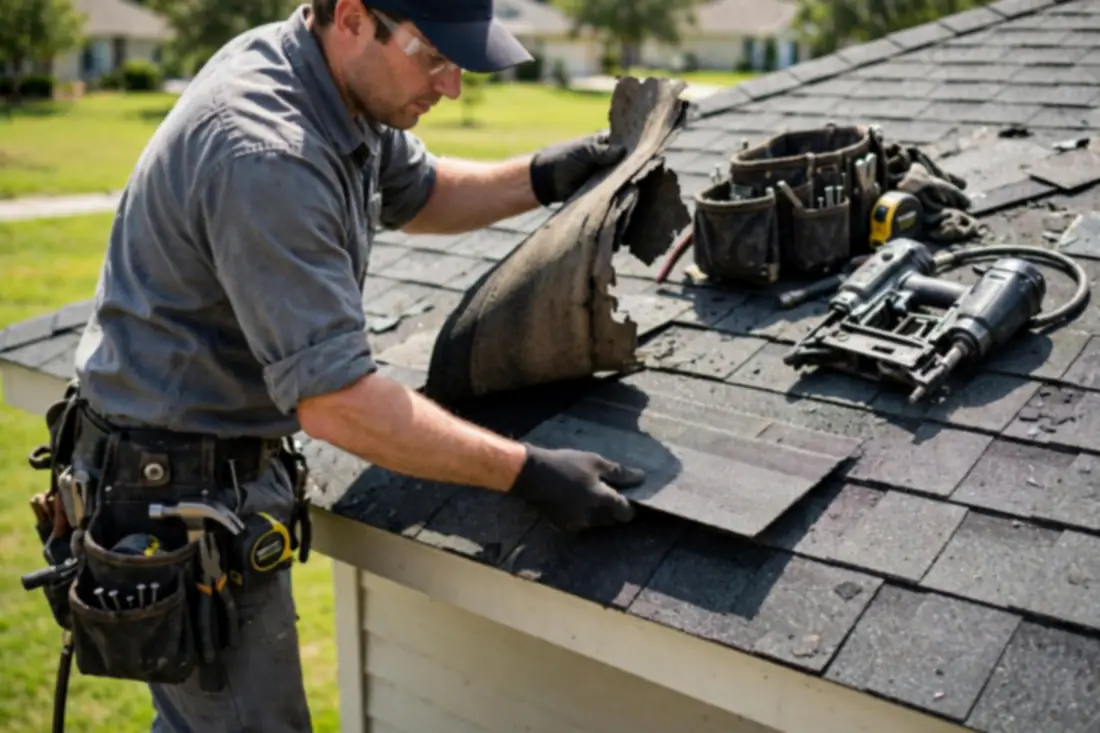
Targeted repairs for the failures Houston roofs actually develop — heat-curled shingles, cracked pipe boots, tired flashing, and storm-lifted edges caught before they reach the ceiling.
Explore Roof Repair →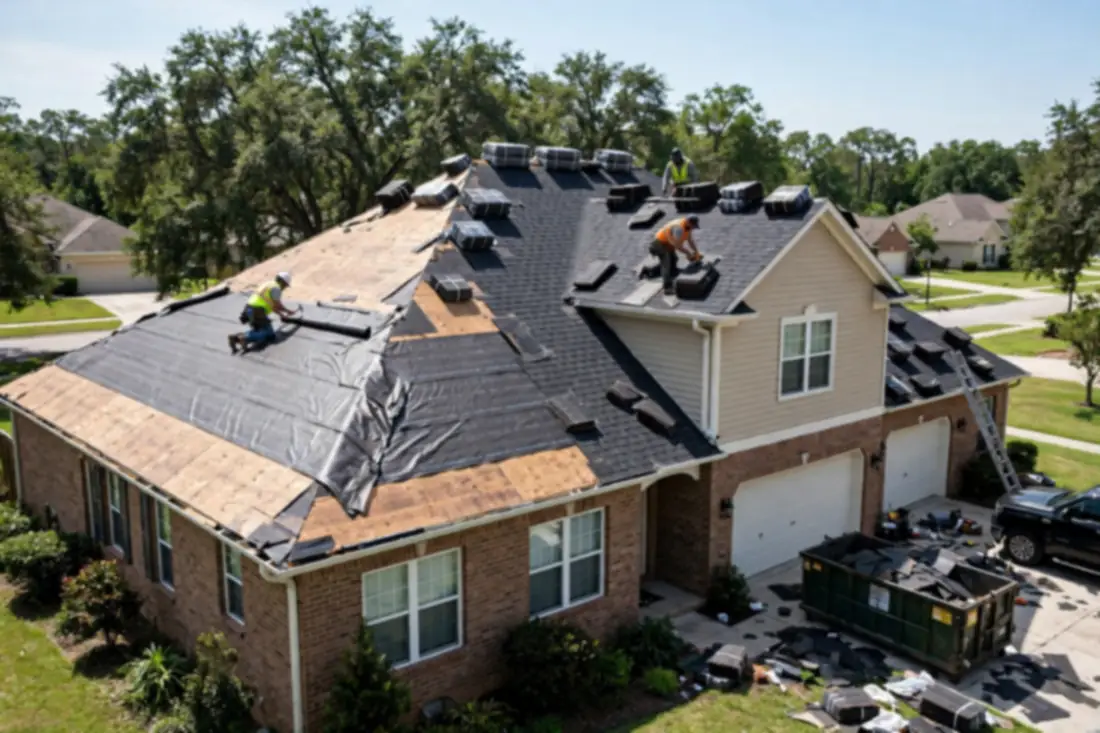
Full tear-off and re-roofing for Houston homes whose shingles have reached the end of their service life — deck inspection, modern underlayment, and a roof built for Gulf storms and Texas heat.
Explore Roof Replacement →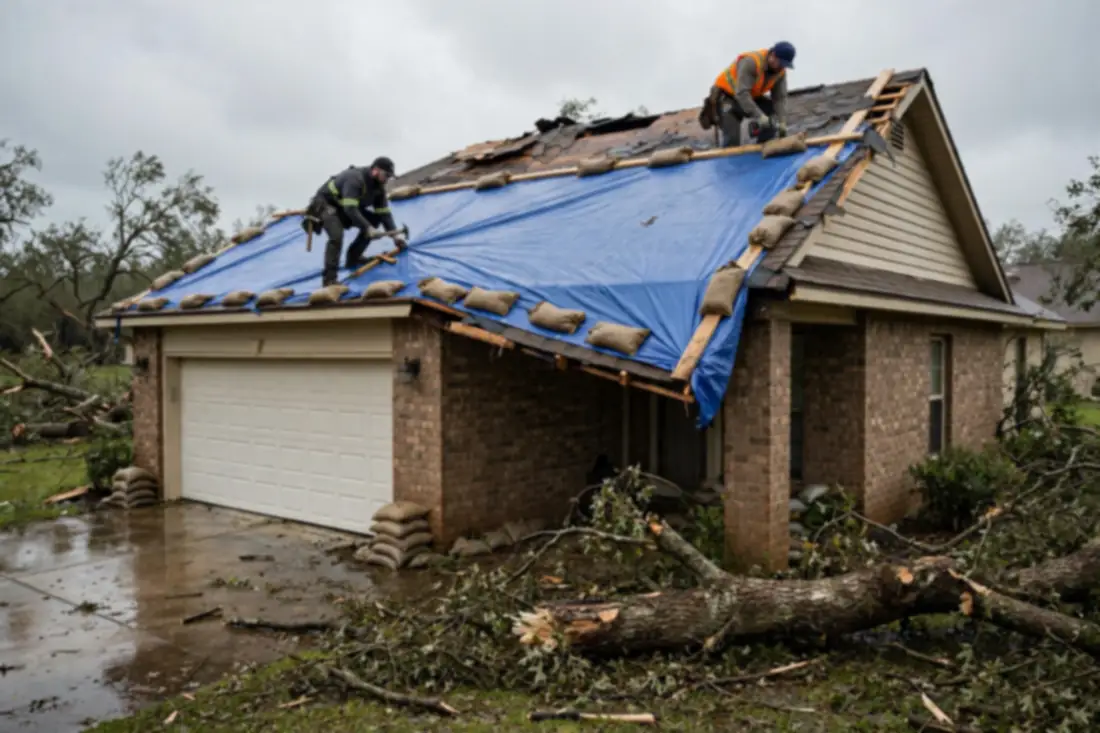
The storm-night service: roofs opened by wind, limbs, or sudden leaks made weather-tight fast — tarping, temporary sealing, and the permanent repair that follows.
Explore Emergency Roof Repair →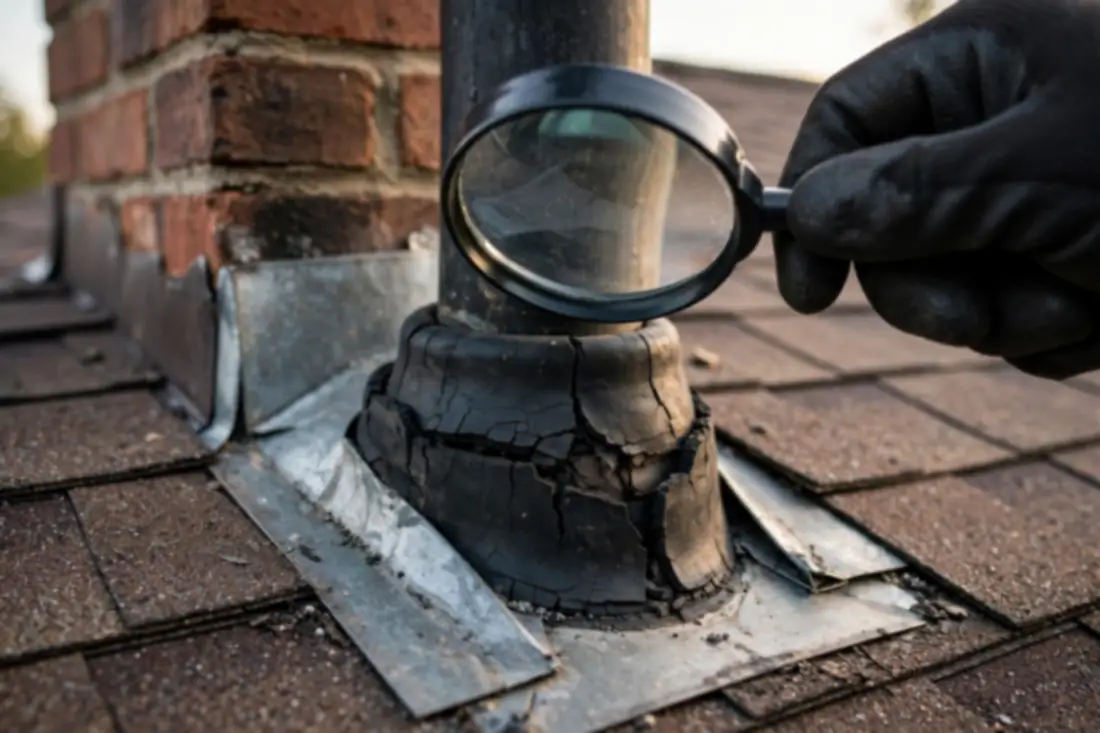
Attic-first leak detection for Houston homes — the stain traced to the failed boot, flashing, or seam above it, then repaired at the source layer, not at the symptom.
Explore Roof Leak Repair →
A full condition reading of your roof — surface, flashing, deck, attic, and ventilation — with photographs, findings by slope, and an honest remaining-life estimate in writing.
Explore Roof Inspection →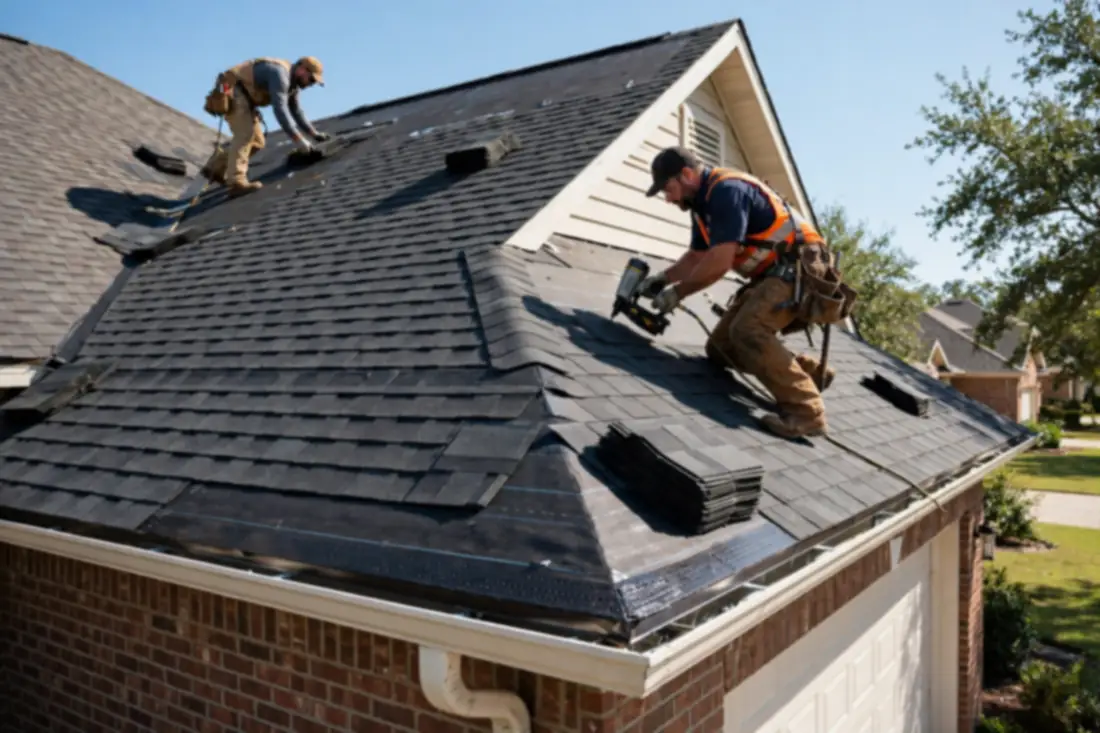
Architectural asphalt shingle roofing installed as a complete system — leak barrier, underlayment, flashing, and ventilation — matched to Houston heat, humidity, and storm wind.
Explore Shingle Roofing →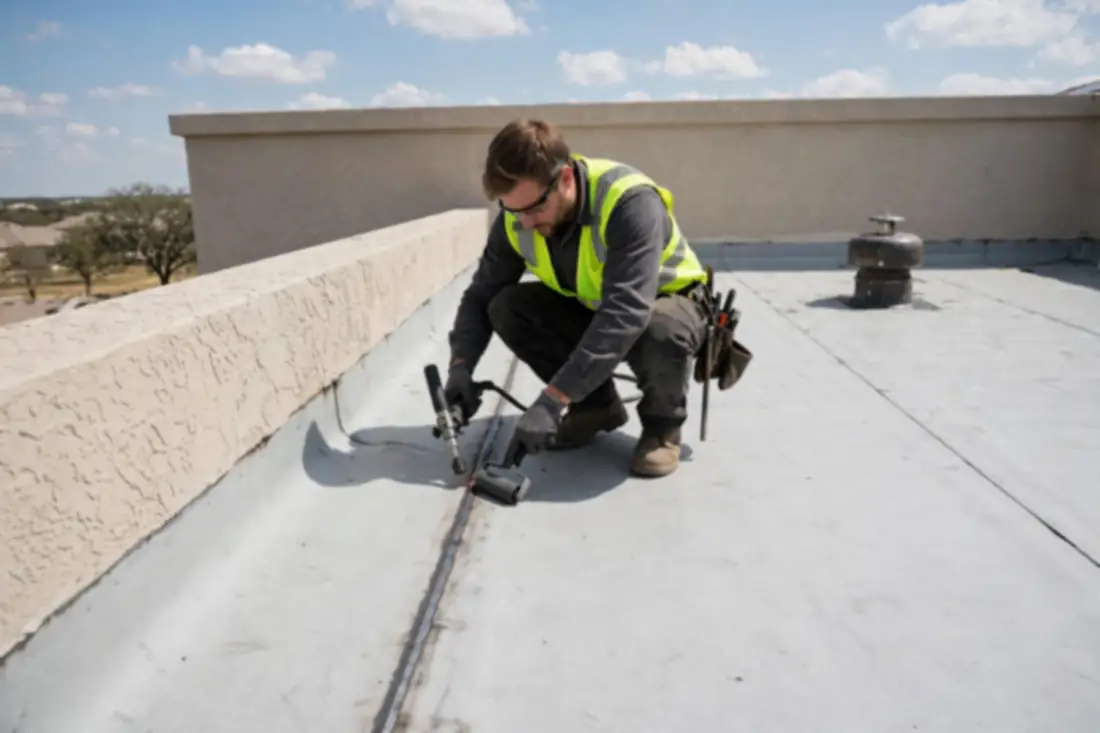
Membrane flat and low-slope roofing for Houston homes and additions — seams, drains, and ponding handled first, because flat roofs live or die by their drainage.
Explore Flat Roofing →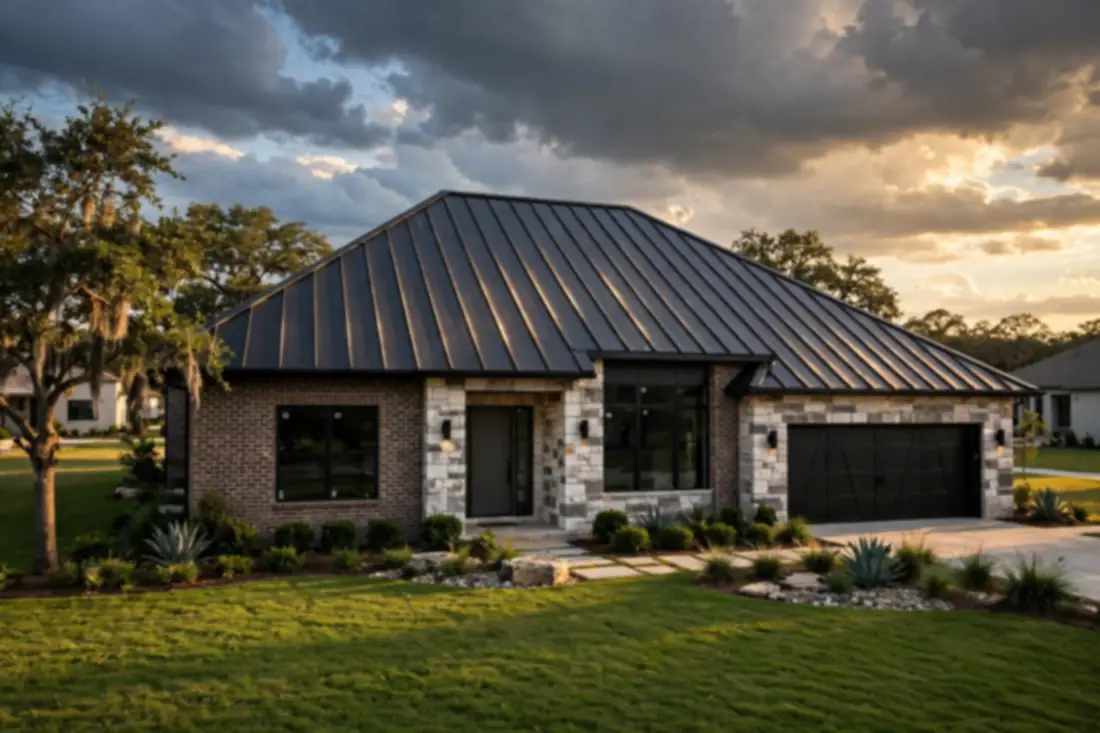
Standing seam and metal shingle roofing for Houston homes — panels detailed for Gulf wind, summer heat reflection, and decades of service with minimal upkeep.
Explore Metal Roofing →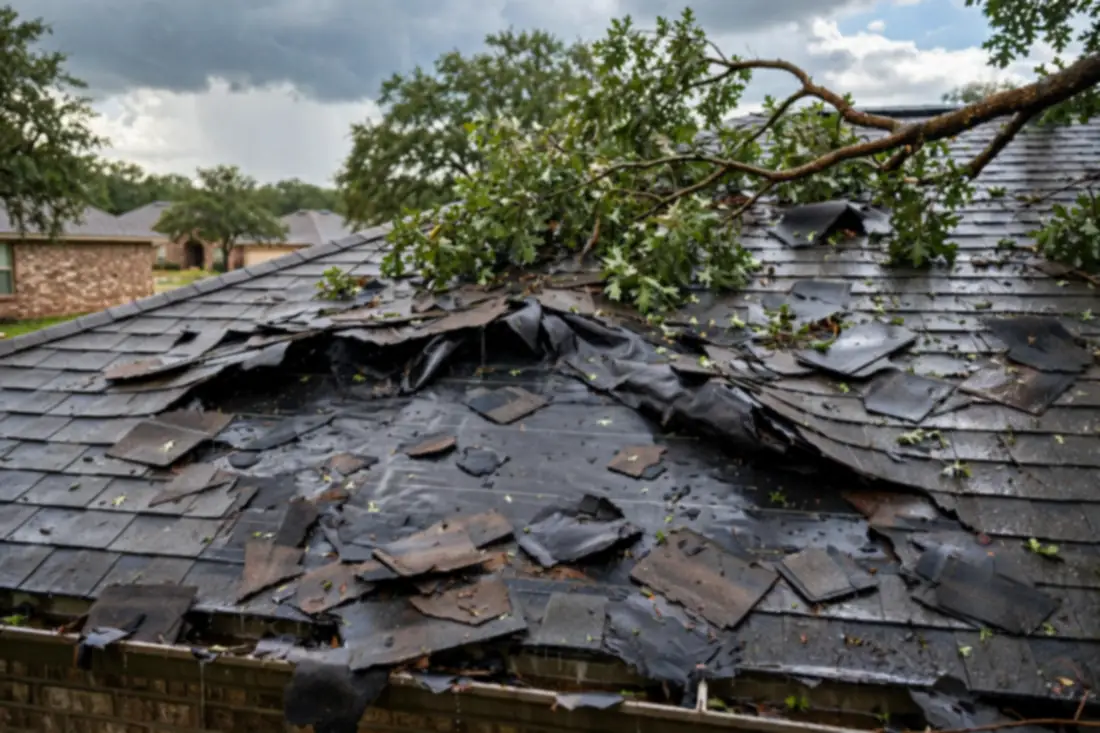
After the wind: storm-torn shingles, limb punctures, and lifted seals across Houston documented properly, stabilized, and repaired as a system — not just the hole you can see.
Explore Storm Damage Roof Repair →It follows the roof: collection area, pitch, and how valleys concentrate the flow. Many Houston homes with large or steep roofs are honestly six-inch territory with oversized downspouts; smaller, simpler roofs are served well by five-inch. The drainage reading, not habit, makes the call.
Yes — the joints are the difference. Sectional gutters join every ten feet or so, and each joint eventually drips and catches debris. Seamless runs are formed to your exact lengths with joints only at corners and outlets, removing most of the failure points at once.
No guard ends it; the right guard reduces it and changes its kind. Guards must be matched to your debris — pine needles defeat guards that stop oak leaves — and even guarded systems want a periodic check that the channel beneath is clear.
Most Houston homes, yes — tear-off of the old system, fascia corrections, fabrication, and hanging typically complete in a single working day, with complex or multi-story homes taking longer.
Then it is replaced as part of the job, before the new channel hangs. The installation reading checks the fascia first precisely because new gutters on rotten wood are a short-lived system.
Mon–Fri 7 AM–10 PM · Sat 8 AM–10 PM · Sun 7 AM–9 PM Central. One call connects you with a local roofing professional.