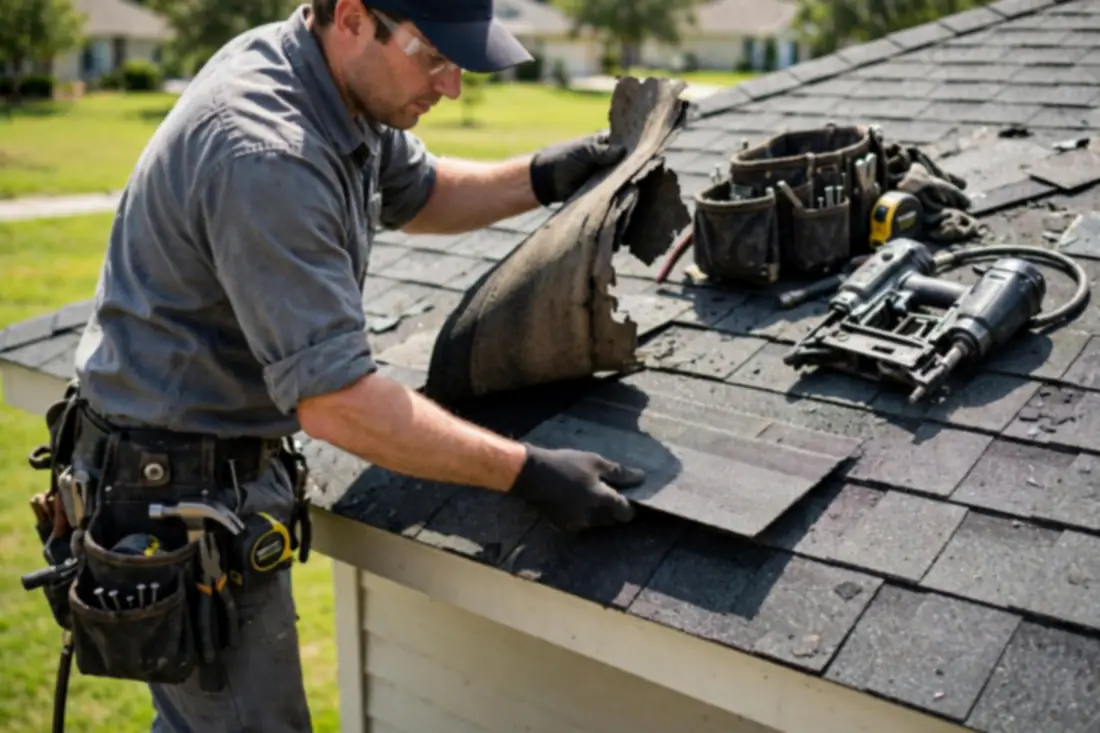

Roofer repairing a damaged section of asphalt shingles on a Houston-area home
Services

Roof Repair

Call Now

Targeted repairs for the failures Houston roofs actually develop — heat-curled shingles, cracked pipe boots, tired flashing, and storm-lifted edges caught before they reach the ceiling.

Most roof problems in Houston start small: a pipe boot cracked by a decade of Gulf sun, a shingle edge lifted by one thunderstorm outflow too many, flashing worked loose around a chimney by years of heat cycling. Roof repair is the work that answers those problems at their source — replacing the failed pieces, resealing the joints, and restoring the roof's ability to shed water — instead of waiting until the failure spreads across a whole slope.

A well-judged repair buys a sound roof many more seasons of service. The key word is judged: spraying sealant over a symptom is not a repair, and neither is nailing new shingles over soft, rotted decking. The local roofing professionals in this network start by finding where the water actually gets in — which is often several feet from where it shows up inside — and then fix the failed layer, not just the stain it left behind.

Roofer repairing a damaged section of asphalt shingles on a Houston-area homeThe Problem

Leaks at chimneys and vents

Failed flashing and sun-cracked boots let water in at the roof's most interrupted points, staining ceilings and rotting the framing around the opening.

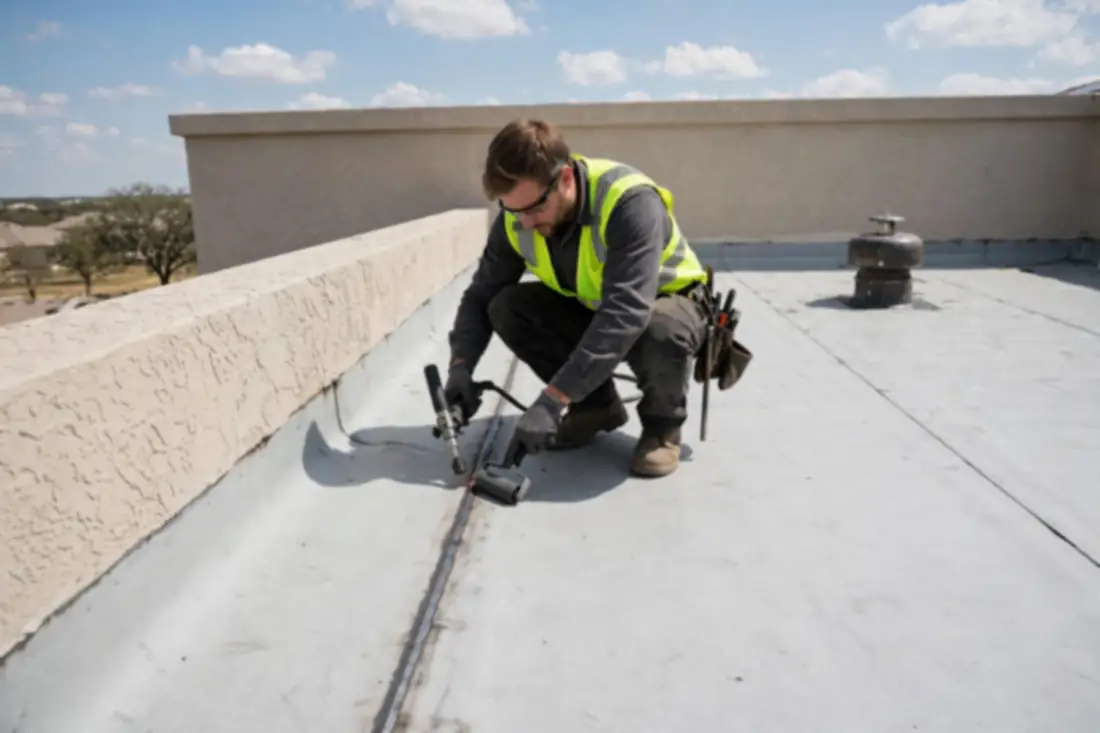
Worker rolling a seam on a light-colored flat roof membraneThe Fix

The Fix, Matched to the Cause

Good repair work is specific — each failure gets the fix that matches its cause:

When a Small Roof Problem Stops Being Small

A stain that keeps growing

A ceiling spot that darkens after every rain is an active leak with a path through your roof. Houston rain arrives in inches per hour, so each storm pushes serious water into the decking and insulation — a repair that would have been simple in March becomes structural by hurricane season.
Shingles in the yard

Finding shingle pieces on the lawn or in the gutters after a windy night means the sealant bond has failed somewhere above. Every missing shingle is an open door for the wind-driven rain of the next Gulf storm.

Black streaks and grit

Dark algae streaks are cosmetic, but the grit collecting at the downspout splash blocks is not — that is your shingles' protective surface leaving. A few granules are normal on a new roof; handfuls after every rain mean the surface is wearing thin.

Flashing that has lifted or cracked

The metal around chimneys, vents, and valleys does more waterproofing than the shingles do. Gaps, rust, or cracked sealant at those joints are the single most common source of repairable leaks in this climate.

What a Real Roof Repair Actually Fixes

A roof is a system of layers, and a leak means one layer failed and the water found the seams in the next. A proper repair works through those layers: the failed shingles come off, the underlayment underneath is checked and replaced where it is torn or saturated, soft decking is cut out and patched with sound wood, and only then do new shingles go on — woven into the existing courses so the pattern of overlaps still sheds water the way the roof was built to.

Flashing repairs follow the same logic. Old sealant is not simply covered with more sealant; loose metal is refastened or replaced, counter-flashing is tucked back where it belongs, and pipe boots are swapped whole rather than smeared with caulk. That is the difference between a repair that holds for years and one that holds until the next hard rain — and it is why the diagnosis matters as much as the fix.

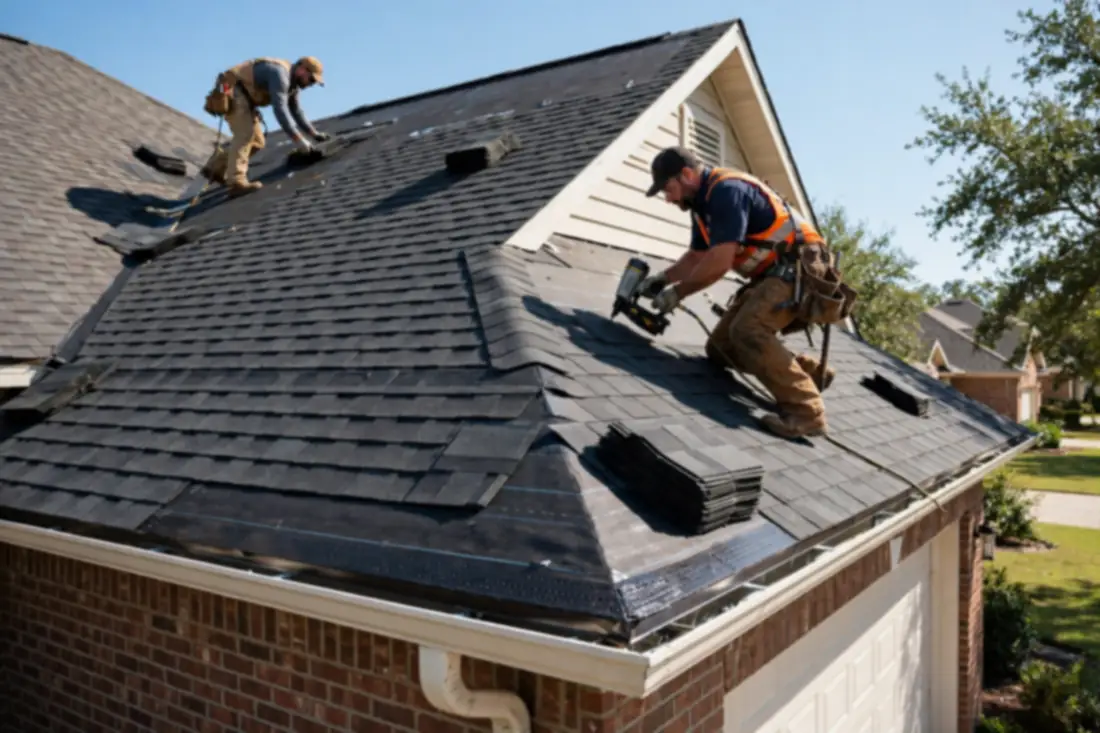
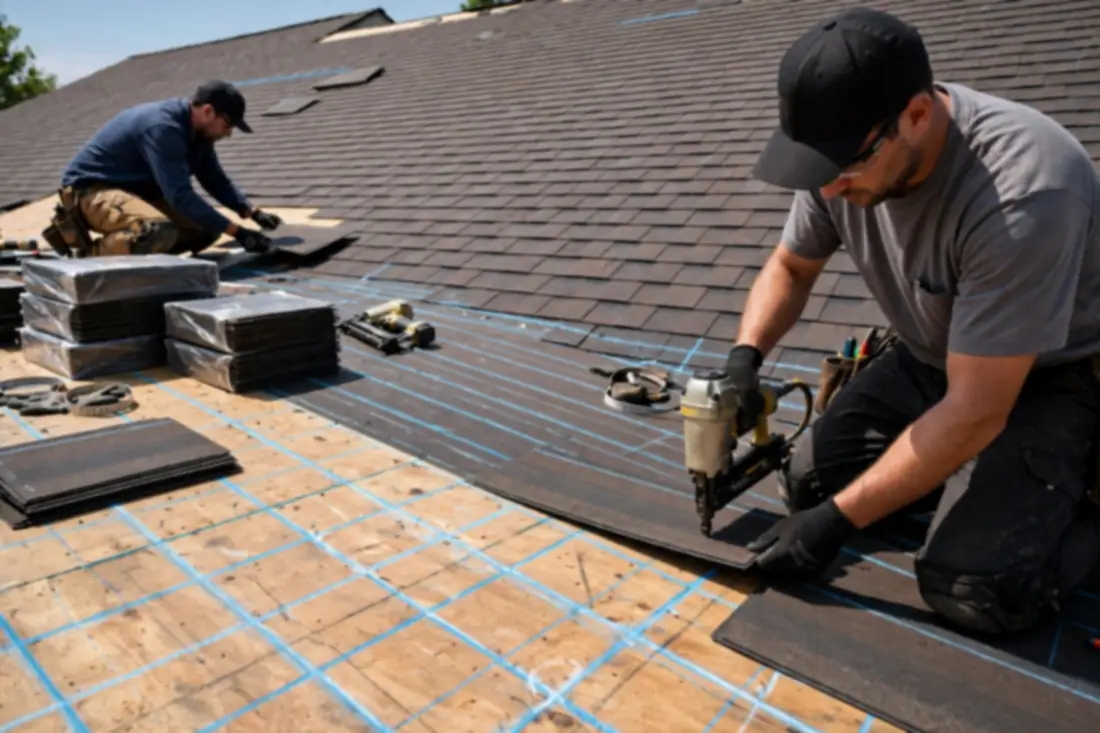
Roofer nailing architectural shingles over fresh underlayment
Shingle installation — New architectural shingles nailed in the reinforced strip, course over course.

Roof Repair in Houston Weather

Houston roofs work under a punishing combination: summer roof surfaces that bake well past 150 degrees, humidity that never really leaves, thunderstorms that drop rain sideways, and a hurricane season that tests every edge from June through November. Heat ages asphalt years faster than the calendar says, and the daily expansion and contraction works at every fastener and seal, season after season.

Local repair experience matters because the failure patterns repeat by housing stock. The brick two-stories of the master-planned suburbs share vent and valley details that fail in the same places. Inner-loop bungalows carry older, lower pitches that pond at their transitions. Pine-heavy streets in the north suburbs bury valleys in needles that hold moisture against the shingles. A roofer who works these streets recognizes the pattern from the ladder — and repairs the cause, not just the spot above your ceiling.

More Problems Roof Repair Solves

Wind-lifted and missing shingles

Once the sealant strip lets go in the heat, storm wind works shingles loose one event at a time until whole patches are exposed to the weather.

Valley and seam leaks

Valleys carry the most water on the roof. Worn valley metal or shingles cut too tight channel that water sideways into the roof instead of down it.

Soft, rotted decking

Slow leaks soak the wood deck until it flexes underfoot. Shingles nailed into soft decking never hold, so the rot has to come out before any surface repair.

How a Targeted Repair Solves Each Problem

Good repair work is specific — each failure gets the fix that matches its cause:

For flashing and penetration leaks

  • Failed pipe boots replaced whole, not caulked over
  • Chimney flashing refastened, resealed, or rebuilt with proper counter-flashing
  • Vent and exhaust caps checked for cracked housings and loose fasteners

For shingle and deck failures

  • Damaged shingles replaced and woven into the existing courses
  • Torn underlayment renewed beneath the repair area
  • Soft decking sections cut out and replaced before re-shingling
  • Valley linings repaired or replaced where metal has worn through

What a Roof Repair Visit Includes

A leak-source diagnosis

The roofer traces the water path from the stain inside to the entry point above — checking the attic where access allows — before any materials come off the truck.

A written description of the fix

You get the repair scope in plain language: what failed, what will be replaced, and which parts of the roof will be opened to do it.

Layer-by-layer repair

Shingles, underlayment, flashing, and decking are each addressed at the level where the failure actually lives.

A water-tested finish

Repaired joints are checked against the next rain — and a roofer who stands behind the diagnosis will want to hear from you if the stain ever darkens again.

After the Repair: What to Watch

A sound repair should end the leak completely, not reduce it. Keep an eye on the old stain through the next two or three rains — it should stay dry and stop growing. If the repaired area involved decking, ask what condition the surrounding wood was in; that answer tells you how much life the rest of that slope likely has.

Repairs also reset your maintenance clock. The roofer's visit is the right moment to clear the valleys, check the other pipe boots (they age at the same rate as the one that failed), and note the roof's overall condition in writing. One boot cracking at year twelve usually means its neighbors are close behind — replacing them together is simple work while a crew is already on the roof.

Mistakes to Avoid

Sealant over the symptom

Caulk smeared on top of shingles hides a leak for a few weeks while water keeps soaking the deck underneath, in Houston humidity that never lets it dry. The stain disappears; the rot does not.

Repairing over soft decking

New shingles over spongy wood cannot hold their fasteners. The repair fails in the first strong storm and the hole is bigger than before.

Matching color, missing the weave

Replacement shingles laid on top instead of woven into the courses break the roof's drainage pattern and create new leak paths at every edge.

Ignoring the attic evidence

The stain pattern, mold, and daylight points in the attic tell the real story of a leak. Skipping the attic check means guessing at the source.

Waiting through another storm season

A small leak in May meets tropical rain in August. Water that sat in the decking and flashing joints all summer turns a modest repair into a section replacement by fall.

Keeping Small Problems Small

Walk the roof with your eyes twice a year

From the ground with binoculars, look for lifted edges, missing pieces, and debris sitting in valleys. Late spring — before hurricane season — and late fall are the two moments that matter.

Keep valleys and gutters clear

Pine needles and oak leaves dam water exactly where the roof is most vulnerable. A valley full of wet debris is a slow leak waiting for a heavy rain.

Act on the first stain

A ceiling stain is the roof asking early, while the answer is still a repair. Every month of delay lets the water bill — in rotted wood — grow.

How It Works

1

Tell us where it shows

Call and describe what you are seeing — a stain, a drip, shingles in the yard, or a known damaged spot. Photos from the ground help the roofer arrive prepared.

2

Diagnosis on the roof

The roofer inspects the area above the symptom and the attic below it, and explains what failed and what the repair involves before work starts.

3

The repair itself

Failed materials come off, the layers beneath are made sound, and new materials are integrated into the existing roof — usually completed the same visit for standard repairs.

4

Walkthrough and notes

You see what was done, get the condition notes for the rest of the roof, and know exactly which areas to keep an eye on in coming seasons.

Not sure whether this is a repair, a detail, or a bigger job?

That is exactly what the diagnosis is for. Describe what you are seeing and a local roofer will read the roof and tell you which service the evidence supports — in writing.

Call Now

More Roofing Services

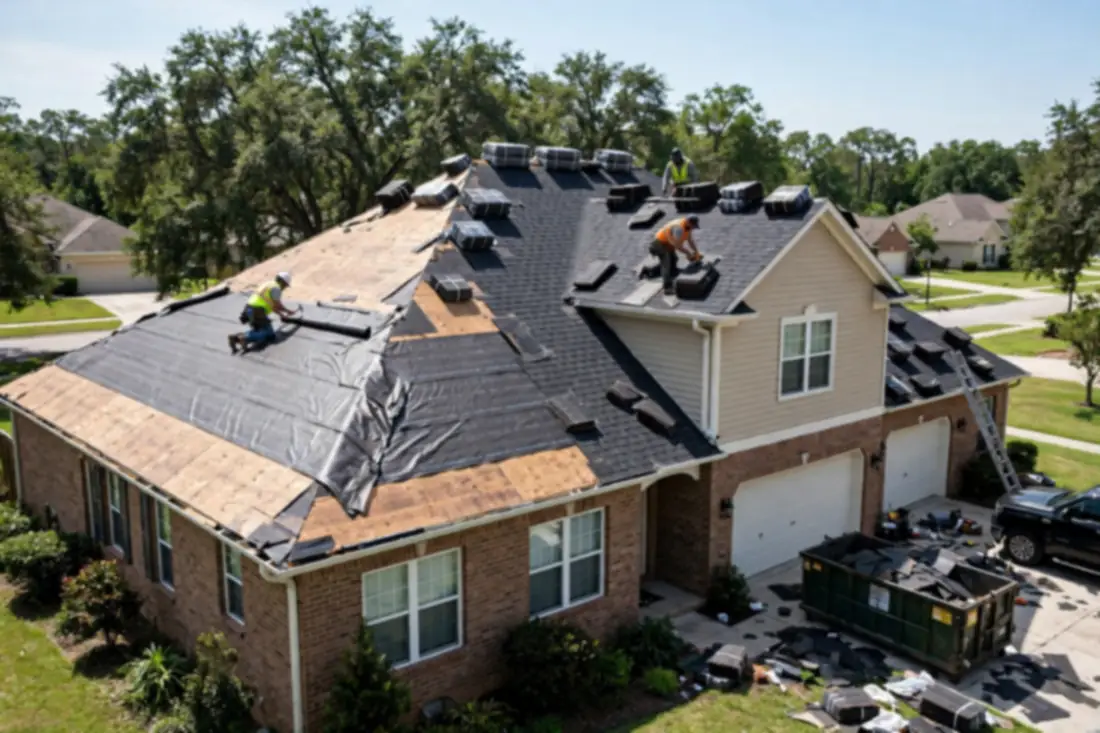
Crew replacing a roof on a large Houston suburban home, one slope new and one stripped to the deck

Roof Replacement

Full tear-off and re-roofing for Houston homes whose shingles have reached the end of their service life — deck inspection, modern underlayment, and a roof built for Gulf storms and Texas heat.

Explore Roof Replacement →
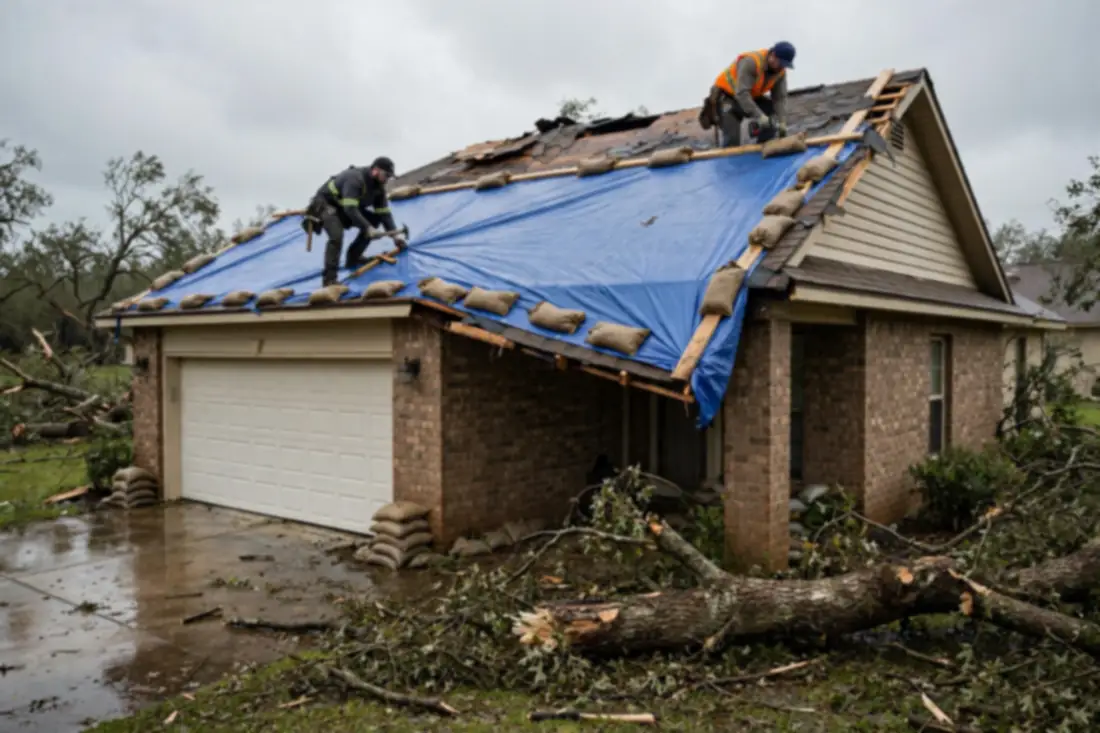
Roofers securing a plain blue tarp over a storm-damaged section of a Texas roof

Emergency Roof Repair

The storm-night service: roofs opened by wind, limbs, or sudden leaks made weather-tight fast — tarping, temporary sealing, and the permanent repair that follows.

Explore Emergency Roof Repair →
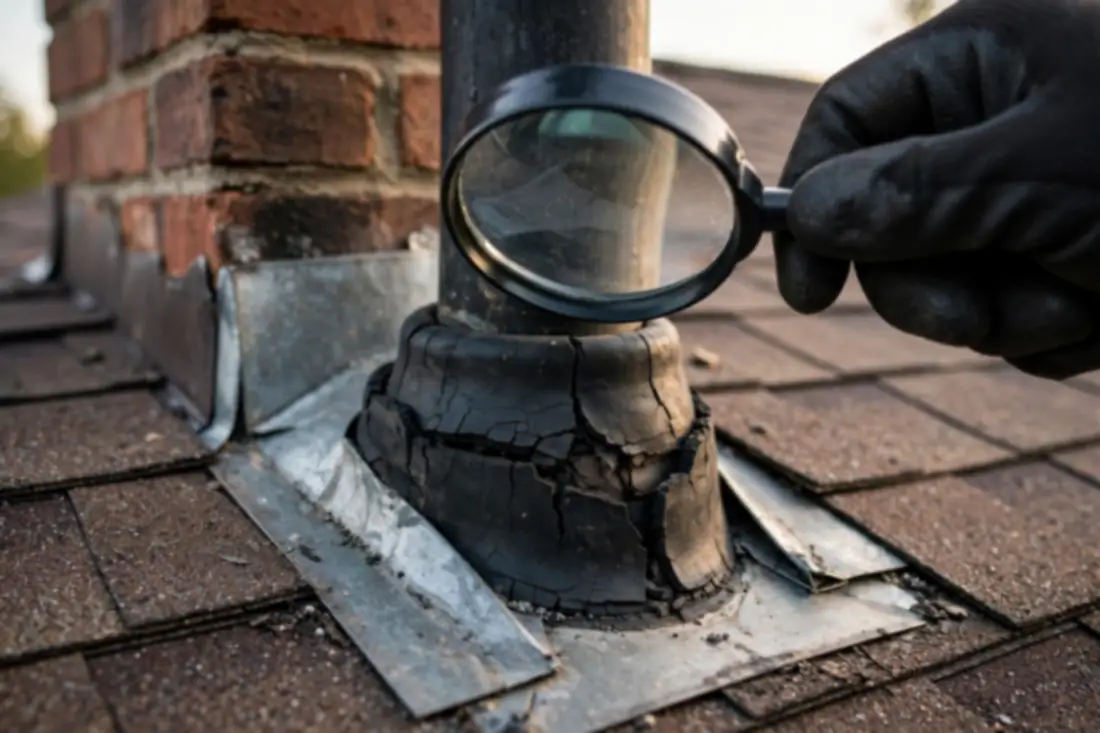
Roofer examining a cracked pipe boot and flashing with a magnifier on a shingle roof

Roof Leak Repair

Attic-first leak detection for Houston homes — the stain traced to the failed boot, flashing, or seam above it, then repaired at the source layer, not at the symptom.

Explore Roof Leak Repair →
Roof inspector on a shingle roof with a clipboard, checking the surface near the ridge

Roof Inspection

A full condition reading of your roof — surface, flashing, deck, attic, and ventilation — with photographs, findings by slope, and an honest remaining-life estimate in writing.

Explore Roof Inspection →
Roofers installing architectural asphalt shingles in straight courses on a steep roof

Shingle Roofing

Architectural asphalt shingle roofing installed as a complete system — leak barrier, underlayment, flashing, and ventilation — matched to Houston heat, humidity, and storm wind.

Explore Shingle Roofing →
Worker heat-welding seams on a light gray flat roof membrane on a Texas home addition

Flat Roofing

Membrane flat and low-slope roofing for Houston homes and additions — seams, drains, and ponding handled first, because flat roofs live or die by their drainage.

Explore Flat Roofing →
Newly installed charcoal standing seam metal roof on a modern Texas home at sunset

Metal Roofing

Standing seam and metal shingle roofing for Houston homes — panels detailed for Gulf wind, summer heat reflection, and decades of service with minimal upkeep.

Explore Metal Roofing →
Storm-damaged roof with a torn-away shingle section and a fallen branch after a Gulf storm

Storm Damage Roof Repair

After the wind: storm-torn shingles, limb punctures, and lifted seals across Houston documented properly, stabilized, and repaired as a system — not just the hole you can see.

Explore Storm Damage Roof Repair →
Worker installing a seamless aluminum gutter along the fascia of a Texas brick home

Gutter Installation

Seamless gutters sized to your roof and Houston's rain rates, pitched to actually drain, hung on sound fascia, and discharged well away from the foundation.

Explore Gutter Installation →

Frequently Asked Questions

Age and spread decide it. A roof with damage in one area is almost always a repair. Damage across several slopes, granule loss everywhere, and recurring leaks in new places point to a roof at the end of its service life — an honest inspection will show you which side of that line your roof is on.

Water entering at a flashing joint or nail hole runs along the decking and rafters until it finds a low path through the ceiling — often a light fixture or a drywall seam several feet away. That is why diagnosis starts in the attic and works upward, not the other way around.

An active leak should not wait — Houston rain does damage in every storm, and summer storms are the heaviest of the year. A repair with no leak behind it, like a few lifted shingles on a dry roof, has more flexibility, but a roofer should look before you decide.

On a younger roof, usually closely. On an older roof, the existing shingles have faded in the Texas sun and lost granules, so new pieces stand out for a while before weathering blends them. The repair's job is waterproofing first; your roofer will show you the closest available match before starting.

Then the rotted section is cut out and replaced as part of the repair — shingles cannot be fastened into soft wood. The roofer will show you the extent before covering it, and the repair scope in writing should name decking replacement as part of the job.

Roof Repair in Houston — one call away

Mon–Fri 7 AM–10 PM · Sat 8 AM–10 PM · Sun 7 AM–9 PM Central. One call connects you with a local roofing professional.

Call Now
Call Now