You are replacing for the long term
A home you plan to keep for decades changes the arithmetic of every roof. Metal's service life means the next replacement conversation belongs to a future owner, or a much older you.
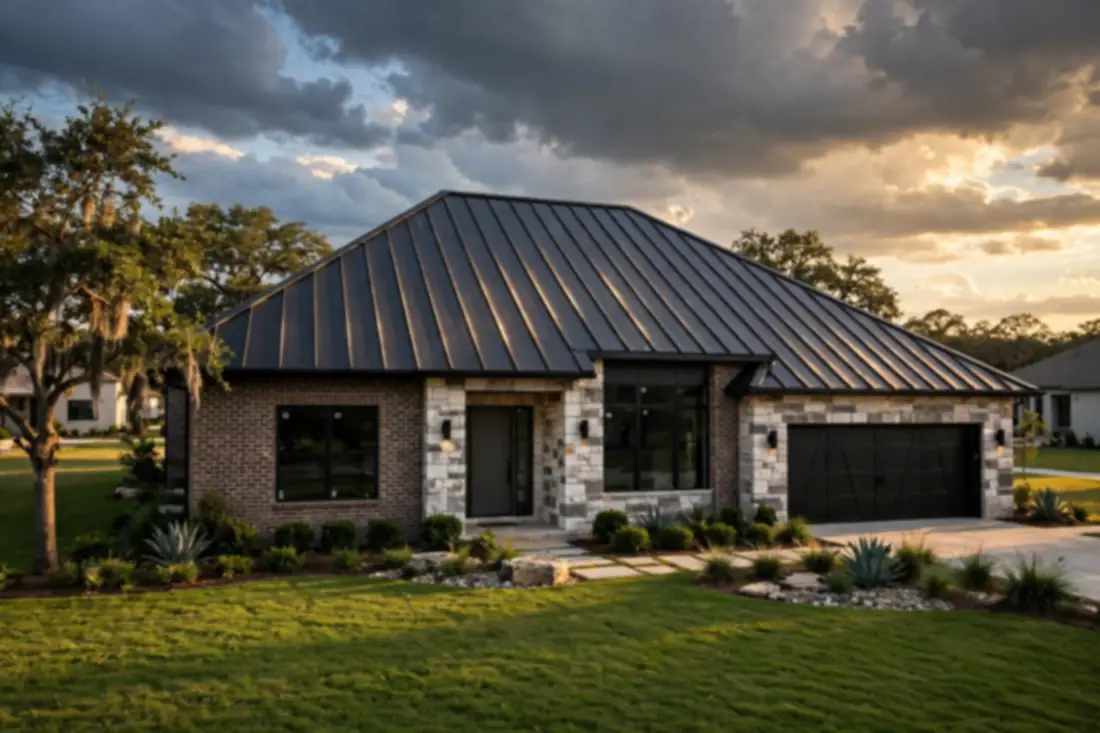
Standing seam and metal shingle roofing for Houston homes — panels detailed for Gulf wind, summer heat reflection, and decades of service with minimal upkeep.
Metal is the roof Houston homeowners choose when they are thinking in decades. A properly installed standing seam metal roof shrugs off the wind that peels shingle seals, reflects a meaningful share of the summer sun that cooks asphalt, and asks for very little across a service life measured in generations of shingle roofs. It is also the least forgiving roof to install casually: every panel is fabricated to the roof, every seam is a craft decision, and the details — valleys, transitions, penetrations — are metalwork, not caulking.
The local professionals in this network install the two residential metal families: standing seam panels, with their raised interlocking ribs and concealed fasteners, and metal shingles that mimic traditional profiles with interlocking metal construction. Both are scoped the same honest way: the roof measured and read first, the panel system matched to its pitch and complexity, and the flashing fabricated — not adapted — for every interruption.
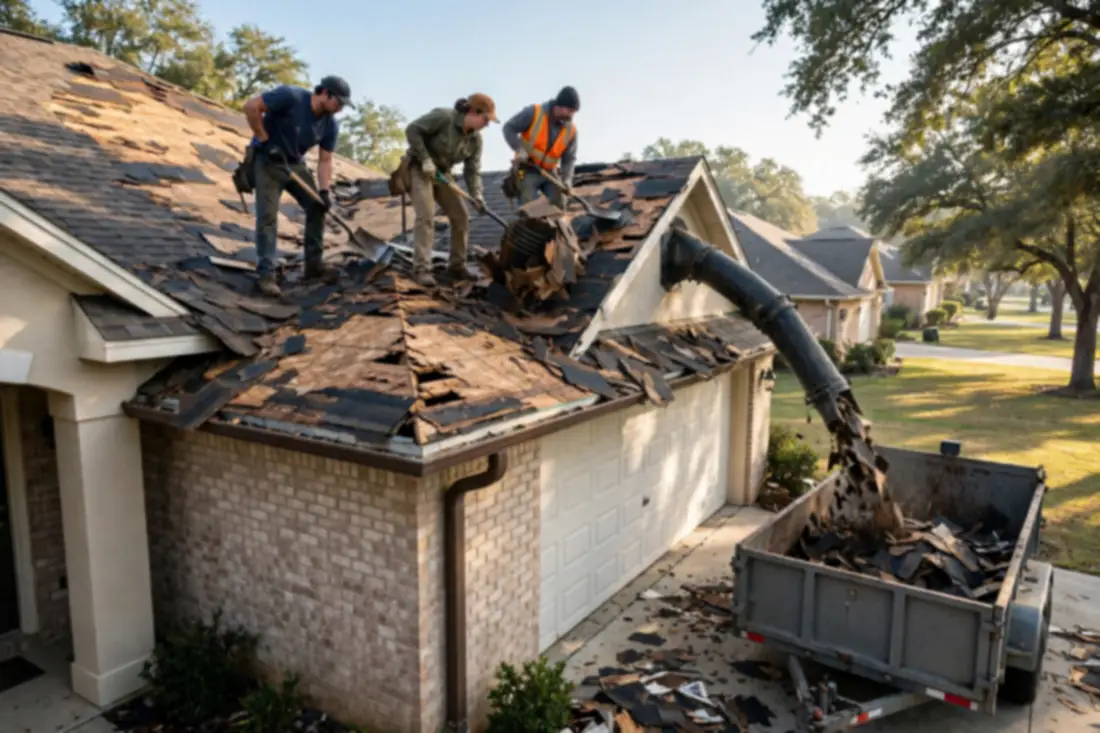
The ProblemTwo more asphalt roofs across thirty years of ownership, each with its own tear-offs and disruption — the cycle metal exists to end.
 The Fix
Mechanics over sealant — each metal decision answers a known Houston failure:
A home you plan to keep for decades changes the arithmetic of every roof. Metal's service life means the next replacement conversation belongs to a future owner, or a much older you.
On exposed lots and open prairie edges of the metro, storm wind edits shingle roofs slope by slope. Interlocked metal panels answer wind with mechanics, not sealant.
Reflective metal finishes bounce a share of the Gulf sun before it becomes attic heat — one layer of the cooling answer alongside ventilation and insulation.
Big clean planes show standing seam at its finest and install most efficiently. Complex roofs can wear metal beautifully too — the detail count simply becomes the project's center of gravity.
A standing seam roof is a field of long metal panels, each raised seam crimped or snapped to its neighbor, fastened by concealed clips that let the metal move with temperature without tearing at its fasteners. That movement is the engineering heart of the system: a forty-foot panel grows and shrinks measurably between a January dawn and an August afternoon, and the clips, slotted holes, and floating details exist to let it. Systems that ignore the movement — screws driven tight through the panel face — write their own failure schedule in loosened holes and oil-canning waves.
Metal shingles take the other route: smaller interlocking units, each fastened and locked to its neighbors, forming a continuous metal skin with a traditional roof's face. Both systems shed water by geometry and laps rather than by sealant, both are detailed with fabricated flashing at every transition, and both stand or fall on the installer's metalwork — which is why metal scopes name the panel profile, gauge, finish, and fastening method in writing.
Houston gives metal four tests. Wind: hurricane-season gusts hunt panel edges and ridge details, answered by seam choice, clip spacing, and edge metal engineered for the coast's pressures. Heat: reflective finishes earn their keep under the Texas sun, while dark colors trade some of that benefit for the look — a trade the scope should state plainly. Rain noise: the old barn-roof legend fades over a solid deck and attic insulation, which is how residential metal is built here. Salt and humidity: finishes and fastener metals are chosen for Gulf air, especially toward the bay side of the metro.
The architecture cooperates. Texas modern and prairie-influenced homes carry standing seam as if designed for it; ranch and traditional homes take metal shingles without changing their character. The honest scope also names where metal does not fit — near-flat slopes below the panel system's minimum pitch belong to membrane, and a good roofer says so and designs the transition instead.
Exposed roofs that lose pieces storm after storm are announcing a fastening problem that sealant cannot answer.
Dark asphalt fields absorb the summer sun wholesale; reflective metal returns a share of it to the sky before it enters the attic system.
On complex roofs, metal's promise dies at sloppy transitions. The problem is never the panel; it is flashing treated as an afterthought.
Mechanics over sealant — each metal decision answers a known Houston failure:
The exact panel system, metal thickness, and finish named in the scope — the three facts that decide the roof's life and look.
Concealed clips and floating details specified for your panel lengths, so Texas temperature swings never tear at the roof.
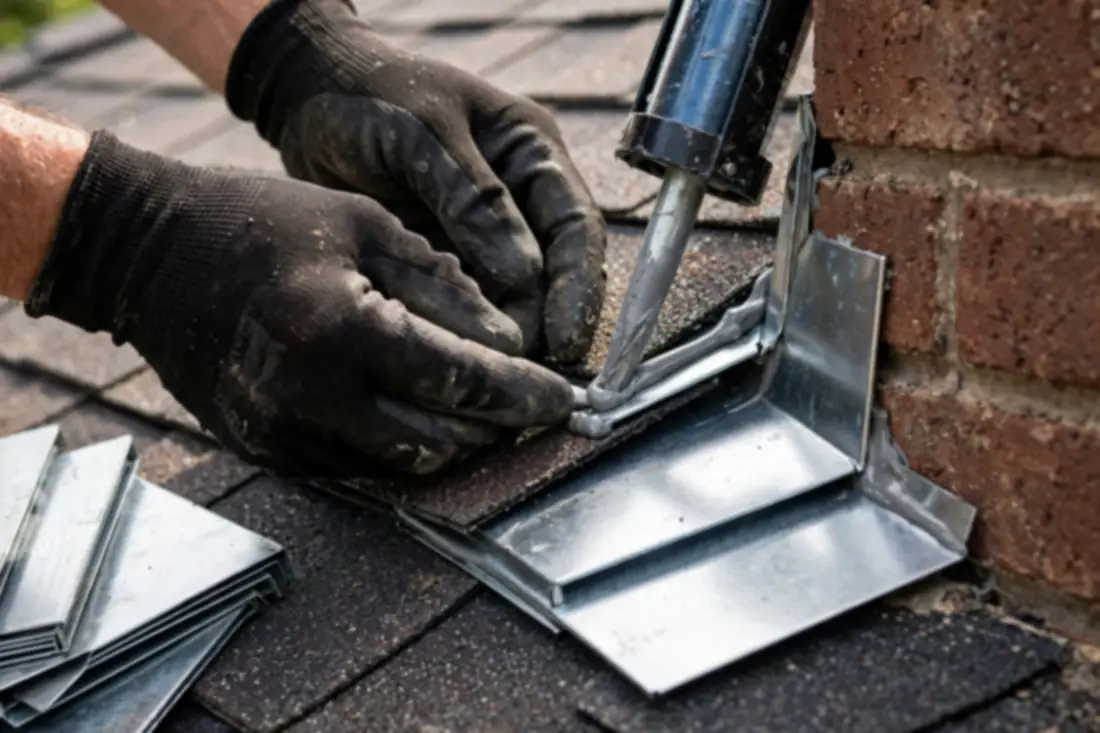
Valleys, chimneys, walls, and penetrations finished in metal bent for the purpose, installed as the field reaches them.
Photographs of the underlayment and fastening before the panels close over them — your record of the hidden half of the system.
Metal's upkeep list is short: keep valleys and gutters clear, keep limbs off the surface, and have the details read after major storms like any roof. Fasteners are concealed, seams are mechanical, and there is no granule surface to shed. The finish will weather gracefully — a slow, even mellowing rather than the patchwork aging of asphalt.
Keep the project documentation with your home records: panel profile, gauge, finish, and installer notes. It is the reference every future service call wants, and the proof a future buyer reads as the home's longest-lived asset stated in facts.
Screw-through agricultural panels belong on barns. Their fasteners back out and their washers perish in this sun, on a schedule measured in years, not decades.
Panels pinned tight at both ends will oil-can, tear at fasteners, and sing in temperature swings. Movement is not a defect to prevent; it is a force to design for.
Profiles differ in seam mechanics, wind performance, and pitch limits. The right choice starts from your roof's geometry and exposure, not from a gallery.
Below its minimum pitch, a seam stops being a watershed and becomes a waterline. Honest scopes switch material there.
Debris dams hold moisture against finishes and seams. The same seasonal rhythm as any roof — the metal just rewards it longer.
Branches scraping in storm wind scar finishes; falling limbs dent panels. Keep the green off the gray.
A post-storm reading of seams, ridge, and edge metal catches the rare loosened detail while it is still a detail.
Pitch, plane sizes, complexity, wind exposure, and attic conditions read first — metal is chosen to fit the roof, not the brochure.
Profile, gauge, finish, fastening, and flashing plan named in the scope, with samples seen against your home's light.
Panels formed to measure, underlayment and details installed, field assembled seam by seam.
The roof walked, the hidden work photographed, and the system record handed over for your home file.
That is exactly what the diagnosis is for. Describe what you are seeing and a local roofer will read the roof and tell you which service the evidence supports — in writing.
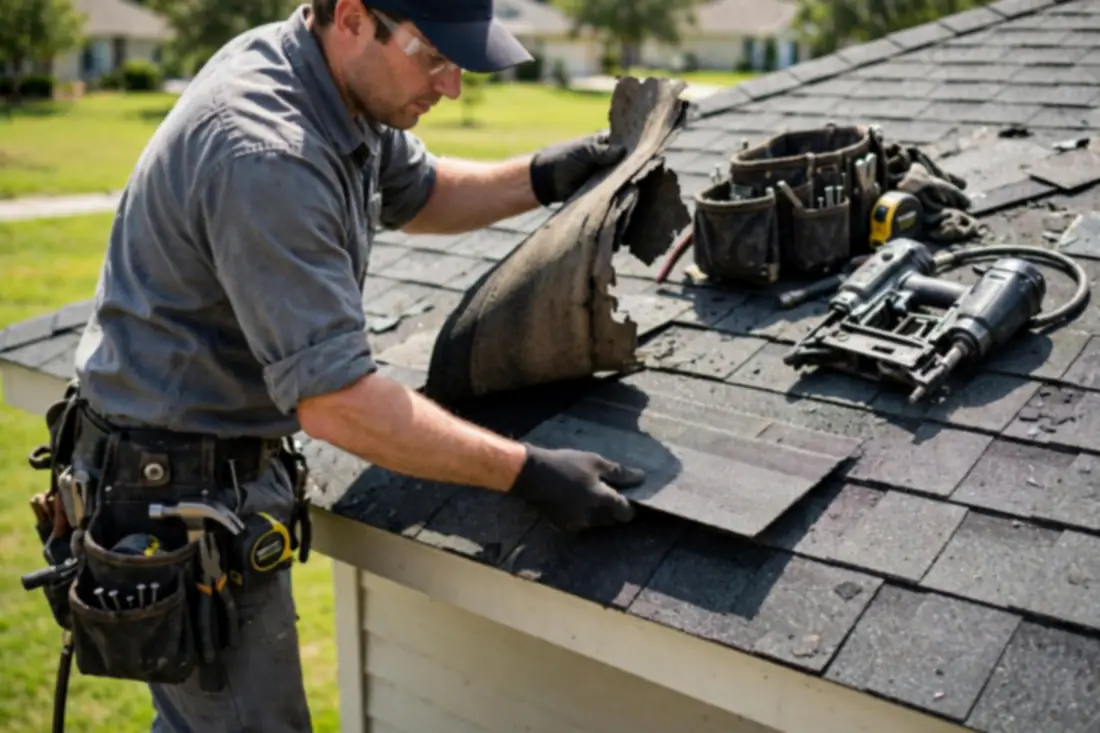
Targeted repairs for the failures Houston roofs actually develop — heat-curled shingles, cracked pipe boots, tired flashing, and storm-lifted edges caught before they reach the ceiling.
Explore Roof Repair →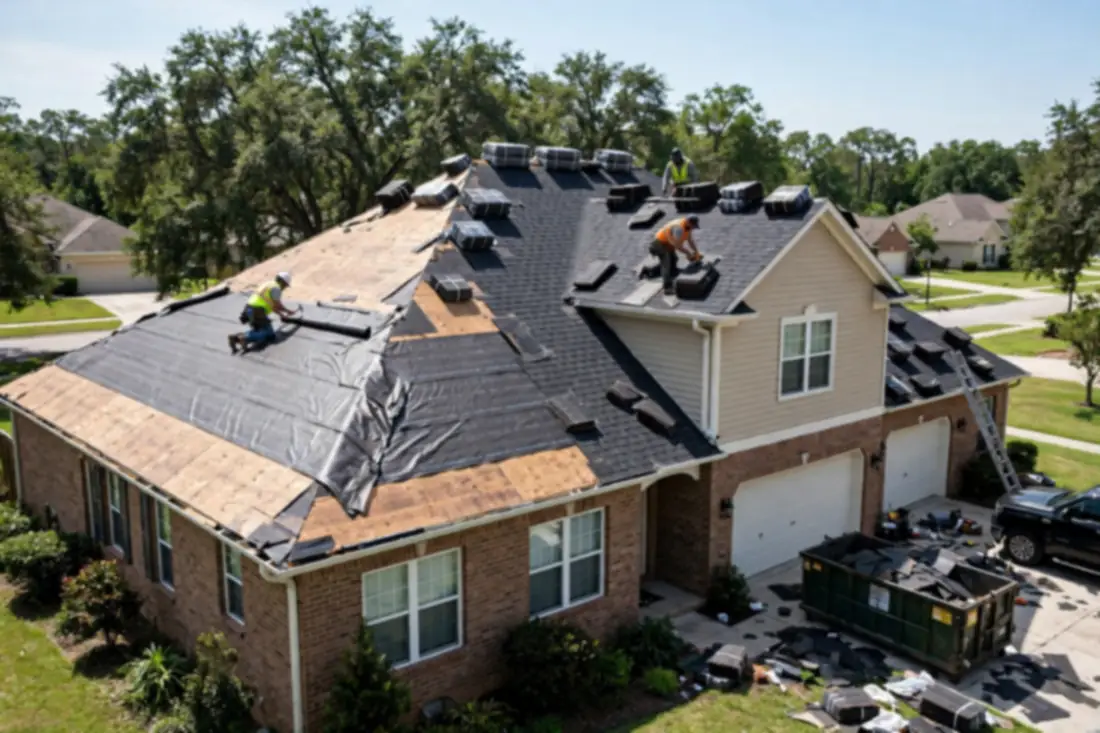
Full tear-off and re-roofing for Houston homes whose shingles have reached the end of their service life — deck inspection, modern underlayment, and a roof built for Gulf storms and Texas heat.
Explore Roof Replacement →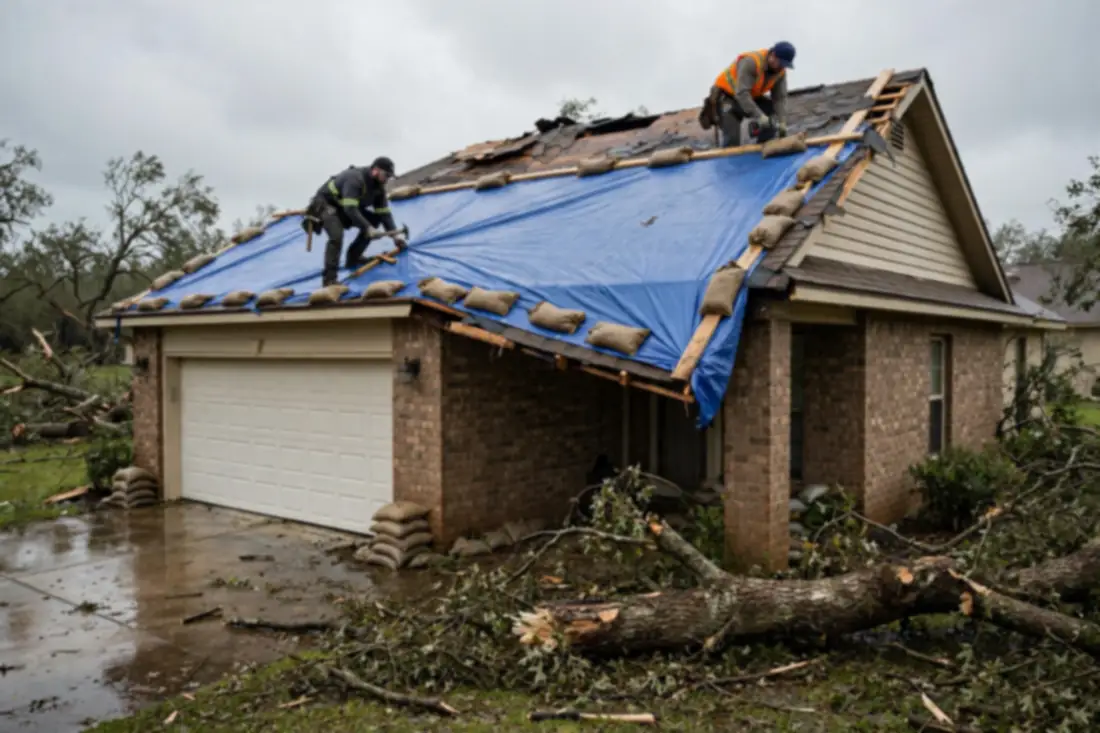
The storm-night service: roofs opened by wind, limbs, or sudden leaks made weather-tight fast — tarping, temporary sealing, and the permanent repair that follows.
Explore Emergency Roof Repair →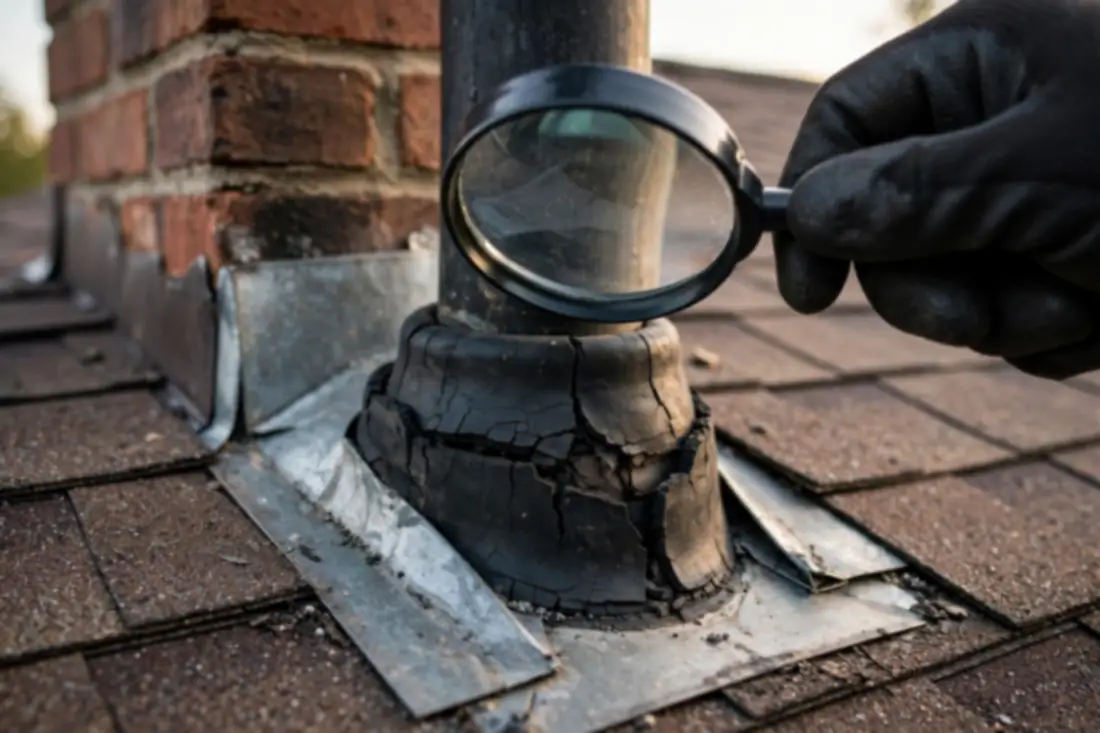
Attic-first leak detection for Houston homes — the stain traced to the failed boot, flashing, or seam above it, then repaired at the source layer, not at the symptom.
Explore Roof Leak Repair →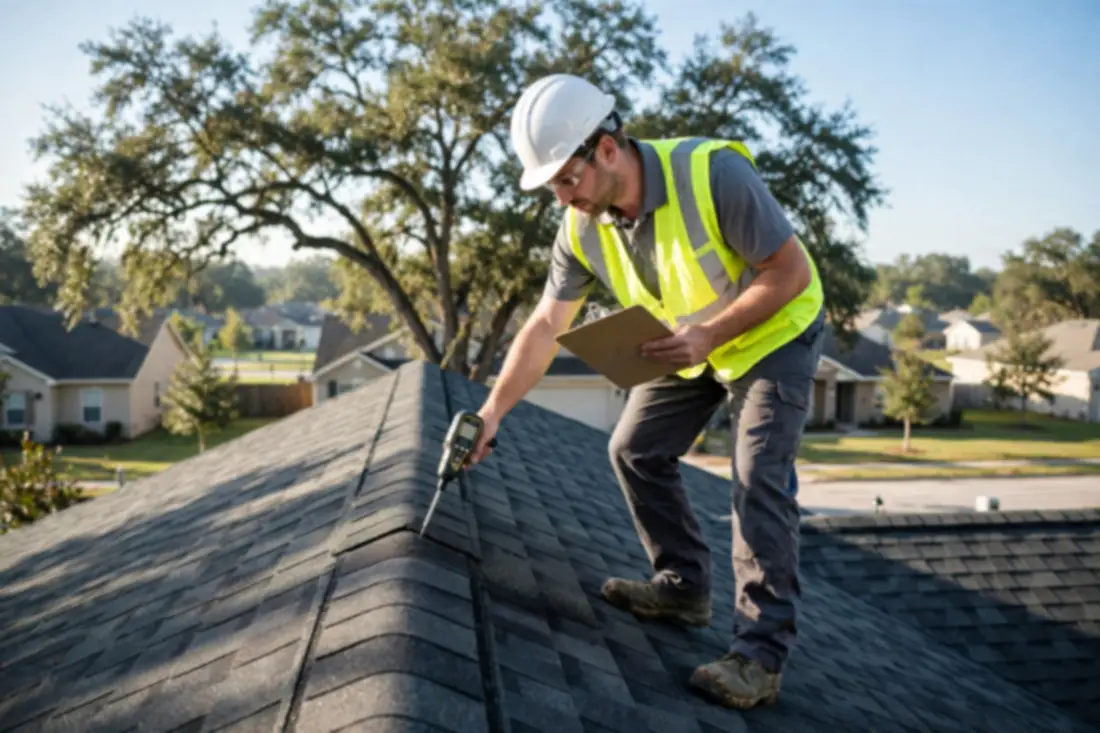
A full condition reading of your roof — surface, flashing, deck, attic, and ventilation — with photographs, findings by slope, and an honest remaining-life estimate in writing.
Explore Roof Inspection →
Architectural asphalt shingle roofing installed as a complete system — leak barrier, underlayment, flashing, and ventilation — matched to Houston heat, humidity, and storm wind.
Explore Shingle Roofing →
Membrane flat and low-slope roofing for Houston homes and additions — seams, drains, and ponding handled first, because flat roofs live or die by their drainage.
Explore Flat Roofing →
After the wind: storm-torn shingles, limb punctures, and lifted seals across Houston documented properly, stabilized, and repaired as a system — not just the hole you can see.
Explore Storm Damage Roof Repair →
Seamless gutters sized to your roof and Houston's rain rates, pitched to actually drain, hung on sound fascia, and discharged well away from the foundation.
Explore Gutter Installation →Over a solid deck with underlayment and an insulated attic — the standard residential build — rain sound is comparable to any roof. The barn-roof drum belongs to open framing, not to houses.
Standing seam systems are measured in decades — commonly two to three times an asphalt roof's service here — with the finish and details maintained. It is the closest thing residential roofing has to a permanent material.
Reflective finishes return a meaningful share of solar heat before it reaches the deck, and they pair with attic ventilation as the two halves of the roof-temperature answer. Dark finishes trade some of that benefit for appearance — your scope can quantify the direction honestly.
It is sometimes done, but the tear-off route is the sound standard here: deck condition verified, underlayment renewed, and no trapped layers aging invisibly beneath a fifty-year surface.
Yes, with the understanding that complexity is where the craft concentrates: every valley and transition is fabricated flashing work. The scope of a complex metal roof is a metalwork project with a roofing result — scoped and scheduled as such.
Mon–Fri 7 AM–10 PM · Sat 8 AM–10 PM · Sun 7 AM–9 PM Central. One call connects you with a local roofing professional.